
Six Women Composers You Haven’t Heard Of
Women composers have long been a vital part of All Classical Radio’s daily playlist. As concert programs become more diverse and inclusive, we are proud to highlight these lesser-known names and showcase the depth of their compositional talent. In honor of Women’s History Month, we’re putting the spotlight on six women composers you may not have heard of but who truly deserve to become household names. Their stories offer lessons in perseverance, resilience, and ingenuity. Keep reading to learn more!
Emilie Mayer (1812-1883)
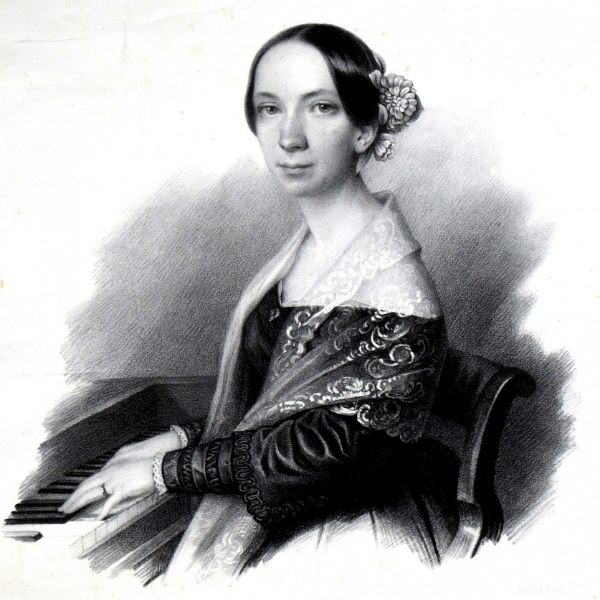
Emilie Mayer was one of the most prolific German composers of her time, and yet her name rarely appears on concert programs today. Mayer took piano lessons from an early age. Though she had few examples to draw on as a woman, she decided, as a young adult, to pursue composition as a professional career.
Because women were barred from professional studies at most institutions, Mayer sought musical tutoring through private study. One of her most impactful mentors was composer Carl Loewe. Ultimately settling in Berlin, Mayer produced hundreds of well-regarded symphonies, chamber music, songs, and more. At first, she published her works under the name E. Mayer; however, once she began using her full name, Emilie Mayer, responses to her music became more critical.
Nonetheless, her career blossomed as she refused to relinquish her ambition. Her music was performed across Europe. Unfortunately, following her death, there was no one to carry on her legacy, and her music fell into obscurity.
Luise Adolpha Le Beau (1850-1927)
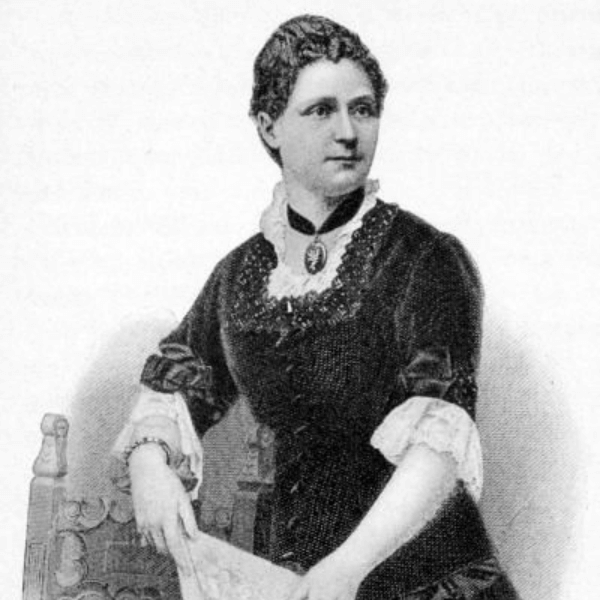
Like Emilie Mayer, German composer Luise Adolpha Le Beau showed musical ability from an early age while learning to play the piano. She began composing during childhood, and as a concert pianist, she made her professional debut at 18. For a short period of time, Le Beau studied with Clara Schumann. Shortly after, she moved to Munich to study with Josef Rheinberger.
As a composer, Le Beau wrote a wide range of works, including orchestral music, operas, choral works, songs, piano solos, and chamber pieces. Unfortunately, because of her gender, Le Beau’s works were often met with skepticism, and career opportunities proved hard to come by. In her autobiography, she wrote, “It is difficult to come to terms with such circumstances when one has dedicated her entire life to a profession, but one must be satisfied with the consciousness of having helped to build the temple of art according to one’s best knowledge and with honest intentions.” As she fought to have her music performed, Le Beau championed equal opportunities for young female musicians.
Guadalupe Olmedo (1853-1889)
Guadalupe Olmedo was a Mexican composer whose musical trajectory paved the way for future women in the region. Olmedo showed exceptional potential on the piano from a young age. When she was only 12 years old, the ruler of the (short-lived) Mexican Empire requested a performance by the young pianist at the National Palace.
In 1875, Olmedo became the first woman composer to graduate from Mexico’s National Conservatory of Music. As she continued writing music, she was largely drawn to works for piano, voice, or small ensembles. In 1887, Olmedo married composer (and her former teacher) Melesio Morales, and it seemed as though she had a bright future ahead of her. Unfortunately, Olmedo died in 1889 at just 35, leaving the world to wonder what more she could have accomplished.
Henriette Renié (1875-1956)
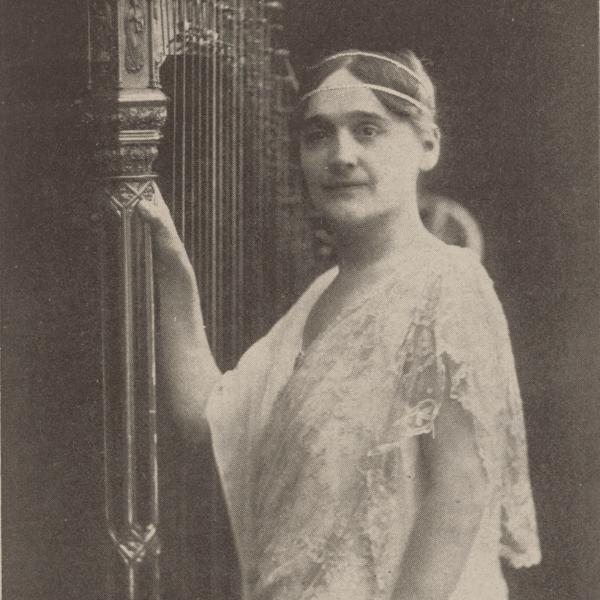
French composer Henriette Renié is best remembered as a virtuoso harpist, though her accomplishments as a composer should not be overlooked. Renié began studying the harp at such a young age that her father had to engineer extensions for the instrument to help her reach the pedals. She began her performance career at 11, after winning first prize for harp at the Paris Conservatory.
As a composer, Renié wrote almost exclusively for the harp (or music that prominently featured the harp). In doing so, she helped elevate the instrument’s status and establish the harp as a solo concert instrument. As a respected teacher, Renié codified a method for playing the harp, called Méthode complete de harpe (Complete Method for Harp), which is still used today. She was never granted a professorship at the Paris Conservatory, but many of her students attended the institution where she had begun her professional trajectory.
Charlotte Sohy (1887-1955)
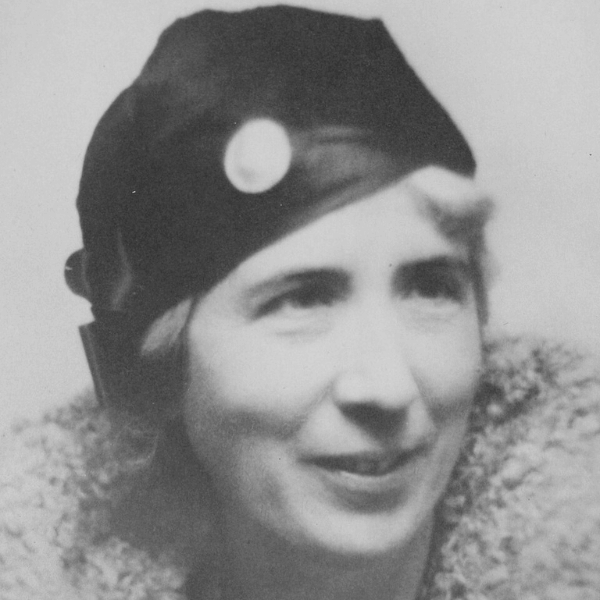
Charlotte Sohy was a French composer who was incredibly influential during her lifetime but has since fallen into relative obscurity. Sohy completed her formal training at the Schola Cantorum, where she studied under Vincent d’Indy. While at the Schola Cantorum, she met her future husband, composer Marcel Labey. The couple enjoyed an unusually fruitful, collaborative relationship (for the time) – they both worked as musical professionals, while raising seven children, and frequently contributed to and advocated for each other’s compositions.
Sohy published 35 works, including a symphony inspired by World War I, an opera, chamber music, songs, and more. To avoid prejudice due to her sex, Sohy used her grandfather’s name, Charles Sohy, as a pseudonym.
Fun fact – Sohy’s cousin was fellow composer Louis Durey. Durey was a member of Les Six, a group of six composers who rebelled against the Romanticism and Impressionism that peaked around the turn of the 20th century. Sohy herself was friends with composers Mel Bonis and Nadia Boulanger.
Madeleine Dring (1923-1977)
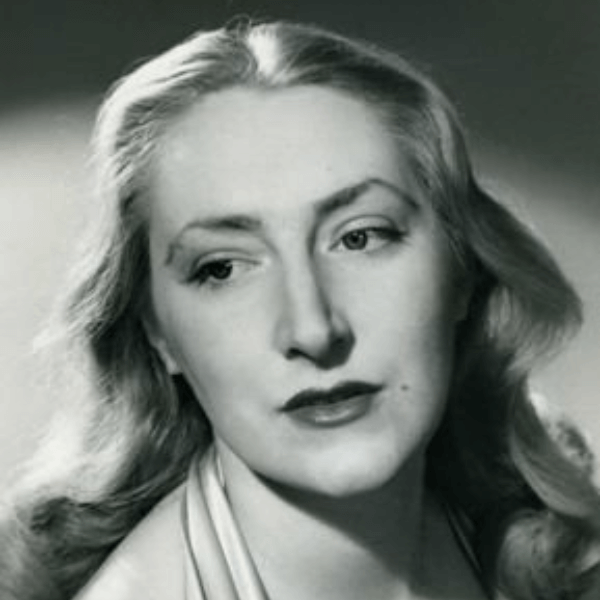
Madeleine Dring was an English composer, actress, singer, and pianist. Born into a creative family, Dring won a scholarship to study violin and piano at the Royal College of Music at just 10 years old. She continued her education there through her teens, studying composition under Herbert Howells and Ralph Vaughan Williams. While music proved to be a creative outlet for Dring from an early age, she also had a deep love of theatre and concurrently studied drama and mime.
As a composer, Dring often intertwined her love of music and theater, writing incidental music and songs for stage works that she would also perform in. She wrote many pieces for her husband, Roger Lord, who was principal oboist of the London Symphony Orchestra. She was known for her sense of wit, which regularly made its way into her scores. Unfortunately, following her death, much of Dring’s unpublished music has not been found.
Keep Learning
If you enjoyed this post, check out a few more from the Arts Blog celebrating the lives of women composers:
- Women We Love to Play On Air: 2025 Edition
- Women We Love to Play On Air: 2024 Edition
- Women We Love to Play On Air: 2023 Edition
- María García’s Five “Must Hear” Women Composers
Read other posts by Rebecca Richardson


