

Exploring Music by Indigenous Composers
November is National Native American Heritage Month, which presents classical music with a challenging topic. The classical tradition has a long record of cultural appropriation when it comes to indigenous musics from North America and around the globe. In the late Victorian era, non-native composers attempted to explore Native American influences in efforts like the late Victorian Indianist Movement—much of this music is criticized for othering and caricaturing its sources.
The twentieth and twenty-first centuries brought us an increasing number of Indigenous classical composers who present their own musical tradition from within. To help you explore the rich world of Native American music, we’d like to share six composers and musical works, all of which explore traditional music in nontraditional ways.
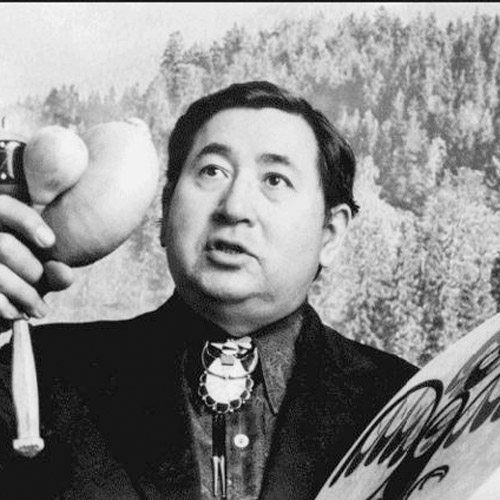
Louis W. Ballard
Katcina Dances
Louis Ballard (1931-2007) was among the first composers of Native American heritage to exert a profound influence on the culture of classical music. Ballard was of Cherokee and Quawpaw descent, and was born on the Quawpaw Reservation in Oklahoma. His composition teachers included Darius Milhaud and Mario Castelnuovo-Tedesco. Ballard’s career as a composer and educator included appointments with the Institute of American Indian Arts, Santa Fe, and with the Bureau of Indian Affairs. In 1997, Ballard received a Lifetime Musical Achievement Award from First Americans in the Arts.
Ballard’s compositions fuse modernist classical techniques with influences from his Native heritage. This recording features a wonderful bassoon rendition of the fourth movement, “Bees,” from Ballard’s Katcina Dances, a 1969 suite which Ballard originally composed for cello and piano.
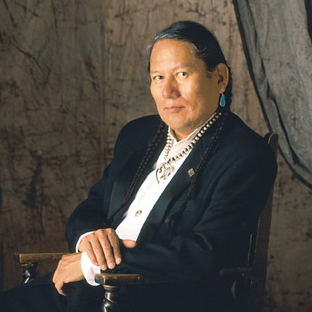
R. Carlos Nakai
Song for the Morning Star
Carlos Nakai (b. 1946) is a virtuoso of the Native American flute. Nakai is of Navajo-Ute heritage, and though he began his musical studies with classical trumpet and music theory, the gift of a traditional Native American wooden flute inspired a career in which he has become an international master of the instrument. Nakai moves freely between musical genres, and composers as diverse as Philip Glass and Billy Williams have written for him: in fact, you’ll hear him perform in a work by Dawn Avery later in this article.
In his artist biography, Nakai explains that his “career has been shaped by a desire to communicate a sense of Native American culture and society that transcends the common stereotypes presented in mass media.”
Nakai has released more than 50 record albums, and he is among the most successful Native American recording artists, with multiple Gold albums to his credit. Song for the Morning Star comes from Nakai’s 1989 album Canyon Trilogy, the first album featuring the Native American flute to reach Platinum status.
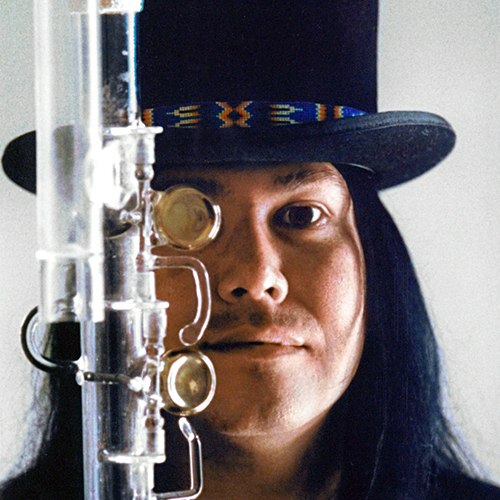
Brent Michael Davids
Fluting Around
Composer and flutist Brent Michael Davids (b. 1959) is a member of the Mohican Nation. Davids earned degrees in both music composition and Native American studies from Arizona State University. His compositions frequently blend traditional classical sounds with the timbres of Native American instruments. Davids’s concert works include We the People, a work for chorus and orchestra composed for the opening of the Smithsonian National Museum of the American Indian. Davids composes for choir as well: one of his recent compositions is Singing for Water, a work for layered chorus reflecting on the struggle of the Native Americans who protested the Dakota Access Pipeline project in 2017.
In this recording, you’ll hear Davids’s 2014 concerto Fluting Around. In his program notes for the piece, Davids explains, “Borrowed from various American Indian traditions of ‘courting flutes,’ Fluting Around is a modern concerto for flute and orchestra. With a bit of humor, Fluting Around celebrates the American Indian courting flute traditions, especially in the third movement, and illustrates that a challenging flute concerto can be both exhilarating and fun for audiences of any culture.”
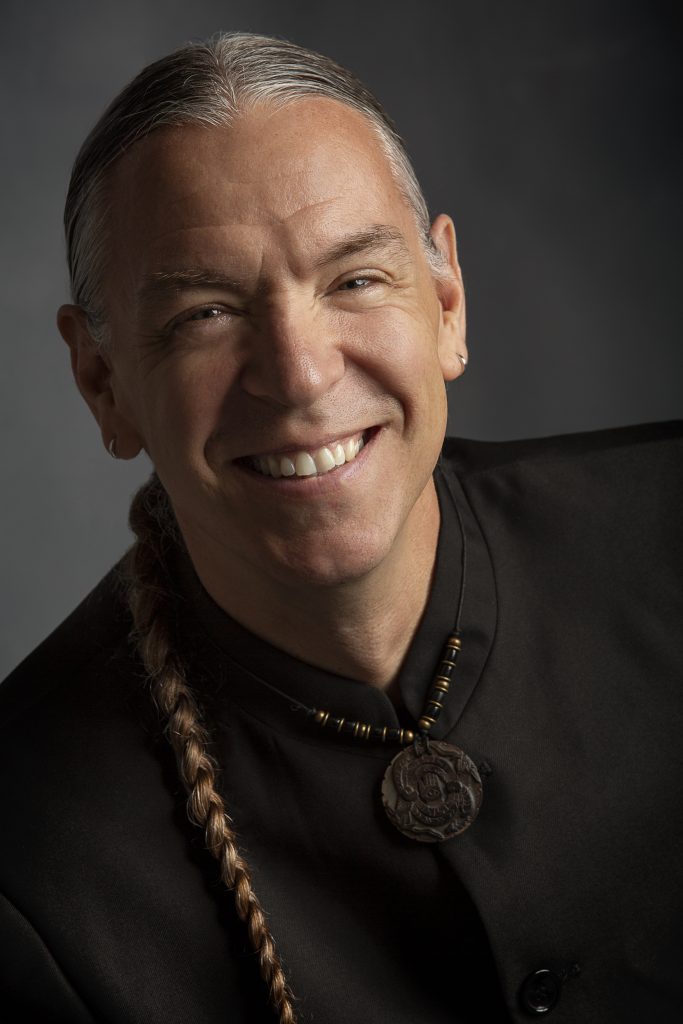
Jerod Impichchaachaaha’ Tate
Pisachi (Reveal)
Composer, educator and pianist Jerod Impichchaachaaha’ Tate (b. 1968) is citizen of the Chickasaw Nation. Tate studied piano at Northwestern University, and piano and composition at the Cleveland Institute of Music. As a classical composer, he has received commissions from the National Symphony Orchestra, the Dallas Symphony Orchestra, the Dale Warland Singers, the American Composers’ Forum, and many more organizations in the United States and beyond.
In this recording, you’ll hear Tate’s Pisachi (Reveal), a work for string quartet commissioned by the contemporary ensemble ETHEL. In his program notes for the work, Tate explains its influences and purpose: “Pisachi (Reveal) is composed in six epitomes, or sections, and was originally commissioned to be performed within a slide show exhibit for ETHEL’s touring project entitled Documerica. Pisachi was conceived to be paired with images of the American Southwest. In doing so, the work draws specifically from Hopi and Pueblo Indian music, rhythms and form. The opening viola solo is a paraphrase of a Pueblo Buffalo Dance and becomes material throughout the work. Later, the work refers to Hopi Buffalo Dance and Elk Dance music. It is the composer’s intent to honor his Southwest Indian cousins through classical repertoire.”
Dawn Avery
Hohonkweta’ka:ionse
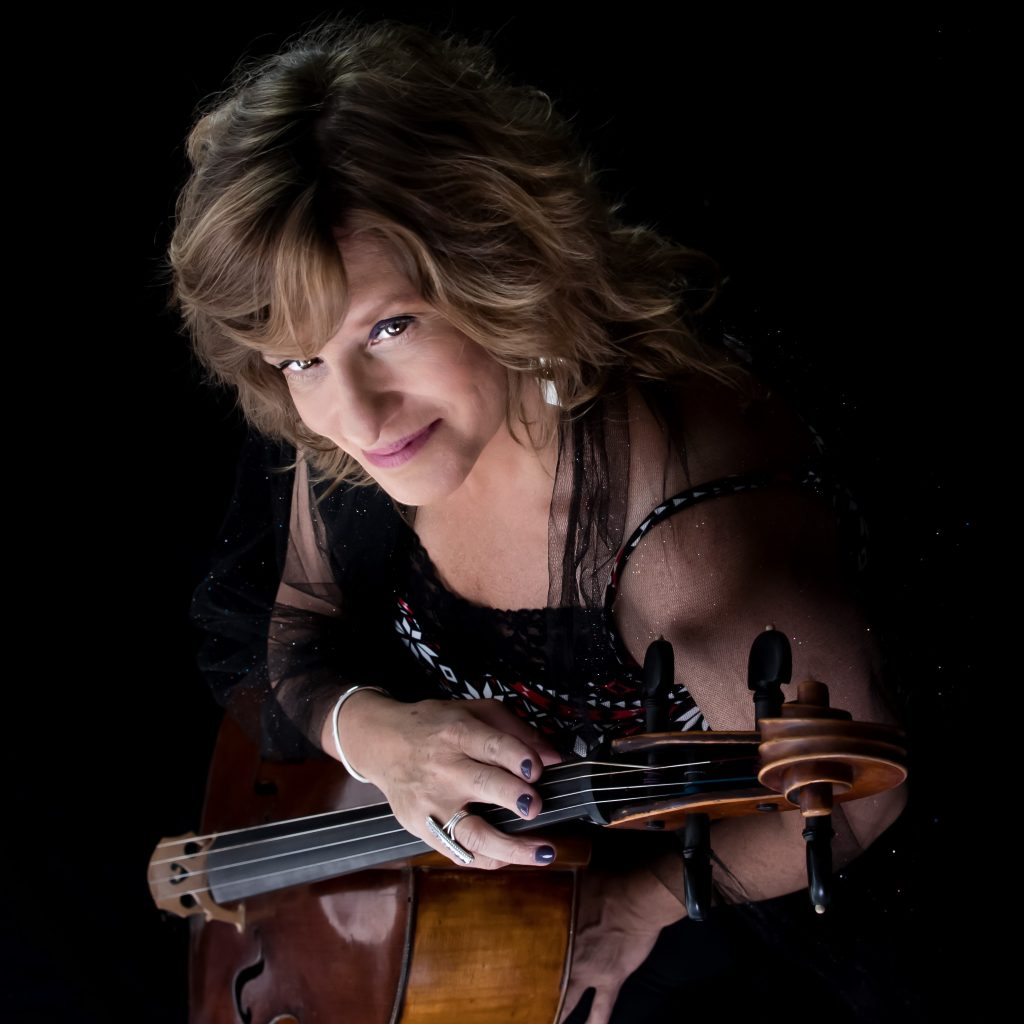
Dawn Avery is a Mohawk cellist, composer, and educator. She holds degrees in music from the Manhattan School of Music and the University of Maryland, and she directs the World Music Program at Montgomery College. As a cellist, Avery moves freely between world, classical, and pop genres, and has collaborated with artists ranging from Carlos Nakai to John Cage to Sting. In 2006, she launched the North Indian American Cello Project, in which she toured and performed cello works by Native American composers, including her own piece for cello and voice entitled Decolonization.
In this recording, you’ll hear Avery’s haunting 2010 composition Hohonkweta’ka:ionse for native flute and string quartet. Avery discusses the work’s origin in her program notes: “The piece was written in honor of our ancestors. Avery started writing the first movement of Hohonkweta’ka:ionse, [the] Mohawk word for ancestors, during a residency at Memorial University in New Foundland. There she learned about the Beothuk, the original aboriginal peoples of the area who were believed to be extinct. Through existing songs, this belief is now being challenged. Traveling along the coast, it seemed that the ancestral voices of these people could be heard in the melodic winds, snow banks, ocean waves and ancient rocks.”

Jeremy Dutcher
Sakomawit
Jeremy Dutcher (b. 1990) is a Canadian tenor, composer, and musicologist who studied music and anthropology at Dalhousie University. He is also a member of the Tobique First Nation in New Brunswick. In 2018, Dutcher released an innovative album entitled Wolastoqiyik Lintuwakonawa, in which he explores the Wolastoq language and music through new compositions. Dutcher embarked upon the project while engaged in musicological work for the Canadian Museum of History: transcribing Wolastoq songs recorded by Native singers in 1907 on wax cylinders. Dutcher explains, “Many of the songs I’d never heard before, because our musical tradition on the East Coast was suppressed by the Canadian Government’s Indian Act.” He adds, “I’m doing this work because there’s only about a hundred Wolastoqey speakers left. It’s crucial for us to make sure that we’re using our language and passing it on to the next generation. If you lose the language, you’re not just losing words; you’re losing an entire way of seeing and experiencing the world from a distinctly indigenous perspective.”
Read other posts by Emma Riggle
Music Researcher & Archivist


