

Anthea Chronicles No. 9: Precious Interactions Beyond the Concerts
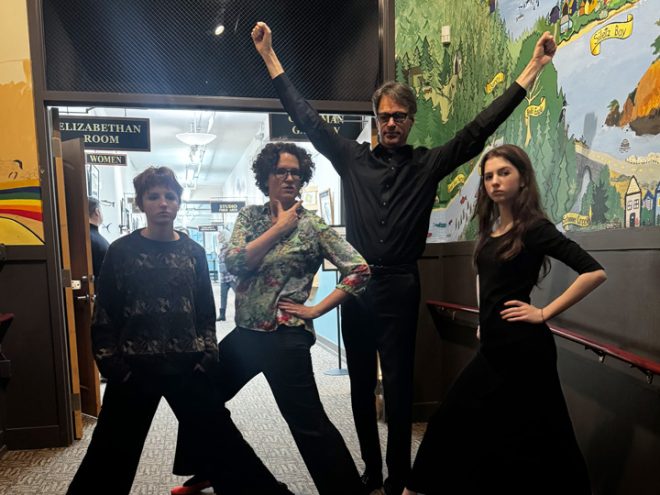
It’s the experiences around concerts that bring a surprising depth to my life. The woman who showed up to a book reading last week with a hand-knitted poncho for me, with a guinea pig pocket; the person who gifted me an antique drum she bought on the Silk Road when she was on Fulbright, simply because she loved the Silk Road chapter from my book.
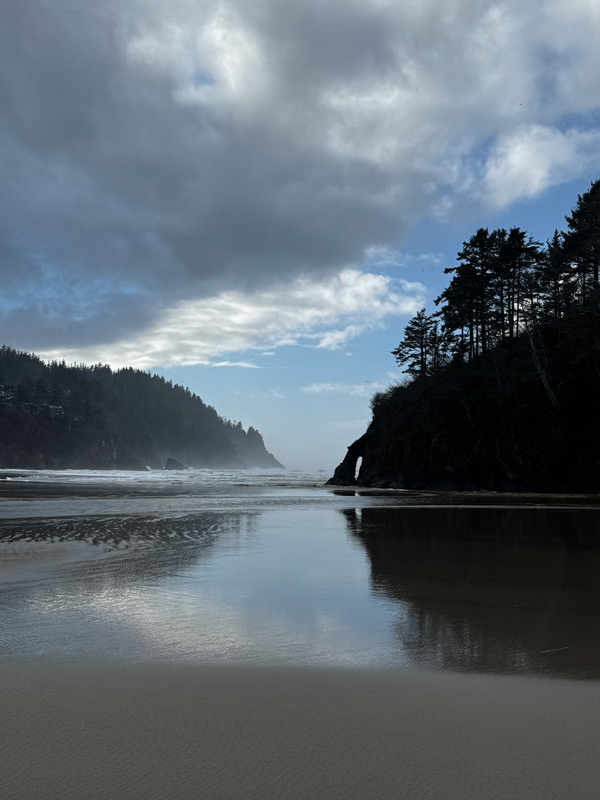
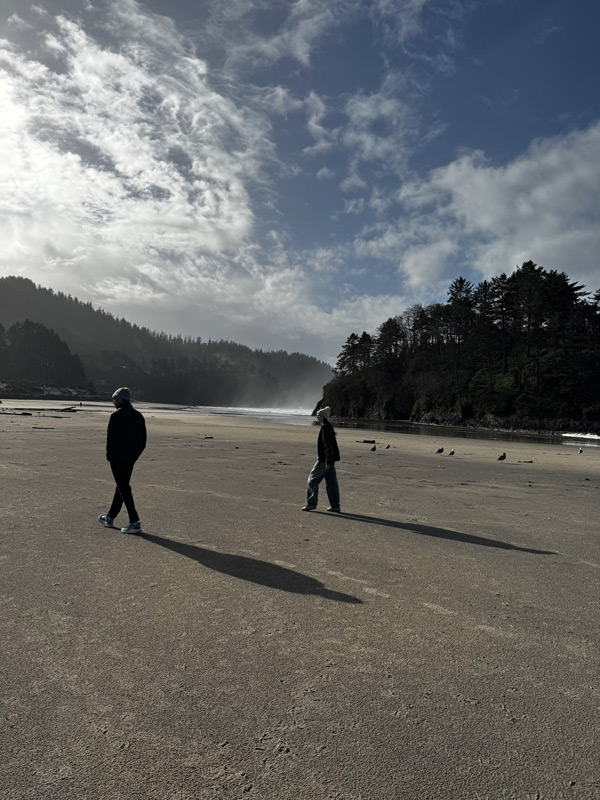
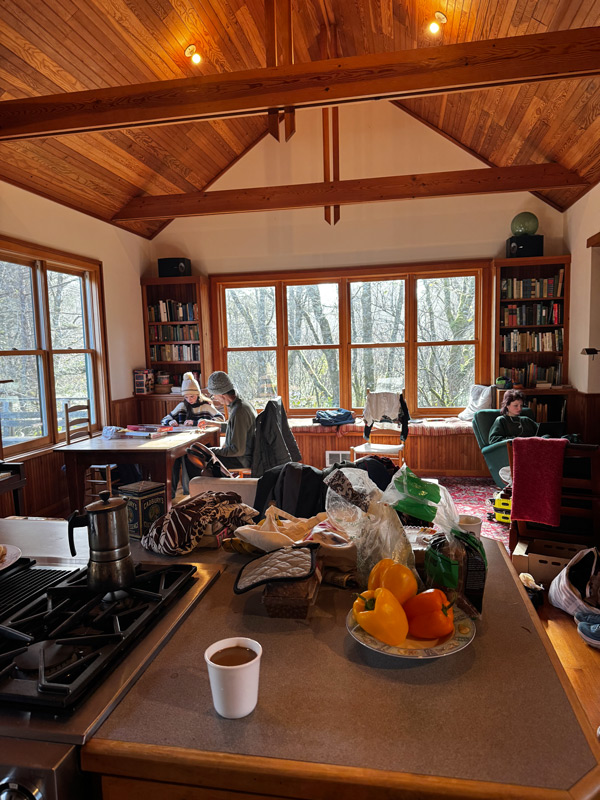
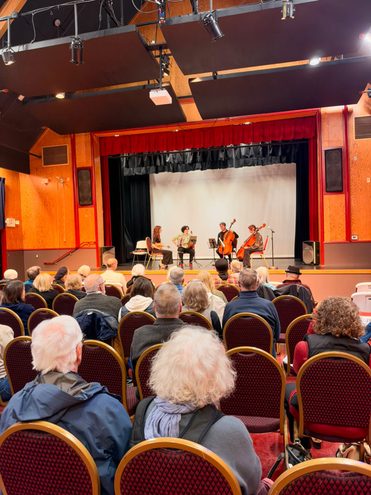
I’m standing in the kitchen of a spacious, pretty cold, rustic cabin on the coast of Oregon. It’s the small, quaint village of Neskowin, where I have been coming to play since the early 2000’s, first as a member of the Amelia Piano Trio, later as Thunder Egg Consort, and now with my solo show and a second concert with my family quartet, the Quartissimos. The concert series is held in a quirky, somewhat ramshackle chapel at the Wi-Ni-Ma Christian Camp, which today is nearly impossible to access because of the overflowing lake. It’s King Tide season now, and with an added winter storm, sneaker waves, flash flooding and unexpected, erratic danger.
We’ve been having such a cozy, Scrabble-and-pancake filled couple of days here, the girls sleeping in a suspended loft over the kitchenette, their hopes of a video game binge clearly dashed as we don’t have a TV; or even Wi-Fi. The cottage is heated by aged wall units, each with their own control dial, and several standing gas heaters. We are bundled and hot-cocoa’ed.
As I am gathering supplies to make peppermint/chocolate crackle cookies, reaching into the lopsided fridge for eggs, I notice some feathers perched on top, and under those, a haphazard stack of booklets – you know the kind that have those black plastic spiral at the end? Very 1980’s. I pull one down, titled “Grandpa Stories,” typed, with a photo of a young boy in front of a log cabin. It’s a diary, memories of a young boy visiting his grandfather’s cabin, retelling stories his grandfather shared. I’m immediately hooked.
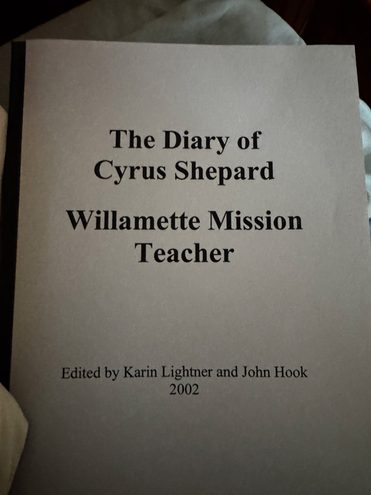
Next in the pile, a volume of letters and diary entries from the first missionaries to the Oregon Territories in 1834. From the East Coast, by train, water, then a harrowing journey with French trappers, all the way to the Willamette Valley. Three men, 14 months, untouchable beauty, wildlife, native peoples, illness, death; and three years later, three brides sent during the First Reinforcement, traveling by boat around the Horn and stopping in the Sandwich Islands (Hawaii). One wife dies before the year is through, alongside her newborn.
The missionaries take care of the native orphans whose parents have died from disease brought by traders and early sailors. Among them, a number of “flathead” children (from the Chinookan peoples), hence the original name, “Flathead Mission.” The children are also unwell, and the diaries are peppered by burials, amputations, and dysentery. There are even three shipwrecked Japanese sailors who become part of the mission. One of the ministers succumbs to scrofula, a type of tuberculosis which claimed indigenous peoples in greater numbers than missionary families. It is 1840.
As I snuggle up in the window nook, watching my older daughter work on her chemistry, my younger daughter and husband battle out their second day of Scrabble. I count myself fortunate to have my health, my family, and my satisfying career. We are off to a home-made dinner at the board president’s house. He’s become a friend, and I’ve been promised lemon rice, a family recipe from his homeland of India. And I hope to also meet the owners of these stacks of journals. I’ll never be wealthy, but the richness of these experiences; that I can pass down to my children.
Read other posts by Anthea Kreston


