
Celebrating Black History Month
Black History Month is a meaningful time to recognize the contributions of African Americans to this country and beyond, including our musical legacy. At All Classical Radio, we’re proud to share a diverse, ever-expanding selection of music by Black artists this month and all year round.
When you tune in this month, here are some of the ways we are celebrating Black musicians:
- THURSDAYS @ THREE – On the January 29th live broadcast, Portland Opera previewed their upcoming production of The Majesty of the Spiritual, an opera highlighting the history of the Spiritual and its influence on American musical genres of all types.
- SUNDAY BRUNCH – On Sunday, February 1st, Kate Remington featured a full menu of music by Black composers and by composers influenced by Black and African culture.
- ON AIR – On Monday, February 2nd, your favorite All Classical hosts presented music by Joseph Bologne, Valerie Coleman, Florence Price, William Grant Still, and more.
- FRIDAY HAPPY HOUR – On Friday, February 6th, Warren Black and Christa Wessel hosted a fun-filled show featuring music by composer, pianist, and native Portlander Phil Moore.
- CLUB MOD – Each Saturday in February, Andrea Murray will feature works about or inspired by Black history. Listen on demand in the audio archive.
- THE SCORE – On February 28th, Edmund Stone presents an episode titled “Stars of Black Cinema,” including Michael B. Jordan in Sinners, Viola Davis in Ma Rainey’s Black Bottom, and more. Listen on demand at thescore.org.
- THE CONCERT HALL – On February 28th, John Pitman’s Saturday evening program will feature music by trailblazing Black composer Florence Price. Listen on demand in the audio archive following the broadcast.
As we celebrate Black History Month and the influence and achievements of Black voices in America, we’d love to highlight five extraordinary musical artists whose works you will hear on All Classical Radio.
Harry T. Burleigh (1866-1949)
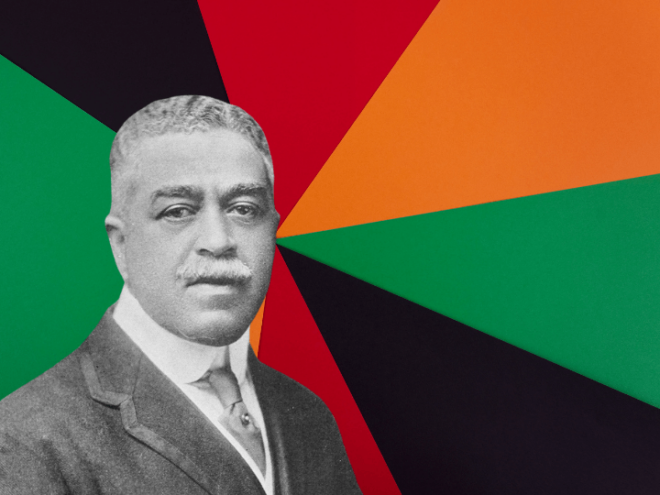
Harry Thacker Burleigh is often overlooked as a formative American composer; however, his influence on the works of those who knew him is immeasurable. Burleigh was born in Erie, Pennsylvania, and, through early exposure to music and his family’s lineage, he learned about African American spirituals. The melodies sung by his enslaved ancestors would become his most significant source of inspiration.
Burleigh received a scholarship to study at the National Conservatory of Music, where he became acquainted with Antonín Dvorák, the Conservatory’s director at the time. Dvorák was fascinated by Burleigh’s seemingly endless knowledge of spirituals and famously wrote themes based on these songs in his “New World” Symphony.
As a composer, Burleigh wrote hundreds of arrangements of spirituals, including “Deep River,” in addition to original songs. His works have forever enriched American classical music and have lifted the spiritual from its horrific past into the light of the concert hall.
James P. Johnson (1894-1955)
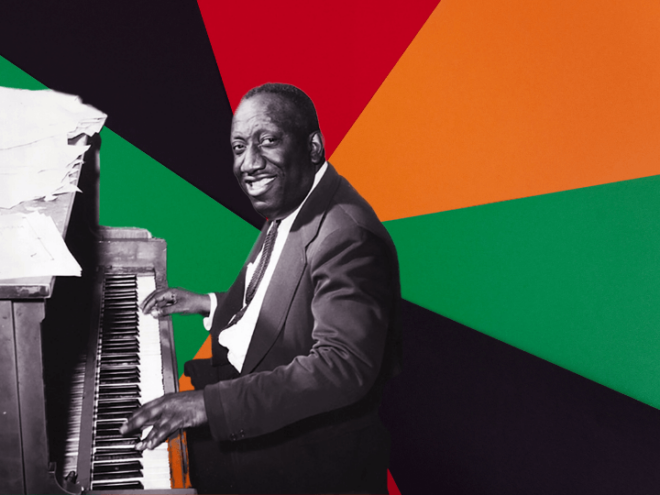
James P. Johnson spent much of his childhood in New Brunswick, New Jersey, where he learned the piano and absorbed the musical influences around him. After his family moved to Manhattan’s San Juan Hill neighborhood when Johnson was a teenager, the young musician began formal study and was exposed to everything from ragtime to Eurocentric classical music. He studied classical repertoire and compositional techniques with Bruto Gianni, who also taught Scott Joplin.
By the 1920s, Johnson had become one of the most significant pianists in New York. He pioneered the Harlem Stride, an improvisational style of jazz piano involving the left hand “striding” large distances up and down the keyboard, made famous in works such as “Caroline Shout” and “Charleston.”
Throughout his career, Johnson constantly sought out a wide variety of skilled musicians to learn from. He explored ways to redefine American classical music through his symphonies, concertos, and other large-scale works.
Julia Perry (1924-1979)
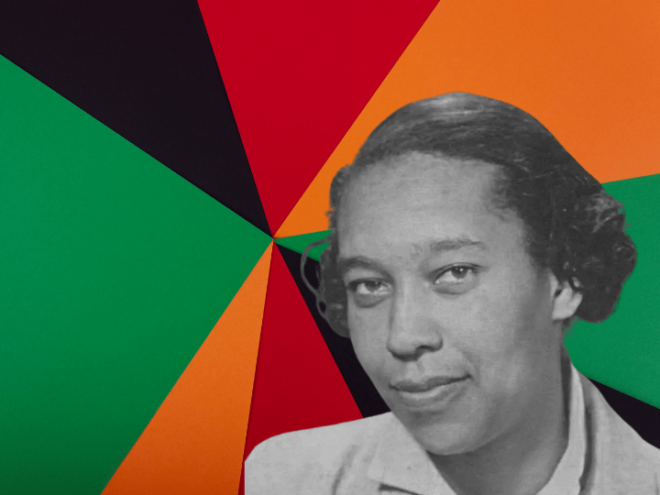
Born in Lexington, Kentucky, Julia Perry studied violin, piano, and singing from an early age. She went on to earn both her Bachelor’s and Master’s Degrees from Westminster Choir College. As an emerging composer and conductor, Perry sought additional training in Europe from Luigi Dallapiccola and Nadia Boulanger.
Early on in her career, Perry was heavily influenced by her Western classical education while still drawing on African American influences, including Spirituals and the blues. However, as the climate around race shifted in the late 1950s and early 1960s, her works became more outwardly expressive of her own experience as a Black woman. She also became bolder in calling out injustices she witnessed.
At 46 years old, Perry suffered a debilitating stroke that paralyzed her right side and made her unable to speak. She taught herself to write with her left hand so she could keep composing. Perry was an incredibly prolific composer; however, much of her work was lost after her death or has yet to be published. Additionally, many of her post-stroke manuscripts have left her advocates unable to read her writing confidently.
Michael Abels (b. 1962)

Michael Abels is a Pulitzer Prize-winning composer known for reworking classical styles by adapting popular mediums. Abels grew up in South Dakota and took piano lessons from a young age. After studying at the University of Southern California and the California Institute for the Arts, Abels established himself as a leading composer of orchestral music.
Abels is best known for his film scores, including the Oscar-winning Get Out, as well as the Pulitzer Prize-winning opera Omar, based on the life of Omar Ibn Said, which he co-composed with Rhiannon Giddens.
In addition to his ever-growing body of work, Abels is the co-founder of the Composers Diversity Collective, an advocacy group that increases the visibility of composers of color in film, gaming, and streaming media.
Jasmine Barnes (b. 1991)
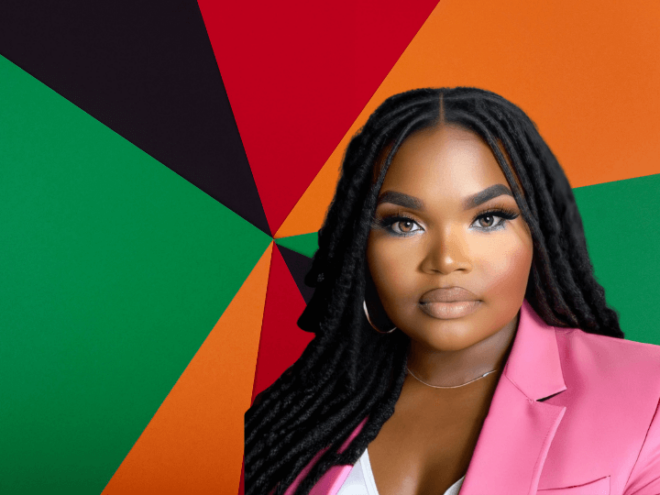
Emmy Award-winning composer and vocalist Jasmine Barnes grew up in Baltimore, where she had access to a wide range of arts programs for young people—something she cites as essential to her ability to pursue a career in music. She has since exploded onto the classical music scene. Barnes’ music is performed worldwide, and she has collaborated with many extraordinary artists, including Lawrence Brownlee, Will Liverman, and Joshua Conyers.
As a composer, Barnes specializes in vocal music, with five operas (currently) under her belt, as well as choral works, chamber music, and art songs. In 2023, she received a Capital Emmy Award for the PBS documentary “Dreamer,” which featured her career and music.
Barnes was one of All Classical Radio’s 2021 Composers in Residence. Her work, Taking Names, was featured on the station’s inaugural album, Amplify, as part of the Recording Inclusivity Initiative. In addition to All Classical, Barnes has held residencies at Opera Theatre of Saint Louis, American Lyric Theater, and Chautauqua Opera.
Keep Learning
Check out these posts from the Arts Blog highlighting the lives of Black musical artists:
- Six Black Composers You Need to Know
- Meet Seven Black Contemporary Composers on All Classical’s Airwaves
- Nine Black Women Who Changed Opera Forever
- Profile: William Grant Still
- Profile: William Levi Dawson
Read other posts by Rebecca Richardson


