Featured image for blog post: Artist in Residence James Shields Takes A Deep Dive Into Baroque Music

James Shields: Deep Dive Into Baroque Music

Featured image for blog post: Artist in Residence James Shields Takes A Deep Dive Into Baroque Music
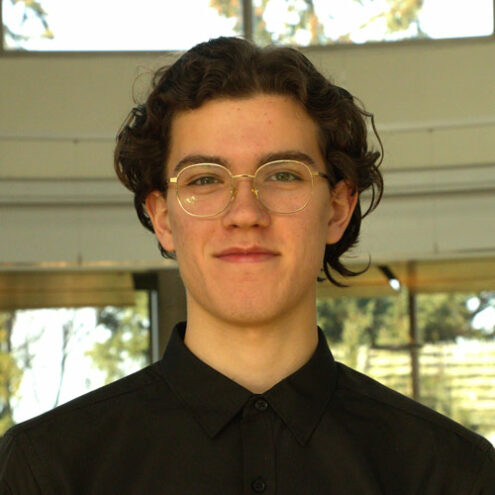
James Shields. Photo by Frankie Tresser.

One half of All Classical Radio’s 2024-2025 Artists in Residence, James Shields, takes a deep dive into the history of Baroque music.

As a clarinet player and a lover of Baroque music, it pains me that my instrument was not fully established during the era of Bach and Vivaldi. The clarinet is generally considered to have come into existence roughly around 1700 and evolved from a wonderful little Baroque instrument called the chalumeau. Composers such as Vivaldi, Telemann, and Graupner wrote for that instrument, which somewhat resembles a recorder with a reed. Both the clarinet and the chalumeau have similar bore designs, and the clarinet’s predecessor makes a remarkably similar sound to the modern clarinet when handled by a skilled musician.

You can learn more about the chalumeau in this YouTube video:

The true clarinet existed during the height of the Baroque Era, but the most well-known composers of the time left us no music for the instrument. So, what’s a Baroque-loving clarinetist to do? First, let’s look at the music of JS Bach, beginning with some unaccompanied music that I have played almost daily for the past 20 years: the six Cello Suites and the six Violin Sonatas and Partitas. These works can be immensely rewarding and powerful educational tools for clarinetists of intermediate and advanced levels, giving both budding and seasoned performers a perfect vehicle to practice tone, legato, articulation, phrasing, rubato, intonation, and more. While many of these movements contain extensive chord writing, most can be readily adapted to the clarinet.

I’ve performed all six Cello Suites on the bass clarinet (gasp!), and I think with a thoughtful approach these masterpieces can come off quite well on the instrument. Suites 1, 2, and 3 are technically more straightforward, in easier keys, and include fewer double and triple stops than the later suites. All three of these earlier suites can provide a great challenge for high school and college aged enthusiasts and are great life-long refresher works for professionals and dedicated amateurs looking to maintain and refine their skills. The final three suites are more challenging. They contain more leaps, more complicated passage work, are longer, and perhaps most challengingly contain much more extensive use of chords. The 6th suite was written for a 5 string “piccolo cello” and as a result has a wider range than the other suites. This presents a unique challenge that will push even many accomplished bass clarinetists to work on refining their high-register finesse.

Hear my rendition of Bach’s Suite No. 1, Mvts 1-3 on YouTube:

Compared to the Cello Suites, the six Violin Sonatas and Partitas are more of a challenge to translate to the clarinet. Of these works, I’ve only publicly performed the Partita in B minor, and it was one of the more difficult challenges I’ve taken on. All six of these works have extensive use of double, triple, and quadruple stops and are generally more virtuosic than the Suites for Cello. Many movements from the Sonatas in G minor and C major, and the Partitas in B minor and D minor, are in my weekly etude rotation. I use these works as the best music to practice evenness of tone, legato, intonation, and the never-ending challenge of creating an inherently engaging performance style that is both clear and subtle. Bach is the best!

While there are many wonderful editions out there prepared specifically for clarinet, I encourage students to use the original scores for cello and violin, rather than adaptations. We can make our own choices on how to roll or break chords that are not possible on the clarinet by looking directly at the source material, rather than assuming the choices of an editor. Many Baroque specialists chose to roll chords even on violin, so I have learned not to lose sleep over it. As far as transposition – who cares? We are playing violin and cello works on the clarinet and bass clarinet, so I think it’s too late for authenticity in certain respects. Clarinetists do need to be able to transpose on sight, so if you really want to play the same sounding pitches as your violinist friends, go ahead and read from the original versions as though you were performing a part for Clarinet in C and you can get some transposition practice while you are at it.

As far as performing other Baroque works on the clarinet, Telemann’s works for chalumeau translate fairly well to the modern clarinet. The Concerto in D minor for 2 chalumeau, strings, and basso continuo can work well on modern instruments. I’ve performed this Concerto several times in what I’d describe as a “middle path” stylistic approach adopting aspects of historically informed performance practice with a mixture of modern and Baroque equipment.

Recently, the acclaimed Swedish Clarinet Soloist Martin Fröst worked with arranger Andreas Tarkmann and Concerto Köln to release a wonderful album of Imaginary Concertos inspired by the question, “What if Vivaldi had written concertos for the clarinet?” The three concertos often draw on Vivaldi’s operatic works, using vocal arias as source material. This approach works fantastically in my opinion, and Tarkmann has created three satisfying and dramatic works that show off the clarinet’s blend of virtuosic and vocal qualities.

My general feeling about Baroque music, or music in general, is that it’s all fair game! Whether you’re looking for a tool to push yourself in the practice room or some new music for the concert stage, I think the clarinet can mix with Baroque Era music brilliantly. With a little care and attention to style, audiences will appreciate your adventures with adapting the music from the pre-clarinet era for this versatile instrument.


Featured image for blog post: Artist in Residence James Shields Takes A Deep Dive Into Baroque Music
Photo by Frankie Tresser.

ABOUT

Clarinetist James Shields is one half of All Classical Radio’s 2024-2025 Artists in Residence, along with his wife, violinist Emily Cole.

James joined the Oregon Symphony in 2016 after holding similar positions in the Canadian Opera Company and the New Mexico Philharmonic. A Juilliard graduate, he has appeared as soloist with the Oregon Symphony, New Mexico Philharmonic, and Music in the Mountains (CO), and has performed as guest principal clarinet of the Philadelphia Orchestra and the Malaysian Philharmonic.

In addition to his performing activities, James holds a master’s degree in Composition and Music Theory from the University of New Mexico and composes regularly.

Learn more about Emily and James on the All Classical Arts Blog.

Featured image for Arts Blog post: Brandi Parisi Interviews Opera in the Park's Ashley Clark

Brandi Parisi Interviews Opera in the Park’s Ashley Clark

Featured image for Arts Blog post: Brandi Parisi Interviews Opera in the Park's Ashley Clark
Ashley Clark, photo by Rebecca Zeller

Opera in the Park has featured free world-class opera performances for the Portland community for over two decades. They recently announced the appointment of their first-ever Executive Director, Ashley Clark.

Ashley has a very special relationship with the organization. All Classical host Brand Parisi spoke with Ashley about her new role, and Opera in the Park’s upcoming production of Bizet’s Carmen on Sunday, July 27, 2025, at Portland’s Peninsula Park. Learn more at operaintheparkportland.org.

All Classical Radio is the Official Media Sponsor for Opera in the Park.

Hear Brandi’s conversation with Ashley below.

Featured image for Scenes from Celilo Falls, photo by Joe Cantrell

Oregon ArtsWatch: MusicWatch Monthly – Summer of feasts

Featured image for LIVE BROADCAST: “Celilo Falls” by Nancy Ives on All Classical Radio and next RII album - blog post

By Matthew Neil Andrews for Oregon ArtsWatch

Oregon Symphony presents “Celilo Falls” (and also Rimsky-Korsakov’s “Scheherazade”) in Salem on June 6 and in Portland on June 7, 8, and 9, 2025. All Classical Radio’s live broadcast starts at 7:15 on Monday, June 9, 2025, and will be archived for two weeks at allclassical.org.

Keep reading at orartswatch.org.

Featured image: Composer Nancy Ives, 'Celilo Falls’

Portland Tribune: Oregon Symphony performs unique concert of ‘Scheherazade and Celilo Falls’

Composer Nancy Ives, 'Celilo Falls’

By Jason Vondersmith for Portland Tribune

On June 9, 2025, All Classical Radio is excited to present a very special live broadcast of composer Nancy Ives’s Celilo Falls, inviting local listeners and those around the world to experience this historic performance in a virtual setting.

Read more at portlandtribune.com.


Read All Classical Radio’s full announcement about this important broadcast on the Arts Blog.

Featured image for John Pitman Reviews: Huang Ruo's 'An American Soldier'

John Pitman Reviews: Huang Ruo’s ‘An American Soldier’

Huang Ruo's 'An American Soldier'

All Classical Radio’s Director of Programming John Pitman’s latest Arts Blog interview is a timely one, in conjunction with Asian American and Pacific Islander Heritage Month and Memorial Day.

Composer, pianist, and vocalist Huang Ruo’s latest recording An American Soldier is a powerful and moving opera based on the true story of a young Chinese American Army solider named Pvt. Danny Chen, who was found dead at his base in Afghanistan in 2011, and the ensuing courts-martial of Chen’s fellow soldiers.

John’s interview is with composer Huang Ruo and his longtime creative partner librettist David Hwang (M. Butterfly, Yellow Face, and the Broadway production of Tarzan among others), who share their interactions with Danny’s mother and father in the musical telling of this tragic but also important American story.

Hear their conversation below:


An American Soldier is now available digitally in collaboration with the American Composers Orchestra and Platoon. For more, visit platoon.lnk.to/anamericansoldier.


Featured image for LIVE BROADCAST: “Celilo Falls” by Nancy Ives on All Classical Radio and next RII album - blog post

LIVE BROADCAST: “Celilo Falls” by Nancy Ives on All Classical Radio and next RII album

Featured image for LIVE BROADCAST: “Celilo Falls” by Nancy Ives on All Classical Radio and next RII album - blog post
Photo by Joe Cantrell

On June 9, 2025, All Classical Radio proudly presented a very special live broadcast from downtown Portland, inviting listeners locally and around the world to experience a historic broadcast of Nancy Ives’ Celilo Falls, performed by the Oregon Symphony under the direction of David Danzmayr. The program included a brand-new arrangement for full orchestra of Ives’ captivating and moving work, paired with Rimsky-Korsakov’s beloved Scheherazade. Ives, a composer and cellist who has been called “one of Oregon’s most prominent and accomplished classical musicians,” (The Oregonian) is the principal cello for the Oregon Symphony.

Photographer Joe Cantrell shared a collection of images to accompany the broadcast. See the Scenes of Celilo.


Celilo Falls, which was premiered in its original arrangement in June 2022, is a multimedia musical experience composed in collaboration with Indigenous storyteller Ed Edmo and Native American photographer Joe Cantrell. This live broadcast will expand access to this powerful piece for listeners in the Pacific Northwest, across the United States, and globally through All Classical’s online stream. The piece will then be syndicated to radio stations across the United States at no cost.

Hosted by All Classical Radio’s Brandi Parisi and Christa Wessel, and produced by veteran journalist Tess Vigeland and President & CEO Suzanne Nance, the live broadcast aired at 7:15 PM PT on Monday, June 9, 2025, on 89.9 FM in Portland/Vancouver, and worldwide at allclassical.org.

After the live broadcast and national syndication, the recording of Celilo Falls will be included in All Classical Radio’s third Recording Inclusivity Initiative album:

“It’s an honor to amplify Celilo Falls for our community and the world. Thanks to our partnership with the Oregon Symphony and Navona Records, Celilo Falls will be featured on All Classical Radio’s third Recording Inclusivity Initiative album, in 2026, highlighting three women composers.” – Suzanne Nance

Learn more about All Classical Radio’s award-winning Recording Inclusivity Initiative at recordinginclusivity.allclassical.org.


ABOUT CELILO FALLS

A photo by Native American photographer Joe Cantrell
Photo by Joe Cantrell

Celilo, Oregon, was likely the oldest continuously inhabited community on the North American continent until 1957, when the completion of the Dalles Dam submerged the falls and nearby settlements. Native Americans lost not only their livelihoods but their cultural home for millennia.

This multimedia work depicts the history of Celilo Falls and the Native communities who have lived there for millennia – from the Missoula floods that formed the gorge, to the inundation of the Falls in 1957 and the present day experience of those who’ve lost so much. View a stunning collection of images by Joe Cantrell to enhance your listening experience.

Many Oregonians are unaware of what was there, its significance for Native peoples, and what was lost; Ives’ piece shines a light on writer/storyteller Ed Edmo and those who still suffer from that loss, using a compelling combination of music, text, and imagery to bring a wide audience together in a shared experience.

This sonic and visual tapestry of evocative music, personal recollections, and immersive imagery conveys Native peoples’ depth of presence in this land and the universal power of place.

Courtesy of composer Nancy Ives, nancyives.com


HOSTS & ARTISTS

Host Brandi Parisi

BRANDI PARISI, HOST

As Radio Network Program Director, Brandi Parisi serves as host and producer of several programs on All Classical Radio. She regularly curates and shares music that brings together a variety of regional performances by local orchestras, chamber groups, choirs, soloists, festivals, and even up and coming new artists. You can hear her most mornings and afternoons during the week, and Sundays at 1:00 PM PT on Played in Oregon.

Brandi is also your regular host of All Classical Radio’s Oregon Symphony radio broadcasts and often hosts the symphony’s pre-concert talks.

Host Christa Wessel

CHRISTA WESSEL, HOST

When Christa was younger, she predicted that one day she would become a professional French horn player, but the detour to radio feels somehow fated. Christa loves sharing her enthusiasm for classical music! She’s been with All Classical Radio since 2007 and truly enjoys hosting Thursdays @ Three, co-hosting Friday Happy Hour with Warren Black, and more.

One of her favorite things about All Classical Radio is the diverse array of music and programming. Christa most enjoys sharing handcrafted playlists and programs you’ll hear nowhere else. Plus, she likes spending time with friends – like our community of listeners.

Composer and cellist Nancy Ives

NANCY IVES, COMPOSER

Composer and cellist Nancy Ives is a musical icon, having “built a career of such spectacular diversity that no summation will do her achievements justice.” (Artslandia). She offers both depth and approachability with enduring and eloquent music inspired by the natural world. Many of Ives’ projects involve working with Indigenous communities to authentically capture, amplify, and relay their stories to wider audiences, including the multimedia orchestral work Celilo Falls. With a DMA from the Manhattan School of Music, Ives is the Principal Cellist with the Oregon Symphony and serves on the Board of Directors for All Classical Radio.

Learn more at nancyives.com.

Ed Edmo, Shoshone-Bannock poet, playwright, performer, traditional storyteller

ED EDMO, POET/STORYTELLER

Ed Edmo is a Shoshone-Bannock poet, playwright, performer, traditional storyteller, tour guide, and lecturer on Northwest tribal culture. Edmo offers guided tours to sacred Native sites, conducts workshops, and offers traditional storytelling performances, dramatic monologues, and lectures on issues such as cultural understanding, substance abuse, and mental health. Edmo is a published short story writer, poet, and playwright, and serves as a consultant to the Smithsonian Museum of the American Indian.

Joe Martin Cantrell, Cherokee photographer

JOE CANTRELL, PHOTOGRAPHER

Cherokee photographer Joe Martin Cantrell uses his personal depth of perspective in combination with sophisticated techniques to make visible the things that often go unseen. After two tours as a Navy officer in Vietnam, Cantrell worked as a photojournalist for UPI, Black Star, Time, Newsweek, The New York Times, The Washington Post, and hundreds of other publications worldwide. He has taught at Oregon School of Arts and Crafts, Pacific Northwest College of Art, Mount Hood Community College, and was Artist in Residence at Crow’s Shadow Institute. Cantrell carries the name of an ancestor who died on the Trail of Tears and offers his own meaningful legacy through generous contributions to benefit humanitarian causes and the arts.

Cantrell was one of over 40 creatives of the Pacific Northwest profiles in All Classical Radio’s Artist Anthology. Learn more about Joe Cantrell and the Artist Anthology at anthology.allclassical.org.

Logo: Oregon Symphony

OREGON SYMPHONY

The Grammy-nominated Oregon Symphony ranks as one of America’s major orchestras. Led by Music Director David Danzmayr, the OSO presents more than 100 concerts annually, in tandem with award-winning education and community engagement programs. Entering its 128th season in 2025/2026, the Oregon Symphony is the oldest orchestra west of the Mississippi.

Learn more about Oregon Symphony, and this historic performance of Celilo Falls, at orsymphony.org.

Rep. Suzanne Bonamici, D-Beaverton, stands in the middle of a group of arts leaders at a press conference to defend the NEA and NEH from drastic budget cuts. Photo by Garrett Andrews.

Oregon Business Magazine: Bonamici, Arts Leaders Declare ‘State Of Emergency’

Photo by Garrett Andrews.

By Garrett Andrews for Oregon Business Magazine

Leaders in the statewide arts community met Monday to discuss approaches to cuts to the National Endowment for the Arts and National Endowment for the Humanities. Afterward, they addressed reporters to raise alarm and show a united front against the Trump Administration’s funding cuts.

“I’m here to say that Donald Trump and the unelected billionaire Elon Musk do not understand the value of arts and culture,” said Rep. Suzanne Bonamici, whose office convened the meeting at the studio of All Classical Radio in the KOIN Tower. “(They) do not understand the importance of differing opinions, and, in fact, are trying to censor opinions. And they do not understand the separation of powers our founding fathers embedded in the Constitution, and we’re here to say that we will not stand by as they attack Oregon’s arts community and culture community.”

Keep reading at oregonbusiness.com.

Rep. Suzanne Bonamici, D-Beaverton, stands in the middle of a group of arts leaders at a press conference to defend the NEA and NEH from drastic budget cuts. Photo by Elizabeth Hayes.

Portland Business Journal: Oregon Arts groups, Bonamici declare ‘state of emergency’ amid NEA, NEH cuts

Rep. Suzanne Bonamici, D-Beaverton, stands in the middle of a group of arts leaders at a press conference to defend the NEA and NEH from drastic budget cuts. Photo by Elizabeth Hayes.

By for Elizabeth Hayes for Portland Business Journal

At a Monday press conference, the art groups announced plans for a series of art summits to “strategize a new plan.”

Keep reading at bizjournals.com.

Feature image for blog post: All Classical Radio: For Humans, By Humans

All Classical Radio: For Humans, By Humans

When you listen to All Classical Radio, you hear handcrafted radio programming that is locally produced and community focused. In collaboration with students from Portland State University’s Branded Media Course and the PSU School of Film, All Classical invites you to explore what it means to make radio for humans, by humans, with a brief and powerful behind-the-scenes look at the station’s approach to independent classical music public radio.

Screencap from the video All Classical Radio: For Humans, By Humans of host John Pitman

“What [All Classical Radio hosts share] of themselves…is what I think helps to create a narrative and a relationship with our listeners” says Director of Music and Programming John Pitman in the video.

“Connection is hard to come by,” adds Radio Network Program Director Brandi Parisi. “[All Classical] fills these gaps in places that people really need. We get letters from folks who say, ‘I feel like I know you,’ ‘I feel like you’re my friend.’ There’s nothing more human than that.”

Screencap from the video All Classical Radio: For Humans, By Humans of host Brandi Parisi

Watch below, or on All Classical Radio’s YouTube channel

Creators and contributors:

  • Audrey Weller: Editor, Producer
  • Maddie Kasberger: Producer, Co-Director
  • Tomas Penner: Cinematographer, Co-Director
  • James Shasteen: Production Assistant, Co-Director
  • Michael Stringfield: Adjunct Assistant Professor, Branded Media, PSU School of Film
  • John Pitman: Director of Music and Programming, All Classical Radio
  • Brandi Parisi: Radio Network Program Director, All Classical Radio

About All Classical Radio’s Arts Mentorship and Education Initiatives

This project with PSU and the PSU School of Film highlights All Classical Radio’s commitment to community collaboration, arts and media education, and supporting the next generation of creatives and leaders. The station’s robust mentorship and education initiatives include the unique Young Artist in Residence and Youth Ambassadors programs, paid internships, arts journalism and productino mentorships, and more. Its International Children’s Arts Network provides access to music and the arts for children, families, and educators 24/7 at icanradio.org.

Thank you to Michael Stringfield, Portland State University Adjunct Assistant Professor, Branded Media, PSU School of Film, and all of the brilliant PSU students involved in bringing this video to life.

Featured image for John Pitman Reviews: Yevgeny Sudbin's 'Ver La Flamme'

John Pitman Reviews: Yevgeny Sudbin’s ‘Ver La Flamme’

Album cover for Yevgeny Sudbin's 'Ver La Flamme'

Renowned for his interpretations of the music of Russian composer and mystic, Alexander Scriabin, celebrated pianist Yevgeny Sudbin is host John Pitman’s latest guest for this Arts Blog interview.

On Sudbin’s newest album, Ver La Flamme (Toward the Flame), the pianist shares his deep knowledge and appreciation for the music of the early 20th century composer, and his imaginative and thought-provoking piano pieces. The album includes preludes, études, sonatas, and fantasies.

In his conversation with All Classical Radio’s Director of Programming, John Pitman, Sudbin shares some fascinating stories about Alexander Scriabin’s wild ideas about the direction of his music, and his audiences. Listening to these works reminds us why the composer and his music truly feel “outside of time.”

Hear Pitman’s conversation with Sudbin below:


Yevgeny Sudbin’s Ver La Flamme is available May 9, 2025, on BIS Records.


KQAC 89.9 Portland/Vancouver
KQOC 88.1 Newport/Lincoln City
KQHR 88.1 Hood River/The Dalles
KQHR 96.3 Columbia Gorge East
KQMI 88.9 Manzanita
KSLC 90.3 McMinnville
95.7 FM Corvallis/Flynn