The Score's Edmund Stone

Celebrating 20 Years of The Score

The Score's Edmund Stone

Congratulations to The Score‘s Edmund Stone on a monumental 20 years on the air, sharing movie music with listeners from coast to coast! 👏

First launched in April 2006, The Score with Edmund Stone is a weekly celebration of symphonic music in film and other media. For generations, the music featured in major motion pictures, on television, and in video games, has been a common musical experience for countless listeners and a meaningful introduction to classical music. Each week on The Score, Edmund shares a fascinating cultural adventure through one of America’s most-loved art forms. With insightful thematic episodes and exclusive interviews with composers and filmmakers, Edmund takes us to the movies like only he can.

Produced in the studios of All Classical Radio in Portland, Oregon, The Score has been received with admiration and increasing success for two decades. Host Edmund Stone is a classically-trained English actor, whose background includes a variety of stage and screen roles. Edmund is the ideal host — warm, knowledgeable, and passionate.

Listen to The Score every Saturday and Sunday at 2:00 PM PT on All Classical Radio. Tune in at 89.9 FM in Portland, Oregon, or from anywhere on All Classical’s website or free mobile app.

Stream episodes on demand for two weeks after broadcast and read exclusive film reviews by Edmund Stone at thescore.org.


SHARE THE SCORE WITH YOUR LISTENERS

The Score with Edmund Stone is available for syndication for public radio stations. NPR news compatible, the program works equally well for music and mixed format stations – with a new show each week and/or holiday and special occasion features.

Visit allclassical.org/contact-management to learn more about sharing The Score with your audiences.


Painting of a Schubertiade

Lieder – A Celebration of Poetry through Song

Painting of a Schubertiade

April is National Poetry Month, a widespread, vibrant celebration honoring poetry’s impact on our culture.

At All Classical Radio, we engage with the poetic brilliance of the past and present every day through the music we play on air.

Poetry has long been a wellspring of inspiration for composers. In this post, we’re going to look at a beloved genre of classical music that exquisitely interweaves music and poetry – Lieder, or “songs” in German.

Art Song, a genre of classical music written for voice and piano accompaniment, became increasingly popular in the 19th century for three primary reasons:

  1. Thanks to advancements in technology and production, more people than ever could afford to bring the keyboard instrument into their homes.
  2. A growing, musically literate middle class craved music that could be performed at home or in more intimate settings than the concert hall.
  3. The 19th century was also a reawakening of emotional expression across all art forms, not least music and poetry.

Let’s take a dive into some examples of Lieder that helped epitomize this fusion of poetry and music, ultimately elevating both art forms.


“Erlkönig” (Elf King) by Franz Schubert (1797-1828)

Wer reitet so spät durch Nacht und Wind?
Who rides so late through the night and wind?
Es ist der Vater mit seinem Kind:
It is the father with his child.
Er hat den Knaben wohl in dem Arm,
He has the boy in his arms;
Er fasst ihn sicher, er hält ihn warm.
he holds him safely, he keeps him warm.

– Johann Wolfgang von Goethe (trans. Richard Wigmore)

We can’t discuss Lieder without considering the composer who catapulted the genre into popularity. Franz Schubert’s 600+ songs laid the groundwork for Lieder to flourish in the 19th century through his sensitive text-setting and his addition of “voice” to his piano accompaniments. He was a voracious reader and sought to elevate the poets of his time through music, including Johann Wolfgang von Goethe. Schubert admired the writer and set over 70 of his poems to music.

Goethe is seen as the start of a new era in German poetry, leading the way with verses full of personal expression and embracing all the elements now associated with the Romantic Era: nature, fantasy, love, and longing.

Schubert wrote the fantastical song “Erlkönig” (Elf King) at just 18 years old, inspired by Goethe’s great ballad poem of the same name. Goethe based his poem on a Danish tale of the “Ellerkrone” (Elf Woman), a figure of death. In the song, Schubert uses a relentless piano accompaniment not only to illustrate the horse’s galloping but also to convey the poem’s ominous mood. Goethe’s poem is recited by four different characters: the narrator, the young boy, the father, and the Elf King. Schubert writes each with their own vocal style, and the pace of the piano only slows at the story’s horrific ending.

Read the whole poem with English translation here.


Dichterliebe (A Poet’s Love) by Robert Schumann (1810-1856)

Im wunderschönen Monat Mai,
In the wondrous month of May,
Als alle Knospen sprangen,
When all the buds burst into bloom,
Da ist in meinem Herzen
Then it was that in my heart
Die Liebe aufgegangen.
Love began to burgeon.

– Heinrich Heine (trans. Richard Stokes)

In the generation following Schubert, composers such as Robert Schumann took up the torch in the development of Lieder, leaning into the piano’s full expression as an equal participant in the song’s storytelling. Schumann also had a love of poetry from an early age and seemed intuitively able to elevate the words of German poets through music.

Schumann’s song cycle, Dichterliebe (A Poet’s Love), remains one of his most influential pieces of music. A song cycle, an emerging genre in the 19th century, takes the idea of an Art Song and expands it into a musical novella. Song cycles consist of a group of individual art songs that are narratively connected and performed together as a multi-movement work. To some, the song cycle symbolizes the ultimate synthesis of music and poetry.

For Dichterliebe, Schumann chose 16 poems from Heinrich Heine’s Lyrisches Intermezzo, a collection of 66 songs following an intimate emotional journey of love and heartbreak. Heine’s poetry is known for its bittersweet quality, exploring the discord between idealism and reality.

Read the English translations of all songs from this cycle here.


“Nachtwanderer” (Night Wanderer) by Fanny Mendelssohn Hensel (1805-1847)

Ich wandre durch die stille Nacht,
I wander through the quiet night,
Da schleicht der Mond so heimlich sacht
the moon floats so secretly and gently,
Oft aus der dunklen Wolkenhülle,
often emerging from a dark cover of clouds.
Und hin und her im Tal,
And here and there in the valley,
Erwacht die Nachtigall
a nightingale awakens
Dann wieder alles grau und stille.
but then all is gray and still again.

– Joseph von Eichendorff (trans. Emily Ezust)

Women composers of the 19th century were barred from access to the same educational institutions and career opportunities as their male counterparts. Consequently, they often turned to writing music that could be enjoyed in intimate salon settings—a perfect setting for Lieder—rather than a public concert hall. However, despite their exclusion from public acknowledgement, women composers such as Fanny Mendelssohn Hensel (sister of Felix Mendelssohn) played a pivotal role in the development of Lieder.

Hensel hosted a weekly salon at her home in Berlin, which became a cultural hub in its own right. At these salons, performances of both her own works and those of other artists would take place. And like many of her songwriting contemporaries, Hensel gravitated towards well-known poets of the time, as seen in her song “Nachtwanderer” (Night Wanderer), which sets evocative poetry by Joseph von Eichendorff.

In “Nachtwanderer,” Hensel not only conjures the poetry’s nocturnal setting through expressive piano accompaniment but also fuses the voice and piano parts together so that they are nearly one and the same. The pianist isn’t supporting the vocalist’s poetic expression; rather, it’s an equal “voice” in bringing Eichendorff’s words to life.

Read Eichendorff’s poem in its entirety with English translation here.


“Feldeinsamkeit” (Alone in Fields) by Johannes Brahms (1833-1897)

Ich ruhe still im hohen grünen Gras
I rest at peace in tall green grass
Und sende lange meinen Blick nach oben,
And gaze steadily aloft,
Von Grillen rings umschwirrt ohn’ Unterlaß,
Surrounded by unceasing crickets,
Von Himmelsbläue wundersam umwoben.
Wondrously interwoven with blue sky.

– Hermann Allmers (trans. Richard Stokes)

Johannes Brahms is undeniably one of the most beloved composers of the 19th century, though his orchestral music has long overshadowed his contributions to Art Song. Nonetheless, he holds a pivotal role in the history of the genre. His musical style seamlessly carried over into his songs, including his expansive, elastic phrasing and harmonic richness.

Unlike Schubert, Schumann, and Hensel, Brahms typically favored lesser-known poets when composing Lieder. He also had a keen interest in folksong, evident in both his songwriting and instrumental works. The poetry of Hermann Allmers didn’t enjoy the same compositional frenzy as many of his German contemporaries; however, Brahms’ setting of his poem “Feldeinsamkeit” (Alone in Fields) is nothing short of exquisite.

 In “Feldeinsamkeit,” Brahms doesn’t use the piano as a character in the story but rather to evoke the serenity of the narrator’s surroundings. Through a seemingly simple accompaniment, Brahms brings to life the gentle breeze against soft grass, the drifting white clouds, and the profound sense of peace expressed in Allmers’ poem.

Read the whole poem with English translation here.


“Auch kleine Dinge…” (Even Small Things…) by Hugo Wolf (1860-1903)

Auch kleine Dinge können uns entzücken,
Even small things can delight us,
Auch kleine Dinge können teuer sein.
Even small things can be precious.
Bedenkt, wie gern wir uns mit Perlen schmücken;
Think how gladly we deck ourselves with pearls;
Sie werden schwer bezahlt und sind nur klein.
They fetch a great price but are only small.

– Paul Heyse (trans. Richard Stokes)

Hugo Wolf referred to his Lieder as “poems for voice and piano,” and viewed song composition as poetic translation. As the turn of the century approached, composers increasingly turned to large-scale works as a testament to their legacy. In Wolf’s case, however, he took his inclination for songwriting and made it into large, dramatic works for the concert hall by creating hefty song collections organized by the poetry they used.

One such work, Italienisches Liederbuch (Italian Songbook), is a substantial collection of 46 Lieder setting poems from Paul Heyse’s anthology of Italian folk poems translated into German. Heyse, a Novel Prize-winning writer, was known not only for his own writings but also for his translations of writings and folk songs written in languages other than German.

The first song featured in Wolf’s Italienisches Liederbuch, “Auch kleine Dinge…” (Even Small Things…), is a rispetto—an eight-line poem with a specific rhyme scheme (ABABCCDD). In keeping with the poem’s spirit of appreciating the “small things,” Wolf keeps the interwoven voice and piano parts restrained and delicate while maintaining sincere emotional expression.

Read the poem in its entirety with English translation here.


Keep Celebrating Poetry Month


Pink and blue illustration of Emilie Mayer portrait

Six Women Composers You Haven’t Heard Of

Women composers have long been a vital part of All Classical Radio’s daily playlist. As concert programs become more diverse and inclusive, we are proud to highlight these lesser-known names and showcase the depth of their compositional talent. In honor of Women’s History Month, we’re putting the spotlight on six women composers you may not have heard of but who truly deserve to become household names. Their stories offer lessons in perseverance, resilience, and ingenuity. Keep reading to learn more!

Emilie Mayer (1812-1883)

Black and white sketch of Emilie Mayer

Emilie Mayer was one of the most prolific German composers of her time, and yet her name rarely appears on concert programs today. Mayer took piano lessons from an early age. Though she had few examples to draw on as a woman, she decided, as a young adult, to pursue composition as a professional career.

Because women were barred from professional studies at most institutions, Mayer sought musical tutoring through private study. One of her most impactful mentors was composer Carl Loewe. Ultimately settling in Berlin, Mayer produced hundreds of well-regarded symphonies, chamber music, songs, and more. At first, she published her works under the name E. Mayer; however, once she began using her full name, Emilie Mayer, responses to her music became more critical.

Nonetheless, her career blossomed as she refused to relinquish her ambition. Her music was performed across Europe. Unfortunately, following her death, there was no one to carry on her legacy, and her music fell into obscurity.


Luise Adolpha Le Beau (1850-1927)

Black and white image of Luise Adolpha Le Beau

Like Emilie Mayer, German composer Luise Adolpha Le Beau showed musical ability from an early age while learning to play the piano. She began composing during childhood, and as a concert pianist, she made her professional debut at 18. For a short period of time, Le Beau studied with Clara Schumann. Shortly after, she moved to Munich to study with Josef Rheinberger.

As a composer, Le Beau wrote a wide range of works, including orchestral music, operas, choral works, songs, piano solos, and chamber pieces. Unfortunately, because of her gender, Le Beau’s works were often met with skepticism, and career opportunities proved hard to come by. In her autobiography, she wrote, “It is difficult to come to terms with such circumstances when one has dedicated her entire life to a profession, but one must be satisfied with the consciousness of having helped to build the temple of art according to one’s best knowledge and with honest intentions.” As she fought to have her music performed, Le Beau championed equal opportunities for young female musicians.


Guadalupe Olmedo (1853-1889)

Guadalupe Olmedo was a Mexican composer whose musical trajectory paved the way for future women in the region. Olmedo showed exceptional potential on the piano from a young age. When she was only 12 years old, the ruler of the (short-lived) Mexican Empire requested a performance by the young pianist at the National Palace.

In 1875, Olmedo became the first woman composer to graduate from Mexico’s National Conservatory of Music. As she continued writing music, she was largely drawn to works for piano, voice, or small ensembles. In 1887, Olmedo married composer (and her former teacher) Melesio Morales, and it seemed as though she had a bright future ahead of her. Unfortunately, Olmedo died in 1889 at just 35, leaving the world to wonder what more she could have accomplished.


Henriette Renié (1875-1956)

Black and white photo of Henriette Renie standing next to a harp

French composer Henriette Renié is best remembered as a virtuoso harpist, though her accomplishments as a composer should not be overlooked. Renié began studying the harp at such a young age that her father had to engineer extensions for the instrument to help her reach the pedals. She began her performance career at 11, after winning first prize for harp at the Paris Conservatory.

As a composer, Renié wrote almost exclusively for the harp (or music that prominently featured the harp). In doing so, she helped elevate the instrument’s status and establish the harp as a solo concert instrument. As a respected teacher, Renié codified a method for playing the harp, called Méthode complete de harpe (Complete Method for Harp), which is still used today. She was never granted a professorship at the Paris Conservatory, but many of her students attended the institution where she had begun her professional trajectory.


Charlotte Sohy (1887-1955)

Black and white photo of Charlotte Sohy

Charlotte Sohy was a French composer who was incredibly influential during her lifetime but has since fallen into relative obscurity. Sohy completed her formal training at the Schola Cantorum, where she studied under Vincent d’Indy. While at the Schola Cantorum, she met her future husband, composer Marcel Labey. The couple enjoyed an unusually fruitful, collaborative relationship (for the time) – they both worked as musical professionals, while raising seven children, and frequently contributed to and advocated for each other’s compositions.

Sohy published 35 works, including a symphony inspired by World War I, an opera, chamber music, songs, and more. To avoid prejudice due to her sex, Sohy used her grandfather’s name, Charles Sohy, as a pseudonym.

Fun fact – Sohy’s cousin was fellow composer Louis Durey. Durey was a member of Les Six, a group of six composers who rebelled against the Romanticism and Impressionism that peaked around the turn of the 20th century. Sohy herself was friends with composers Mel Bonis and Nadia Boulanger.


Madeleine Dring (1923-1977)

Black and white headshot of Madeleine Dring
Photo of Madeleine Dring via the British Music Collection

Madeleine Dring was an English composer, actress, singer, and pianist. Born into a creative family, Dring won a scholarship to study violin and piano at the Royal College of Music at just 10 years old. She continued her education there through her teens, studying composition under Herbert Howells and Ralph Vaughan Williams. While music proved to be a creative outlet for Dring from an early age, she also had a deep love of theatre and concurrently studied drama and mime.

As a composer, Dring often intertwined her love of music and theater, writing incidental music and songs for stage works that she would also perform in. She wrote many pieces for her husband, Roger Lord, who was principal oboist of the London Symphony Orchestra. She was known for her sense of wit, which regularly made its way into her scores. Unfortunately, following her death, much of Dring’s unpublished music has not been found.


Keep Learning

If you enjoyed this post, check out a few more from the Arts Blog celebrating the lives of women composers:

Featured image for John Pitman Reviews: Randall Scotting's 'Divine Impresario'

John Pitman Reviews: Randall Scotting’s ‘Divine Impresario’

Featured image for John Pitman Reviews: Randall Scotting's 'Divine Impresario'

Randall Scotting, who hails from rural Colorado originally, is an internationally known singer of that very specialized and cultivated vocal range known as the countertenor. He’s already well established in the opera world, singing music which was originally written for the superstars of the Baroque, the castrati.

Scotting’s fourth and newest album is the result of years of research into one of history’s top castrati, Nicolini.

In this interview with All Classical’s John Pitman, Scotting uncovers the fascinating world of these unique singers and the dazzling, pyrotechnic and ultimately very moving, music that was tailor-made for them. Scotting brings Nicolini and his music to life in his new album, Divine Impresario.

Randall Scotting’s Divine Impresario is available March 17, 2026, on Signum Classics.


All Classical Radio host Lisa Lipton by Christine Dong

Lisa Lipton Spotlights PSU’s ‘Spring Awakening’

All Classical Radio host Lisa Lipton by Christine Dong
Lisa Lipton by Christine Dong

All Classical Radio host Lisa Lipton sat down to chat with Zach Galatis, flute section member, piccolo soloist with the Oregon Symphony, and Assistant Professor of Flute at Portland State University (PSU) to hear more about his role as music director behind PSU’s first ever full-scale musical production, Spring Awakening.

Best known in the region for his dynamic work as a performer and educator, Zach shares how he brings his deep musical insight to this Tony Award–winning rock musical that explores adolescence, identity, and the struggle to be heard. In their conversation below, we hear them dive into what makes this milestone production so meaningful for PSU’s School of Music & Theater and how the cast and creative team are bringing this bold, coming of age show to life.


Based on a play by Frank Wedekind, and directed by Theresa Robbins Dudeck, PSU’s production of Spring Awakening runs February 27 – March 7, 2026, at Lincoln Performance Hall. Tickets and more at pdx.edu.


All Classical Radio host Kate Remington by Daniel Stark

Get to Know Sunday Brunch Host, Kate Remington

All Classical Radio host Kate Remington by Daniel Stark
Kate Remington by Daniel Stark

All Classical Radio is delighted to welcome Kate Remington to the On Air team, as the host of Sunday Brunch.

Tune in Sundays from 10:00 AM to 12:00 PM PT to enjoy delicious music with Kate from all around the world, or listen On Demand for a Sunday Brunch experience, any time of the week.

We asked Kate to tell us a bit more about herself, her musical experiences, and her inspirations as an on air host and music enthusiast.

Read on to get to know Kate Remington, and tune in Sundays at 10:00 AM for her weekly program Sunday Brunch.


Tell us about your first or most memorable concert.

Kate: I’m a huge Alfred Brendel fan and was lucky enough to attend many of his concerts, including one in Vienna with conductor Simon Rattle and the Vienna Philharmonic when they recorded Beethoven’s Piano Concertos 1 and 4. The collaboration between all of them was beyond incredible.

What is your go-to dish for a great breakfast/brunch with friends?

Kate: Not healthy in any way, but I’m a big fan of biscuits and gravy. They’re not a thing in New England, or Wisconsin where I grew up, so I’m making up for lost time now that I’m in Oregon.

How would you describe All Classical Radio’s Sunday Brunch?

Kate: The thing I love most is how Sunday Brunch can take you all over the world, and back and forth through time. Every week is an adventure!

Do you play an instrument?

Kate: Yes, I began studying piano when I was eight, and was a piano major in college. I was planning to be a conductor, but radio was much more fun.

You are a fan of video game music, what is it about this subgenre that speaks to you? Do you have a favorite video game/soundtrack?

Kate: Game music is very powerful. It can give you some extra confidence to do battle with a fierce enemy, or provide a meaningful context while you’re exploring an environment. One of the soundtracks I have on regular rotation is Jessica Curry’s So Let Us Melt. Its joyful choruses lift my spirits every time I listen to it.

If you were stranded on a desert island and could only bring the library of one composer, who’s catalogue would you bring with you?

Kate: It would have to be Beethoven. His music is so personal, and covers the whole range of human experience

Any advice for someone who is interested in listening to more classical music, but is not sure where to “start?”

Kate: It’s a deep ocean, to be sure! Honestly, I’d suggest listening to All Classical Radio because we present such a diverse range of music that spans centuries, and if one composer’s music isn’t doing it for you, there’ll be something else coming along that you’ll probably love. And you can find out all the details of performers and titles on the playlists on our website, and find more music by the composers you’re interested in.


Daisy image for All Classical Radio's Sunday Brunch 2026

Welcome Kate!

She’ll save you a seat at the Sunday Brunch table, every Sunday from 10:00 AM to 12:00 PM PT on All Classical Radio.

Or stream past episodes On Demand for two weeks following each broadcast.


Featured image for All Classical Radio's 2026 Valentine's Day special, Love Story, image of a pink cityscape with hearts in the sky

LOVE STORY, A special Valentine’s Day program

Featured image for All Classical Radio's 2026 Valentine's Day special, Love Story, image of a pink cityscape with hearts in the sky

Let your heart crescendo with All Classical Radio for a very special radio program. Join hosts Coty Raven Morris and Edmund Stone for our heartfelt gift to you: LOVE STORY. Listen on demand now through February 26, 2026.

From sweeping symphonies to tender overtures, every note tells a story of love worth tuning in for. This special program is filled with harmony, passion, and some of classical music’s greatest romances, and it’s all made possible by your support. Thank you for keeping love in the airwaves on All Classical Radio.

Read on for a closer look at some of the tales you will hear on LOVE STORY.

Robert Schumann & Clara Wieck

Drawing of Robert and Clara Schumann

Robert and Clara first met 13 years before their marriage. When Clara was just 8 years old—and already a virtuoso on the piano herself—the teenaged Robert began taking piano lessons with Clara’s father. Over the next several years, the two musicians grew to know each other well. In time, friendship turned into love. Robert and Clara’s courtship was long and not without challenges. Clara’s father vehemently opposed the match, and only after suing him were they finally able to make things official.

As a wedding gift, Robert compiled 26 songs into a collection called “Myrtles,” named after the herb associated with the Ancient Greek goddess, Aphrodite. Myrtle was also traditionally included in German bridal bouquets.

Ludwig van Beethoven & his “Immortal Beloved”

Drawing of Beethoven

During the summer of 1812, Ludwig van Beethoven penned a letter that would unleash decades, if not centuries, of debate. The letter’s recipient was notably referred to as “Immortal Beloved,” though no actual name was ever used. The document was never sent and only discovered after the composer’s death. We may never know who Beethoven intended to bestow such sweet words, but the mystery around this romantic gesture is tantalizing…

Gustav Mahler & Alma Schindler

Black and white photo of Gustav and Alma

Did you know that Gustav Mahler was not only a composer of massive symphonic works but also a hopeless romantic? The courtship of Mahler and the promising young composer and socialite, Alma Schindler, was quick and passionate. The two met at a dinner party, and Mahler was immediately infatuated with “the most beautiful woman in Vienna.” Within weeks of meeting, the couple was married in an intimate private ceremony.

Around the same time of the couple’s marriage, Mahler was working on his fifth symphony. The fourth movement, called “Adagietto,” may be one of the most romantic pieces of orchestral music ever written. No text accompanies this piece, yet it still contains an exquisite level of poetic expression. Gustav even sent Alma the score to this movement as a love letter, for what communicates affection more completely than music, especially for a composer?

Benjamin Britten & Peter Pears

Color photo of Britten and Pears
Image source: Britten Pears Arts

The relationship between Benjamin Britten and Peter Pears is one for the ages. The two met through a mutual friend and remained together for nearly 40 years, until Britten’s death. While they could never publicly acknowledge their romantic relationship – they managed to build a rich and fulfilling life together. Letter writing was a regular form of communication. Britten and Pears left behind hundreds of handwritten documents as part of their romantic legacy. As a professional singer, Pears also became something of a muse for Britten and inspired many of the composer’s best-known works.

Leoš Janáček & Kamila Stösslová

Black and white photo of Janacek and Stosslova
Image source: The Arts Fuse

Leoš Janáček was 63 years old when we first met a 25-year-old woman named Kamila Stösslová. Janáček quickly became enamored with Kamila, obsessively writing to her on a regular basis and incorporating visions of her into his music. She was reportedly flattered by the composer’s affection. The problem, however, was that both Janáček and Stösslová were already married… to other people!

Kamila remained loyal to her husband, while remaining in touch with Leoš. He, on the other hand, would use his yearning for his unattainable love interest to fuel his writing. Over the next decade, Stösslová inspired some of his most famous pieces of music.

Thank you to CREO Chocolate

Logo for CREO Chocolate, proud sponsor of All Classical Radio's LOVE STORY

LOVE STORY and all of the handcrafted programming on All Classical Radio is made possible by listener support.

This special program is generously sponsored by CREO Chocolate. An award-winning small-batch chocolate factory and tasting room in the Lloyd district of Portland, Oregon, CREO Chocolate sources their beans directly from small farmers and craft with detailed attention to bring out interesting flavors. They offer high-quality products and tasting experiences.

Learn more at creochocolate.com.

This blog post was written in collaboration with All Classical’s Winter/Spring 2025 intern, Andrew Jenks.

Featured image for Celebrating Black History Month 2026

Celebrating Black History Month

Black History Month is a meaningful time to recognize the contributions of African Americans to this country and beyond, including our musical legacy. At All Classical Radio, we’re proud to share a diverse, ever-expanding selection of music by Black artists this month and all year round.

When you tune in this month, here are some of the ways we are celebrating Black musicians:

  • THURSDAYS @ THREE – On the January 29th live broadcast, Portland Opera previewed their upcoming production of The Majesty of the Spiritual, an opera highlighting the history of the Spiritual and its influence on American musical genres of all types.

  • SUNDAY BRUNCH – On Sunday, February 1st, Kate Remington featured a full menu of music by Black composers and by composers influenced by Black and African culture.

  • ON AIR – On Monday, February 2nd, your favorite All Classical hosts presented music by Joseph Bologne, Valerie Coleman, Florence Price, William Grant Still, and more.

  • FRIDAY HAPPY HOUR – On Friday, February 6th, Warren Black and Christa Wessel hosted a fun-filled show featuring music by composer, pianist, and native Portlander Phil Moore.

  • THE SCORE – On February 28th, Edmund Stone presents an episode titled “Stars of Black Cinema,” including Michael B. Jordan in Sinners, Viola Davis in Ma Rainey’s Black Bottom, and more. Listen on demand at thescore.org.


As we celebrate Black History Month and the influence and achievements of Black voices in America, we’d love to highlight five extraordinary musical artists whose works you will hear on All Classical Radio.

Harry T. Burleigh (1866-1949)

photo of Harry Burleigh against a black, red, orange, and green background

Harry Thacker Burleigh is often overlooked as a formative American composer; however, his influence on the works of those who knew him is immeasurable. Burleigh was born in Erie, Pennsylvania, and, through early exposure to music and his family’s lineage, he learned about African American spirituals. The melodies sung by his enslaved ancestors would become his most significant source of inspiration.

Burleigh received a scholarship to study at the National Conservatory of Music, where he became acquainted with Antonín Dvorák, the Conservatory’s director at the time. Dvorák was fascinated by Burleigh’s seemingly endless knowledge of spirituals and famously wrote themes based on these songs in his “New World” Symphony.  

As a composer, Burleigh wrote hundreds of arrangements of spirituals, including “Deep River,” in addition to original songs. His works have forever enriched American classical music and have lifted the spiritual from its horrific past into the light of the concert hall.


James P. Johnson (1894-1955)

photo of James P. Johnson against a black, red, orange, and green background

James P. Johnson spent much of his childhood in New Brunswick, New Jersey, where he learned the piano and absorbed the musical influences around him. After his family moved to Manhattan’s San Juan Hill neighborhood when Johnson was a teenager, the young musician began formal study and was exposed to everything from ragtime to Eurocentric classical music. He studied classical repertoire and compositional techniques with Bruto Gianni, who also taught Scott Joplin.
By the 1920s, Johnson had become one of the most significant pianists in New York. He pioneered the Harlem Stride, an improvisational style of jazz piano involving the left hand “striding” large distances up and down the keyboard, made famous in works such as “Caroline Shout” and “Charleston.”

Throughout his career, Johnson constantly sought out a wide variety of skilled musicians to learn from. He explored ways to redefine American classical music through his symphonies, concertos, and other large-scale works.


Julia Perry (1924-1979)

photo of Julia Perry against a black, red, orange, and green background

Born in Lexington, Kentucky, Julia Perry studied violin, piano, and singing from an early age. She went on to earn both her Bachelor’s and Master’s Degrees from Westminster Choir College. As an emerging composer and conductor, Perry sought additional training in Europe from Luigi Dallapiccola and Nadia Boulanger.

Early on in her career, Perry was heavily influenced by her Western classical education while still drawing on African American influences, including Spirituals and the blues. However, as the climate around race shifted in the late 1950s and early 1960s, her works became more outwardly expressive of her own experience as a Black woman. She also became bolder in calling out injustices she witnessed.
At 46 years old, Perry suffered a debilitating stroke that paralyzed her right side and made her unable to speak. She taught herself to write with her left hand so she could keep composing. Perry was an incredibly prolific composer; however, much of her work was lost after her death or has yet to be published. Additionally, many of her post-stroke manuscripts have left her advocates unable to read her writing confidently.


Michael Abels (b. 1962)

photo of Michael Abels against a black, red, orange, and green background

Michael Abels is a Pulitzer Prize-winning composer known for reworking classical styles by adapting popular mediums. Abels grew up in South Dakota and took piano lessons from a young age. After studying at the University of Southern California and the California Institute for the Arts, Abels established himself as a leading composer of orchestral music.  

Abels is best known for his film scores, including the Oscar-winning Get Out, as well as the Pulitzer Prize-winning opera Omar, based on the life of Omar Ibn Said, which he co-composed with Rhiannon Giddens.

In addition to his ever-growing body of work, Abels is the co-founder of the Composers Diversity Collective, an advocacy group that increases the visibility of composers of color in film, gaming, and streaming media.


Jasmine Barnes (b. 1991)

photo of Jasmine Barnes against a black, red, orange, and green background

Emmy Award-winning composer and vocalist Jasmine Barnes grew up in Baltimore, where she had access to a wide range of arts programs for young people—something she cites as essential to her ability to pursue a career in music. She has since exploded onto the classical music scene. Barnes’ music is performed worldwide, and she has collaborated with many extraordinary artists, including Lawrence Brownlee, Will Liverman, and Joshua Conyers.

As a composer, Barnes specializes in vocal music, with five operas (currently) under her belt, as well as choral works, chamber music, and art songs. In 2023, she received a Capital Emmy Award for the PBS documentary “Dreamer,” which featured her career and music.

Barnes was one of All Classical Radio’s 2021 Composers in Residence. Her work, Taking Names, was featured on the station’s inaugural album, Amplify, as part of the Recording Inclusivity Initiative. In addition to All Classical, Barnes has held residencies at Opera Theatre of Saint Louis, American Lyric Theater, and Chautauqua Opera.


Keep Learning

Check out these posts from the Arts Blog highlighting the lives of Black musical artists:


Former All Classical Radio intern Cindy Flores in the Salem Reporter (RACHEL ALEXANDER/Salem Reporter)

Salem Reporter: McKay mariachi teacher plans statewide festival, grows new music program

Former All Classical Radio intern Cindy Flores (RACHEL ALEXANDER/Salem Reporter)
Photo credit: Rachel Alexander for the Salem Reporter

Salem Reporter by Rachel Alexander

Former All Classical Radio intern Cindy Flores was featured in the Salem Reporter for her work leading McKay High School’s innovative mariachi music program. Way to go, Cindy! 👏

Flores is the first music teacher in the Salem-Keizer School District dedicated full-time to mariachi and other Mexican music traditions. Her work is split across three schools in northeast Salem, with mornings at McKay and afternoons at Waldo and Stephens middle schools. She teaches about 40 middle school students.

Keep reading at salemreporter.com.

Featured image for KGW's Hello, Rose City: Meet the New CEO & President of All Classical Radio, Fred Child

KGW’s Hello, Rose City: Meet the New President & CEO of All Classical Radio, Fred Child

Featured image for KGW's Hello, Rose City: Meet the New CEO & President of All Classical Radio, Fred Child

KGW’s Hello, Rose City

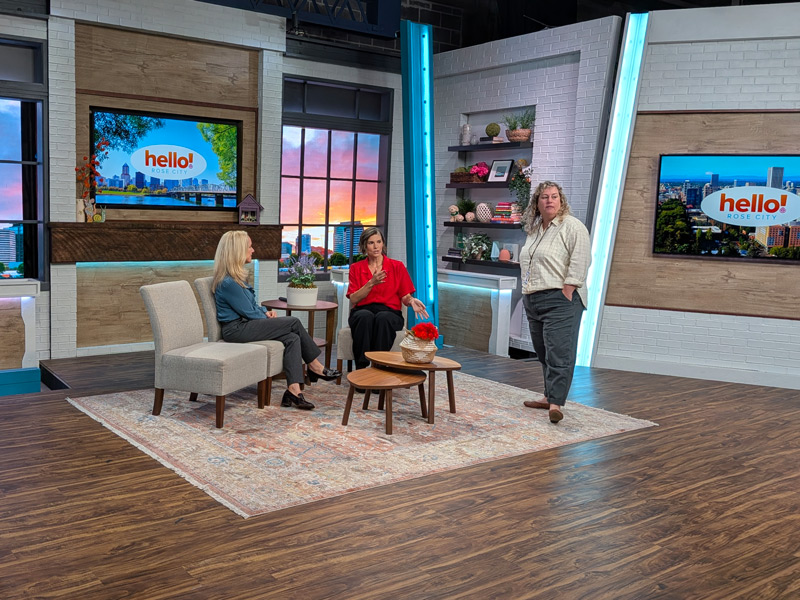
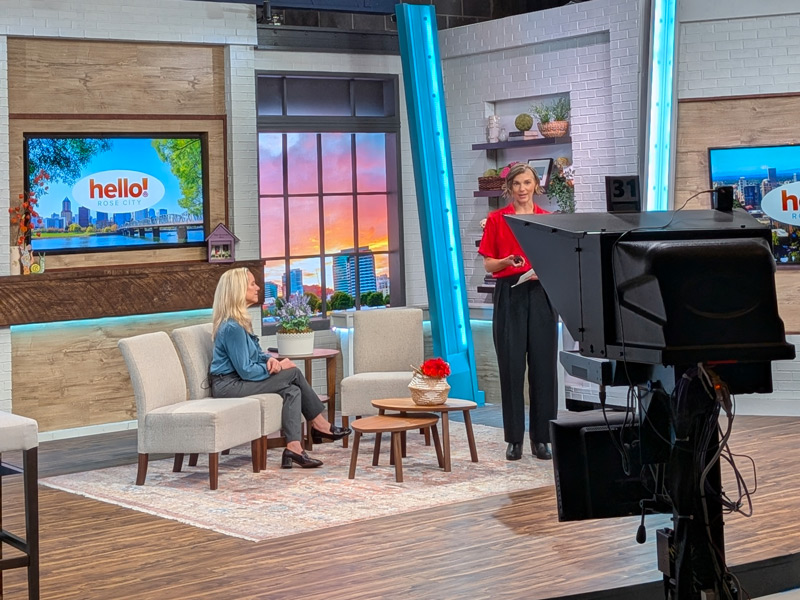
Thank you to KGW host Lacey Evans and the entire team for having Fred Child, All Classical Radio’s new President & CEO, on Hello, Rose City.

Find behind-the-scenes pics and watch the segment below to learn more about Fred and all of the exciting things coming up on All Classical.

Learn more at kgw.com


KQAC 89.9 Portland/Vancouver
KQOC 88.1 Newport/Lincoln City
KQHR 88.1 Hood River/The Dalles
KQHR 96.3 Columbia Gorge East
KQMI 88.9 Manzanita
KSLC 90.3 McMinnville
95.7 FM Corvallis/Flynn