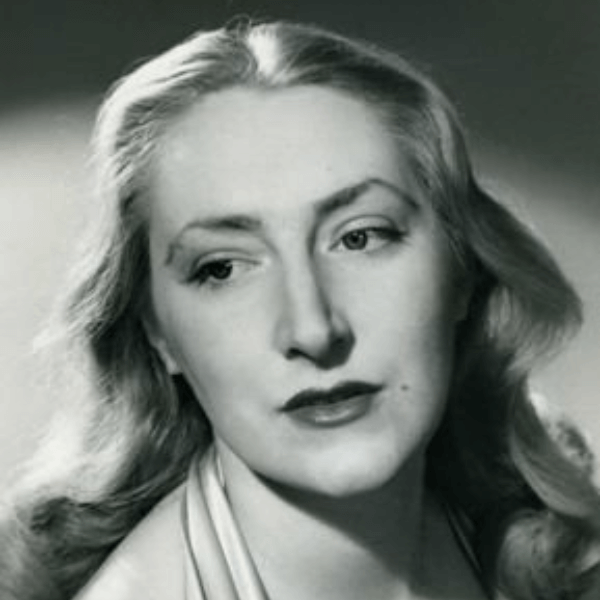
Featured image for John Pitman Reviews: Gautier Capuçon's Gaïa

John Pitman Reviews: Gautier Capuçon’s Gaïa

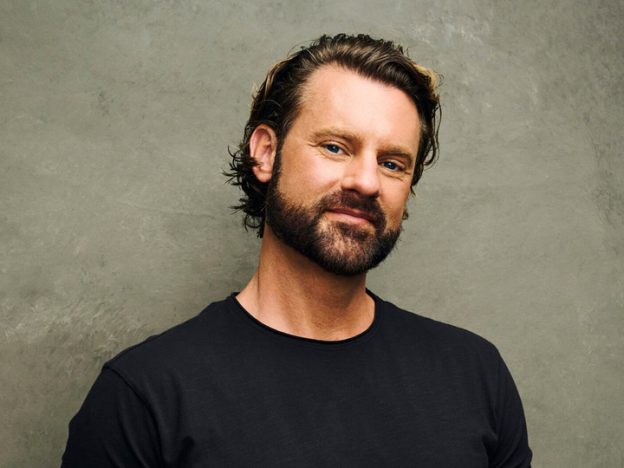
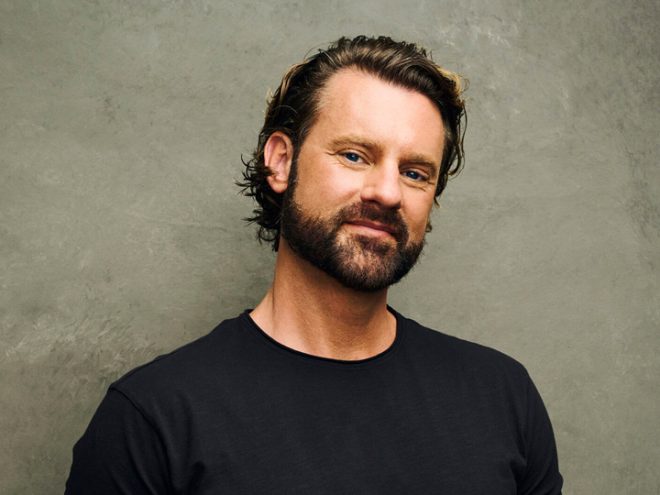
Cellist Gautier Capuçon, photographed by M. Bertrand Delapierre. Courtesy of artist's website.
Cellist Gautier Capuçon, photographed by M. Bertrand Delapierre. Courtesy of artist’s website.

French classical cellist Gautier Capuçon and his instrument becomes the voice of the Earth in an inspired new album of world premiere recordings in Gaïa. Uniting seventeen original contributions by sixteen contemporary composers, his new project sets out to explore humanity’s relationship to nature through a multifaceted lens, drawing from different musical genres, aesthetics, and cultural influences as well as the formidable contrasts of the natural world.

Taking its name from the Greek goddess of the Earth and Mother of all life, Gaïa showcases diverse new works by artists you hear on All Classical Radio regularly, such as Max Richter, Ludovico Einaudi, and Joe Hisaishi – as well as emerging talents: Armand Amar, Jasmine Barnes, Olivia Belli, Quenton Blache, Michael Canitrot, JB Dunckel, Missy Mazzoli, Gabriela Montero, Nico Muhly, Xavier Foley, and Ayanna Witter-Johnson.

All Classical Radio’s Director of Music & Programming, John Pitman, recently spoke with Capuçon about the cellist’s passion for music, concern for the earth in the age of climate change, and a love of doing “crazy things,” such as climbing the French Alps near where he grew up. Hear their conversation below, and keep an ear out for the unique sound of the sirens of the gendarmes (so you know he’s calling from Paris!).


Gautier Capuçon’s bold, emotional, and multi-dimensional project, Gaïa, is available now on Warner Classics.


Portland Business Journal: Meet the new CEO of a Portland broadcaster with international reach

Fred Child, president and CEO of All Classical Radio, stands in front of a wall of CDs at the station's headquarters in KOIN Tower. Photo courtesy of Portland Business Journal.
Photo courtesy of Portland Business Journal.

Portland Business Journal by Elizabeth Hayes

Fred Child, President & CEO of All Classical Radio, stands in front of a wall of CDs at the station’s headquarters in KOIN Tower.

After a classical radio career that took him to New York, Fred Child is back in his hometown as CEO of Portland’s All Classical Radio.

“I’m proud of the work I did as a national host and feel extraordinarily lucky to work with so many of my musical heroes on the national and global musical scene, and to bring those connections back to Portland feels fantastic. This is such a talented creative team already. I have the privilege of getting to focus on the big picture and creating an environment in which they can do their best work and serve the audience better and expand who that audience is. 2025 was a really interesting year for public broadcasting everywhere, and I want to help All Classical weather the storm and recommit to the core mission of sharing great classical music with as many people as possible.”

Keep reading with a subscription at bizjournals.com.

Featured image for John Pitman Reviews: Christopher Tin's 'Song Offerings'

John Pitman Reviews: Christopher Tin’s ‘Song Offerings’

Featured image for John Pitman Reviews: Christopher Tin's 'Song Offerings'
Christopher Tin by Andy Wilkinson

During rehearsals for his choral cycle The Lost Birds, Colorado-based choral group Kantorei collaborated with two-time GRAMMY-winning composer Christopher Tin on a new piece. The choir would later describe this new work as a celebration of “unbridled joy!”

American poet and lyricist Charles Anthony Silvestri worked closely with Tin and Kantorei on this project.

From these collaborations, the album Song Offerings was born.

All Classical Radio’s John Pitman recently had the pleasure of speaking with Tin about the inspiration behind the multi-movement cycle, how the sources – which range from Rabindranath Tagore to the New Testament and Ovid’s Metamorphosis – reflect ancient expressions of love, while at the same time giving voice to our fellow living humans.

Hear their conversation below:


Christopher Tin’s latest album Song Offerings is available now on Decca Records.


Featured image for KATU’s ARC PDX: Portland's classical music radio gets new CEO and president

KATU’s ARC PDX: Portland’s classical music radio gets new CEO and president

All Classical Radio names Fred Child as New President & CEO

KATU/KUNP’s ARC PDX by Wesleigh Ogle

Watch Fred Child, All Classical Radio’s incoming President & CEO, speak with Wesleigh Ogle on KUNP/KATU’s ARC PDX about joining All Classical Radio. A Portland native and graduate of Lincoln High School, Fred shares what it means to return to his hometown of Portland, his journey in broadcasting, and what inspires him about this next chapter.

Hear more about Fred’s plans for All Classical when he begins his new position in January 2026.

Learn more at katu.com.

All Classical Radio names Fred Child as New President & CEO

All Classical Radio names Fred Child as New President & CEO

All Classical Radio names Fred Child as New President & CEO

All Classical Radio is thrilled to announce Fred Child as our next President and CEO, beginning January 2, 2026.

An award-winning broadcaster and arts advocate, Fred is relocating to Oregon from New York City to join the All Classical Radio team. Among his many accomplishments, he is particularly admired for his 25-year run as host of the nationally syndicated classical music radio program, Performance Today, heard on hundreds of radio stations nationwide.

“Fred has been a leader in connecting music-makers with music-lovers, and advancing access to the arts with a passion and approach that is absolutely infectious. He brings an ambitious strategic vision for our arts network, guided by a deep understanding of and appreciation for public media. We are so proud to welcome him to All Classical Radio,” says All Classical Radio Board Chair Elaine Durst.

“It is a joy to return to my hometown of Portland and an honor to join this beloved institution,” says Fred. “All Classical Radio delivers essential culture as a free global resource, and does so with a team of uniquely talented personalities. Their creativity inspires me to envision what we can do together through our shared experience of great music, outstanding performances, and engaging storytelling.”

Read more in the official press release, and stay tuned to learn more about All Classical Radio’s next chapter in the months ahead.

All Classical Radio partnered with URL Media to conduct this search.


IN THE NEWS

Thank you to KGW host Lacey Evans and the entire team for having Fred Child, All Classical Radio’s new President & CEO, on Hello, Rose City.

See all recent press coverage about this exciting announcement.


Sunday Brunch, pink featured image

A Farewell Message from Sunday Brunch host Suzanne Nance

Spotlight image: Delicious Music on Sunday Brunch with host Suzanne Nance

“Dear Friends,

As we gather for Sunday Brunch, I want to share a decision with you that comes from my heart. For the past ten years, it has been one of the great joys and honors of my life to lead All Classical Radio and to share time with you on the radio.

When I announced my departure as President & CEO earlier this year, the station invited me to continue hosting Sunday Brunch from my new home in Ireland. Since then, and as this year draws to a close, I’ve come to understand that All Classical Radio is beginning a beautiful new chapter under its next leader, and out of respect for the new CEO and the spirit of a new year and all the possibilities it brings, it feels right for me to pass the microphone.

So today, with deep gratitude and a full heart, I shared my final Sunday Brunch as your host. Listen again on demand until January 11, 2026.

It has been an honor to spend these Sunday mornings with you, to bring music into your homes and into your lives, and to be part of your routines… your breakfasts, your quiet moments, your challenges and celebrations.

To the donors and sponsors of this show, and to YOU and your fellow listeners and brunchers, I thank you for everything.”

-Suzanne Nance


Stay tuned for updates on what’s coming next for Sunday Brunch. We have a seat saved for YOU to explore more delicious music at the Sunday Brunch table in 2026!

Featured image for Oregon ArtsWatch: Fred Childs comes home to lead All Classical Radio

Oregon ArtsWatch: Fred Child comes home to lead All Classical Radio

Featured image for All Classical Radio names Fred Child as New President & CEO

Oregon ArtsWatch By Brett Campbell

One of the most recognizable voices in American classical music is coming to Portland’s airwaves. But Fred Child, the genial longtime host of the nation’s most popular classical music radio program, Performance Today, isn’t just bringing his enthusiastic, informed voice to Portland’s All Classical Radio. He’s just been named the new president and chief executive officer of Oregon’s most significant classical radio station, which has become a cultural hub for the region.

He’s also coming home. Child is a Portland native who studied classical piano and jazz, and served for a decade as a host at Oregon Public Broadcasting before becoming Music Director and Director of Cultural Programming at the New York public media giant WNYC, where he also hosted a performance and interview program. Along with his quarter-century of hosting American Public Media’s nationally syndicated Performance Today, Child has also been the Emmy-winning announcer for PBS’s Live From Lincoln Center, hosted National Public Radio’s Creators @ Carnegie program, and anchored many major live concert broadcasts. He bade farewell to Performance Today at the end of October.

Keep reading at orartswatch.org.

Featured image for All Classical Radio names Fred Child as New President & CEO

KOIN; Portland Business Journal; Current: All Classical Radio names Fred Child as New President & CEO

Featured image for All Classical Radio names Fred Child as New President & CEO

On December 9, 2025, All Classical Radio announced Fred Child as the station’s next President and CEO, beginning January 2, 2026.

“It is a joy to return to my hometown of Portland and an honor to join this beloved institution,” says Fred. “All Classical Radio delivers essential culture as a free global resource, and does so with a team of uniquely talented personalities. Their creativity inspires me to envision what we can do together through our shared experience of great music, outstanding performances, and engaging storytelling.”

Learn more on the Arts Blog.

This announcement has been featured in:

Musical Muses: An Artist’s Inspiration

Inspiration—that elusive lightning strike that aids in the creation of novels, symphonies, and the most beautiful works of art. I’m sure all of us can relate to that classic image of the tortured writer, up at 3:00 AM with nothing but a blank page in front of them. No matter what the medium, it isn’t easy to find that spark that sets your idea in motion. For some, the best ideas come from the people around them.

Today, we’re going to take a trip down memory lane and appreciate the muses that inspired some of the best composers of their era.


Beethoven and the everyday hero

A man who needs no introduction, Beethoven is regarded as one of the most influential composers of all time. His Symphony No. 3, commonly known as the “Eroica” Symphony, has been considered the point at which Western classical music began to transition into the Romantic Era. Part of what made Symphony No. 3 so revolutionary was the first inklings of what would later be called programmatic music. Unlike typical compositions from the Classical Era, programmatic music is a type of instrumental music that tells a story. Famous examples are Tchaikovsky’s 1812 Overture or Berlioz’s Symphony Fantastique.

The Eroica Symphony didn’t yet have a cohesive story to tell, but rather communicated a feeling, an idea that stirred the audience to think of triumph and freedom. In the beginning, Beethoven was inspired by Napoleon Bonaparte. To many, Napoleon embodied the sentiments of democracy and justice that permeated the French Revolution. Considering himself a “free spirit,” Beethoven felt a kinship with Napoleon that fueled his composition. However, upon hearing that Napoleon had crowned himself Emperor of France, the furious Beethoven cried out, “So he is no more than a common mortal! Now, too, he will tread under foot all the rights of Man…” He promptly scratched out his dedication and renamed the symphony in honor of the everyday hero.


Robert Schumann and the incomparable Clara Schumann

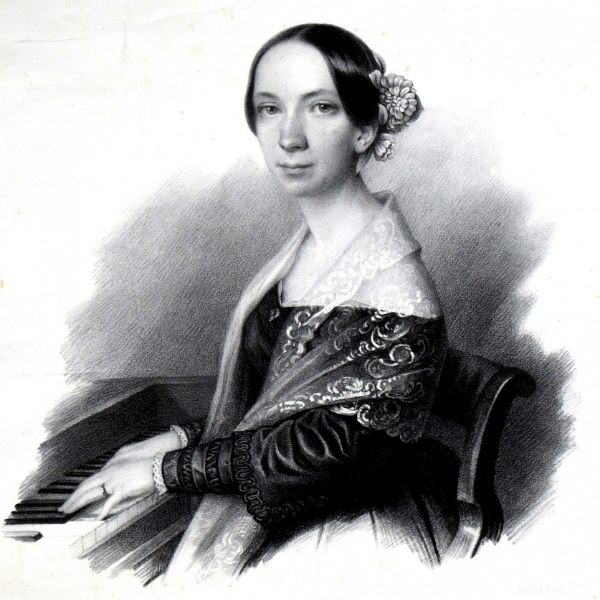
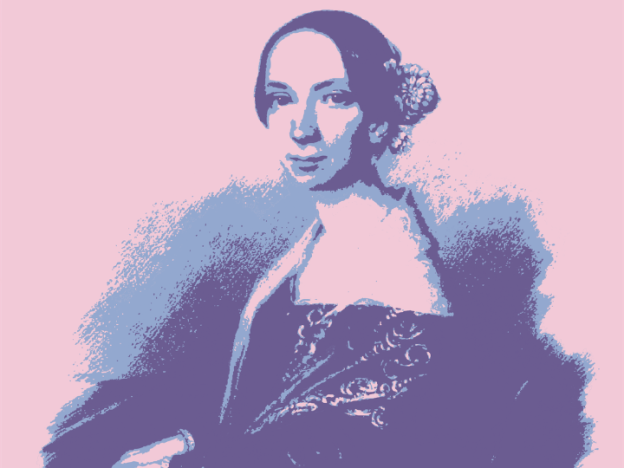
Clara Schumann was one of the most distinguished musicians of the Romantic Period. An incredible pianist, teacher, and composer, she also inspired a flurry of compositions. Felix Mendelssohn, Franz Liszt, and Johannes Brahms all dedicated works to her. When she met her future husband, Robert Schumann, Clara had already made a name for herself touring across Europe. Robert was one of her father’s piano students, and throughout the years, he developed an affection for Clara that resulted in the frequent exchange of love letters.

Once her father caught wind of their affair, he promptly kicked Robert to the curb and sent Clara on tour to separate the young lovers. Despite many attempts by Robert to win him over, Clara’s father continued to refuse to consent to their marriage. In the end, the case went to court, where the judge ruled in favor of the couple. They were married in September of 1840, the day before Clara’s 21st birthday. The following year, Robert wrote his fourth symphony and dedicated it to Clara, although it was later revised and rededicated to their mutual friend, violinist Joseph Joachim. While one might feel confused by the change, Clara had gone on record to say she strongly preferred the second version.


Richard Wagner and his gift to Cosima Wagner

Richard Wagner was an imposing figure credited with revolutionizing opera and changing theatre as we know it. One would be forgiven for believing this titan of history was more myth than man. However, he was hounded by many romantic debacles throughout his life. These failed relationships culminated in his invitation to Cosima von Bülow and her husband, Hans von Bülow, to Wagner’s home in Switzerland. Cosima, the daughter of pianist and fellow composer, Franz Liszt, arrived a few days before her husband. Thus started a love affair that would persist for the rest of Wagner’s life.

The then-married Wagner did not publicly pursue Cosima, but they continued seeing each other in secret. She even gave birth to two of his illegitimate daughters. In the end, Cosima divorced Hans in 1863, shortly after the death of Wagner’s first wife. She promptly moved in with Wagner, followed by their children. In 1869, he composed Siegfried Idyll as a gift to Cosima in celebration of the birth of their son. The sweet, tender piece was first performed Christmas morning on the stairs of their villa, letting Cosima awaken to its opening melody.


Edward and Alice Elgar’s guessing game

On the evening of October 21st, 1898, an exhausted and exasperated Edward Elgar sat down at his piano. He had hoped that playing would help raise his spirits, but little did he know he would stumble upon the melody that would inspire one of the greatest pieces of the 19th century. During his mindless playing, his wife, Alice, exclaimed, “Edward, that’s a good tune.” Awakened from his daydream, he played the tune again and saw potential.

In the coming weeks, Elgar would manipulate and shift the melody to imitate his friends, family, and neighbors. Alice listened, endlessly entertained, and tried to guess who he was mimicking. These moments between them would become the groundwork for his orchestral work, Variations on an Original Theme, Op. 36, more commonly called the “Enigma Variations.” Elgar dedicated the work “to my friends pictured within” and prefaced each of the 14 variations with the initials, name, or nickname of the friend depicted.


More Musical Relationships to Explore


Painting of decorated christmas trees in a forest

The Stories of Twelve Carols: 2025 Edition

All Classical Radio’s Festival of Carols returns once more with four days of cherished seasonal music from cultures around the world, curated to lift your spirit and warm your heart. Each December, our Program Director, John Pitman, selects twelve pieces from our extensive Festival of Carols library for a deep dive into their origins. Over the past several years, we’ve explored holiday classics on the Arts Blog, such as “Hark, the Herald Angels Sing,” “O Tannenbaum,” and “Silent Night.” We’ve also expanded our exploration of carols to cover several centuries, origins, languages, and even holidays beyond Christmas. This year, we’re covering carols written as far back as the 12th century, as recently as the 1960s, in addition to a beloved Hanukkah tune.  

Be sure to tune in to our 2025 Festival of Carols on All Classical Radio from December 22nd-25th! Learn more about All Classical Radio’s Holiday Programming.


The Little Drummer Boy

Written in 1941 by American composer Katherine Davis, The Little Drummer Boy was initially titled “Carol of the Drum.” Inspired by the French carol, Patapan, Davis’s Christmastime tune also evokes the sound of a drum in celebration of Jesus’s birth. As a music educator, Davis wrote many of her compositions for choirs at the schools where she taught, including The Little Drummer Boy. A decade later, the Trapp Family Singers (yes, the same family immortalised in The Sound of Music) recorded the carol to widespread acclaim. In 1958, a successful recording by the Harry Simeone Chorale brought Davis’s song to households around the world.


Adam lay ybounden

The words of the English carol, Adam lay ybounden (Adam was bound), come from an anonymous source of the 15th century. No contemporary musical setting survives. The poetry recounts the Fall of Man from the Book of Genesis, though it ends on a positive note: “Blessed be the time that apple taken was! Therefore we may singen Deo gratias!” Many English composers have written their own versions of the carol, including Peter Warlock, John Ireland, and Benjamin Britten. We are going to listen to Boris Ord’s 1955 version, which has since been a staple of the Service of Nine Lessons and Carols at King’s College, Cambridge. Ord was a beloved choir director at the institution from 1929-57.

Tune in to All Classical Radio on Wednesday, December 24th at 7:00 AM PT to listen to this year’s live broadcast of A Festival of Nine Lessons and Carols from King’s College, Cambridge.


Jul, jul, strålande jul

Known as “Christmas, Christmas, glorious Christmas” in English, this Swedish carol is one of the best-known seasonal songs in Scandinavia. Written by composer Gustaf Nordqvist in 1921, with lyrics by priest and author Edvard Evers, Jul, jul, strålande jul describes a wintry white Christmas and the opportunity for peace that this season brings. The graceful lilt of the melody beautifully accompanies Evers’s poetry, evoking images of silent, snow-filled evenings. Originally composed as a piece for solo voice, this carol has since been arranged for various choral ensembles, both accompanied by instruments and a cappella.

Follow along with an English translation of the Swedish poetry here.


I Wonder as I Wander

Attributed to American composer John Jacob Niles, I Wonder as I Wander is based on a song fragment Niles heard while traveling through Appalachian North Carolina in 1933. Niles devoted his musical career to collecting and transcribing folk songs, in addition to researching folk instruments. In an unpublished autobiography, the composer noted the following about his experience encountering a little girl named Annie Morgan singing:

“[Annie] sang the first three lines of the verse of ‘I Wonder As I Wander.’ At twenty-five cents a performance, I tried to get her to sing all the song. After eight tries, all of which are carefully recorded in my notes, I had only three lines of verse, a garbled fragment of melodic material—and a magnificent idea.”

Niles published I Wonder as I Wander in his collection of Songs of the Hill-Folk.


Maoz Tzur

Maoz Tzur (Rock of Ages) is a well-known Hebrew liturgical poem sung during Hanukkah celebrations. The text, dating from as early as the 12th century, tells a brief history of the Jewish people and all they have overcome. While we don’t know its original musical setting, the hymn is now most commonly associated with a melody from a 15th-century German folksong. As to the poem’s author, historians speculate that the first letters of the first five stanzas form an acrostic of the author’s name, Mordechai, though we don’t know much more than that.

In the recording below, you’ll hear Maoz Tzur sung in both Hebrew and then in English.


I Saw Three Ships

I Saw Three Ships is a traditional English Christmas carol from the 17th century. The joyful, dancelike melody is paired with perplexing lyrics that tell of the arrival of three ships in (landlocked) Bethlehem, leading many to wonder what event this carol may be referring to. One theory holds that these were the ships that transported the relics of the Magi to the Cathedral of Cologne in the 12th century. Another theory is that the ships represent the camels (or desert ships, if you will) carrying the Magi through the desert to visit the baby Jesus. The original text has undergone several variations over the centuries, so it’s possible that something was quite literally lost in translation.


Lulajże Jezuniu

Lulajże Jezuniu, one of Poland’s most famous Christmas carols, translates to “Hush, little Jesus.” In fact, the word “Lulajże” specifically refers to rocking a child to sleep, which conveys the carol’s overall tone. This tender, loving lullaby humanizes the relationship between Mary and the baby Jesus — it’s simply a mother rocking her newborn to sleep. Although not officially confirmed, many believe the carol dates to the 17th century. If the melody sounds familiar, it may be because Chopin references it in the slow section of Scherzo No. 1 in b minor, Op. 20.

You will find an English translation of the Polish poetry here.


O Jesulein süss, o Jesulein mild!

O Little One sweet, O Little One mild is a short and sweet 17th-century carol from Germany with anonymous origins. The carol was first arranged by Samuel Scheidt and later by J. S. Bach, who preserved Scheidt’s melody but elaborated on the harmonization in a style more typical of the Baroque era. The gentle, rocking melody evokes peaceful imagery of worshiping at the crib of the baby Jesus, a common theme in sacred music for the season.

Follow along with an English translation of the German text here.


I Heard the Bells on Christmas Day

A carol with many musical settings, I Heard the Bells on Christmas Day is based on the poem, “Christmas Bells,” by Henry Wadsworth Longfellow. Longfellow wrote the piece on Christmas Day 1863 amid the horrors of the American Civil War, an event reflected in the poem’s narrative. While some stanzas acknowledge the despair felt throughout the country, the final verse ends on a hopeful note: “Then pealed the bells more loud and deep / God is not dead, nor doth He sleep / The Wrong shall fail / The Right prevail / With peace on earth, goodwill to men.”

Below, you will hear a musical arrangement of the carol by English composer and choirmaster Sir Philip Ledger. You can read Longfellow’s poem in its entirety here.


There Is No Rose of Such Virtue

Also written as “Ther is no rose of swych vertu,” this Medieval English Christmas Carol has anonymous origins dating from around 1420. The reference to Mary as a rose was a common association during the Middle Ages, appearing in several hymns and carols, including Es ist ein Ros’ entsprungen (Lo, How a Rose E’er-Blooming).

You are likely to hear several different versions of this carol. Several composers have taken the original text and arranged the music, including John Joubert and Benjamin Britten. We’d like to highlight the original version with the 15th-century melody. As you listen, you’ll hear the singers return to the first phrase, “There is no rose of such virtue as is the rose that bare Jesu,” multiple times. Using the first verse of a carol as the refrain was common for the time.


I Sing of a Maiden

I Sing of a Maiden also comes from the hand of an anonymous English 15th-century author. While we know that the poem was intended to be sung, no musical setting from the period has survived. The poetry celebrates the Annunciation and imminent birth of Jesus, with an overarching tone of introspection and grace. Many composers have set modernized versions of this Medieval text to music, including Gustav Holst, Benjamin Britten, John Rutter, and Peter Warlock. We will listen to a setting by Patrick Hadley, written in 1936, that beautifully pairs with the meditative mood of the poetry.


Do You Hear What I Hear?

Created in the early ‘60s by songwriting duo Gloria Shayne (Baker) & Noel Regney, who were also married at the time, Do You Hear What I Hear? was composed during the Cuban Missile Crisis. The lyrics, inspired by the Nativity story, took on an additional meaning amid the threat of nuclear war, with the final stanza stating, “Pray for peace, people everywhere.” Do You Hear What I Hear? was originally recorded by the Harry Simeone Chorale (the same group that helped popularize The Little Drummer Boy). Bing Crosby released a solo version a year later, making the song a massive success. Currently, there is no shortage of arrangements of the carol in a wide variety of musical styles.

Fun fact – Shayne and Regney also wrote the popular children’s tune, “Rain, Rain, Go Away.”


Keep the Celebration Going

Read about more favorites from the Festival of Carols in previous years’ editions of “The Stories of Twelve Carols”:

  • 2024 Stories, including Patapan and Gabriel’s Message
  • 2023 Stories, including Still, still, still and While Shepherds Watched Their Flocks
  • 2022 Stories, including O Holy Night and In the Bleak Mid-Winter
  • 2021 Stories, including The Carol of the Bells and O Come, O Come, Emmanuel
  • 2020 Stories, including The Holly and the Ivy and The Coventry Carol
  • 2019 Stories, including Joy to the World and Silent Night

Tune in to All Classical Radio starting December 22nd to hear your favorites played on air, and learn about the full scope of our 2025 holiday programming here. Happy listening!


KQAC 89.9 Portland/Vancouver
KQOC 88.1 Newport/Lincoln City
KQHR 88.1 Hood River/The Dalles
KQHR 96.3 Columbia Gorge East
KQMI 88.9 Manzanita
KSLC 90.3 McMinnville
95.7 FM Corvallis/Flynn