The votes have all been counted, and the winning selections of All Classical Radio’s Classical Countdown to 2025 have aired on New Year’s Eve! Read on to see the results of this year’s listener-voted 100 favorite musical pieces.
Thank you for participating in our annual Classical Countdown tradition, and thank you for listening to All Classical Radio. Everything we do is made possible by listener support, and we are grateful for YOU.
Happy New Year, and cheers to another year of beautiful music!
2024 Classical Countdown Results
Hisaishi: Ponyo On The Cliff By The Sea
Dvorák: Symphony No. 9 in E minor, “From the New World”
Beethoven: Symphony No. 9 in D minor, “Choral”
Gershwin: Rhapsody in Blue
Ravel: Bolero
Rimsky-Korsakov: Scheherazade
Saint-Saëns: Symphony No. 3 in C minor, “Organ”
Bach: Brandenburg Concertos
Vaughan Williams: Fantasia on a Theme by Thomas Tallis
Holst: The Planets
Rachmaninoff: Piano Concerto No. 2 in C minor
Vaughan Williams: The Lark Ascending
Barber: Adagio for Strings
Orff: Carmina Burana
Copland: Appalachian Spring
Grieg: Peer Gynt
Rachmaninoff: Rhapsody on a Theme of Paganini
Copland: Fanfare for the Common Man
Tchaikovsky: Swan Lake
Mahler: Symphony No. 1 in D Major
Debussy: Clair de Lune
Tchaikovsky: Violin Concerto in D Major
Smetana: The Moldau
Mussorgsky: Pictures at an Exhibition
Bach: Jesu, Joy of Man’s Desiring
Vivaldi: The Four Seasons: Winter
Wagner: Ride of the Valkyries
Sibelius: Finlandia
Wagner: Tannhäuser Overture
Berlioz: Symphonie Fantastique
Satie: Gymnopedies for piano
Dvorák: Cello Concerto in B minor, Op. 104
Elgar: “Enigma” Variations
Beethoven: Symphony No. 7 in A Major
Beethoven: Piano Concerto No. 5 in E-flat Major, “Emperor”
Rodrigo: Concierto de Aranjuez
Beethoven: Piano Sonata No. 14 in C-sharp minor, “Moonlight”
As we begin a new year together, we’d like to take a moment to reflect, with gratitude, on 2024. Together, we have achieved so much!
Thanks to your generous support, All Classical has had an exciting year full of high notes and crescendos—from a new state-of-the-art home in downtown Portland to innovative community collaborations and artist residencies, and a project profiling trailblazing artists of the Pacific Northwest.
All Classical Radio is community-focused and community-supported. Your financial support will help to keep the music playing in the year ahead, and ensure that All Classical can continue sharing comfort, inspiration, and healing music with our community every day. Thank you.
Buildout and relocation to state-of-the-art Media Arts Center in downtown Portland, maintaining uninterrupted service on two 24-hour networks.
Over 40 creative visionaries and leaders profiled and celebrated in the Artist Anthology, funded by the NEA.
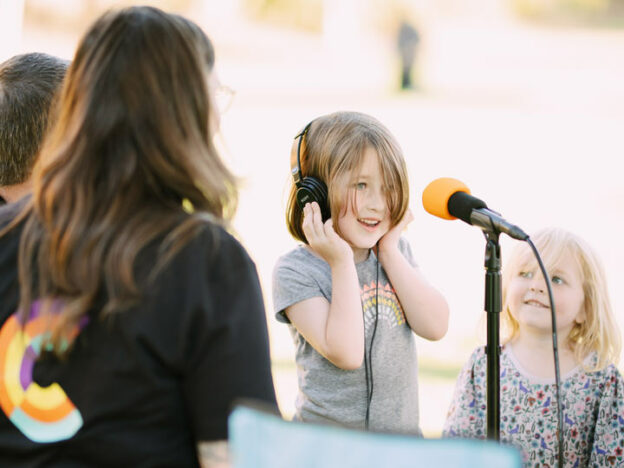
Opening of the International Children’s Arts Network (ICAN) Moonflower Studio, logging 85+ hours of youth in-studio production since August, and ICAN listenership growth to over 30,000 youth, families, and educators.
Release of Seasons 2 and 3 of ICAN Become, including youth interviews with Broadway Star Kelli O’Hara, Portland Timbers player Zac McGraw, Oregon Symphony Associate Conductor Deanna Tham, and more.
Broadcast of new Sound in Print summer series with host Coty Raven Morris, twice named a finalist for the Recording Academy and GRAMMY Museum’s Music Educator Award.
On air and online specials with star guests including Itzhak Perlman, Julie Andrews, John Malkovich, Jimmie Herrod, and more.
Recognition of All Classical Radio staff: Suzanne Nance awarded Portland Metro Chamber’s Sandra K. McDonough Leadership Award; Rebecca Richardson named a Rising Star in Public Media by Current.
$4.4 million raised in 2024 for the relocation capital campaign, including $750,000 from M.J. Murdock Charitable Trust and 90+ additional gifts. The total raised since 2023 is $10.2 million.
Thank you for supporting All Classical Radio.Your tax-deductible contribution will help protect the future of classical music in the Pacific Northwest, and beyond.
The venerable broadcaster’s move to new studios in downtown’s KOIN Tower opens space for an energetic and expanded mission beyond the radio dial.
Portland’s All Classical Radio, one of the nation’s most successful classical radio stations, is entering a new incarnation. ArtsWatch’s Joe Cantrell was on hand — trusty camera in hand — a couple of weeks ago for the public opening of the station’s gleaming new headquarters on the third floor of downtown Portland’s KOIN Tower.
Celebrating the magic of the season is one of All Classical Radio’s most beloved traditions. Each December, our Program Director, John Pitman, selects twelve pieces from our extensive Festival of Carols library for a deep dive into their origins.
Since 2019, we’ve explored holiday classics on the Arts Blog, such as “Hark, the Herald Angels Sing,” “O Tannenbaum,” and “Silent Night.” Each year, we’ve expanded our exploration of carols to cover several centuries, origins, languages, and even holidays beyond Christmas. This year, we’re thrilled to continue in this tradition and cover a mix of dear favorites and lesser-known jewels.
The words of the carol Hodie Christus Natus Est (Today Christ is born) originate from a 6th-century Gregorian chant that was traditionally sung at Christmas. One of the text sources comes from the Gospel of Luke: “For unto you is born this day in the City of David a Savior, which is Christ the Lord…” Another comes from Psalm 32, which begins, “Be glad in the Lord, and rejoice…” In the time since its Medieval origins, the chant has emerged as a popular Christmas carol and has been interpreted by many composers throughout the subsequent centuries, including Jan Pieterszoon Sweelinck, William Byrd, and Giovanni Palestrina.
Let’s listen to Dutch composer Jan Pieterszoon Sweelinck’s interpretation of the chant published in 1619. Sweelinck’s music straddles the Renaissance and Baroque eras and is a shining example of the power of polyphony (the combination of several melodies sung together to create a rich vocal tapestry). You can follow along with the English translation of the Latin text here.
What Sweeter Music
Renowned English composer and choral director John Rutter is no stranger to holiday music and has written many beloved Christmas carols. One such work, What Sweeter Music, was composed in 1988 for the choir of King’s College for their Festival of Nine Lessons and Carols. (And in case you didn’t know, All Classical broadcasts this Christmas Eve tradition every year. Be sure to tune in at 7:00 AM PT on Tuesday, December 24, 2024). For What Sweeter Music, Rutter chose to set words by 17th-century English poet Robert Herrick which celebrate the birth of Jesus through joyful song.
Jesu, bleibet meine Freude (Jesu, Joy of Man’s Desiring) from Cantata 147
J. S. Bach originally composed Cantata 147, Herz und Mund und Tat und Leben (Heart and mouth and deed and life) for the Advent season in 1716, rewriting it a few years later while serving in his new position as music director at St. Thomas School in Leipzig. Bach wrote this well-known cantata for the Feast of the Visitation to the Virgin Mary, which is closely associated with the anticipation of the birth of Jesus. For text, Bach looked to the Gospel of Luke for inspiration. The most famous movement from the work, “Jesu, Joy of Man’s Desiring,” appears twice in Cantata 147: once in the middle, and once as a reprise at the end with new text. As you listen to this holiday anthem, read along with an English translation of the German text here.
Gabriel’s Message
Gabriel’s Message (“The angel Gabriel from heaven came…”) originated as an anonymous Medieval Basque hymn that has since been arranged by several choral composers, including Edgar Pettman, John Rutter, and Stephen Paulus. The text tells the story of the Annunciation as it relates to the celebration of Christmas and relays an intimate interaction between Gabriel and Mary. Not long after it was written, the carol became popular across regional boundaries and even crossed the English Channel.
Fun fact: Chaucer quoted the carol as part of The Miller’s Tale in his Canterbury Tales.
El Noi de la Mare
The gentle Catalan Christmas carol, El Noi de la Mare (The Son of the Virgin), could easily double as a lullaby. Written in three variations, the carol’s three verses ask, “What shall we give the son of the Mary?” The narrative refers to figs in all three verses, and in the final stanza, the figs that are “still green” are a reference to Jesus as an innocent child, and the fig’s “ripening” is his coming work of redemption. Read an English translation of the text here. Given its Spanish origins, this carol is frequently arranged for guitar, as seen below. In fact, guitarist Andrés Segovia is largely responsible for the work’s popularity outside of Spain.
A Cornish Christmas Carol
English composer Peter Warlock (born Philip Arnold Heseltine) contributed several beloved carols and choral works to the seasonal repertory, including his striking Cornish Christmas Carol. If you feel like this carol gives you a bit of aural whiplash, Warlock wrote the following note in his score: “To be sung fairly fast, with sudden alternations of hardness and sweetness, of rude heartiness and tenderness touched with awe.” Be sure to listen for the fleeting musical reference to another carol we’ve discussed already featured on the Arts Blog.
Gesu Bambino
Composed in 1917 by Pietro Yon, this Italian Christmas carol quickly became a seasonal staple across many nations. Born in Italy, Yon emigrated to the US at age 21 and wrote his famous carol while serving as organist of St. Francis Xavier Church in Manhattan. You might notice that the melody and text for the chorus are extracted from Adeste Fideles (Oh Come All Ye Faithful). Since its publication, Gesu Bambino has been performed both in Italian and English and recorded by such notable singers as Luciano Pavarotti and Kathleen Battle. You will find the English translation of the original Italian lyrics here.
A Boy Was Born
Using text of German origin from the 16th century, English composer Benjamin Britten created his Christmas cantata, A Boy Was Born, while still a student at the Royal College of Music. This soaring a cappella piece marked Britten’s first major composition for voice and his first significant religious contribution. It’s important to note that the title, A Boy Was Born, is both the title of the cantata and the name of the work’s first movement. This first movement serves as the main theme upon which the subsequent six variations are built. When performed by itself, the first movement is hymn-like and sincere, evoking musical traditions of both centuries past and present.
Patapan
Originating from the Burgundy region of France, the traditional Christmas carol Patapan was written around 1700 by Bernard de la Monnoye. In addition to his work as a lawyer, La Monnoye wrote a well-known collection of thirteen Burgundian Christmas carols under the pseudonym “Gui Barozai,” with Patapan being the most popular today. Telling a story of two boys and their musical lessons in celebration, the original title of the carol was “Willie, Take Your Little Drum” and can be interpreted as a predecessor to The Little Drummer Boy. The carol’s title is meant to mimic the drummer’s sound while celebrating the baby Jesus’s birth. As you listen, follow along with an English translation of the text here.
A Christmas Carol
American composer Charles Ives’s A Christmas Carol was written with a calm, sweet, and lilting melody that offers a soft air of devotion. Composed in 1894, Ives wrote both the text and music for this carol himself and published it in a collection of 114 Songs in 1922. While the title might call to mind a certain Dickensian novella, Ives titled his carol in literal reference to the holiday celebrating the birth of Jesus.
Ave Maria
German composer and arranger Franz Biebl’s interpretation of the Marian antiphon is a sublime choral masterpiece. Written for double-male chorus (and later arranged for mixed voices), Biebl wove elements of Medieval chant into a resolutely 20th-century piece. Originally composed in the 1950s, Biebl’s Ave Maria became widely popular in the U.S. after being recorded by the famed vocal ensemble Chanticleer. Interestingly, Biebl actually wrote the piece for a firemen’s choir in Bavaria. As for the text, while not directly connected to Christmas, the ancient prayer to Mary has become a consistent literary counterpart to other nativity texts.
Gloucestershire Wassail
Gloucestershire Wassail (“Wassail, Wassail, All Over the Town”) is a joyful traditional English carol dating from the 18th century and commemorates the Christmastime wassailing tradition known throughout parts of England. Wassailing involves going from house to house and singing of good health while carrying a large, decorated bowl filled with mulled wine to offer townsfolk. The verses of text refer to many food items the carolers wish for in the new year, such as a good crop of corn and a good Christmas pie, as well as acknowledge many of the local livestock.
Keep the Celebration Going
Read about more favorites from the Festival of Carols in previous years’ editions of “The Stories of Twelve Carols”:
All Classical Radio is thrilled to announce that Elaina Stuppler’s position as the station’s Young Artist in Residence has been extended through Summer 2025!
Elaina has already appeared at several high-profile station events, including the unveiling of All Classical’s 40th Anniversary display at the Oregon Historical Society in January 2024, where she performed with Pink Martini band leader Thomas Lauderdale, pianist Hunter Noack, vocalist Sofia von Trapp, and others. Elaina has also played an active programming role for the International Children’s Arts Network (ICAN). In April 2024, she interviewed Dame Julie Andrews and her daughter, Emma Walton Hamilton, for a special episode of ICAN’s Audio Book Tour. In 2025, Elaina will continue to create content for both All Classical and ICAN’s digital channels and will perform on an upcoming episode of Thursdays @ Three in 2025.
Elaina was recently named a YoungArts Award Winner with Distinction in the Voice/Singer-Songwriter category. Winners of this national competition are chosen for their caliber of artistic achievement by esteemed discipline-specific panels of artists through an adjudication process that includes multiple rounds of review. All YoungArts award winners receive a cash prize, in addition to creative and professional support in their emerging careers. Out of 11,000 applicants, only 169 won with distinction. Learn more at youngarts.org.
Congratulations, Elaina, on this tremendous achievement!
ABOUT
16-year-old Elaina Stuppler is an award-winning composer, trombonist, and vocalist, who has performed at Carnegie Hall, Lincoln Center, the Sydney Opera House, the Grammy Museum, and the Hollywood Bowl with the Los Angeles Philharmonic. Elaina is Co-Principal Trombonist of the Portland Youth Philharmonic (PYP) and was selected for All-State and All-Northwest Honor Bands for Jazz and Wind Ensemble. Her original compositions have been performed by PYP, Third Angle, Metropolitan Youth Orchestra of New York, Chamber Music Northwest, and Metropolitan Youth Symphony.
The long-running All Classical program Thursdays @ Three opens its next season this week with Doyle’s former choir, Choral Arts Ensemble.
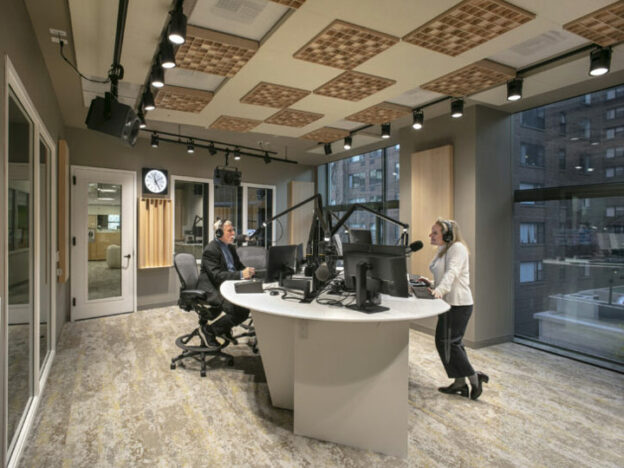
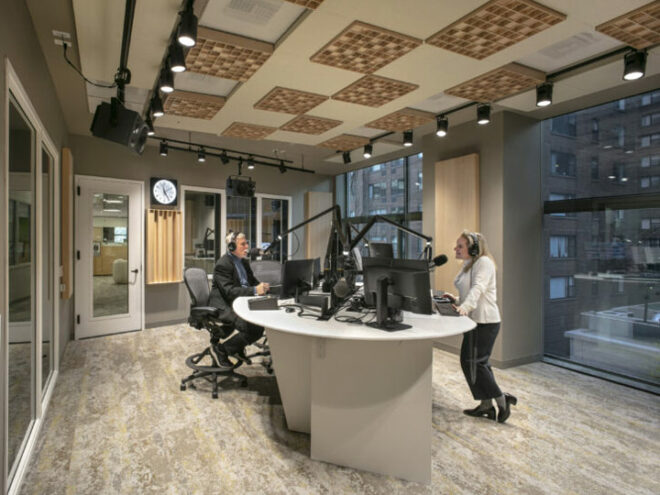
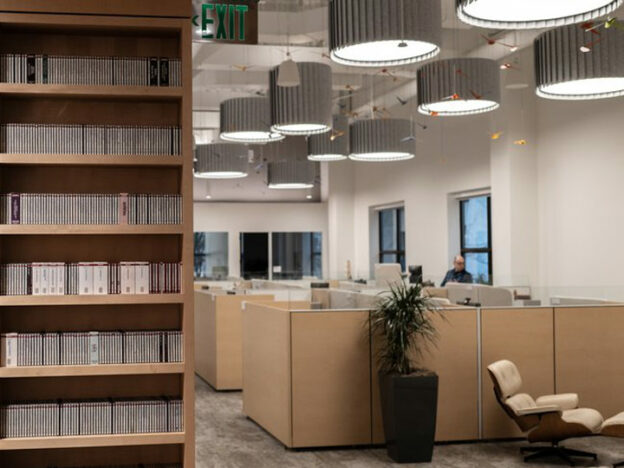
KQAC has moved to the third floor of the always eye-catching KOIN Tower near the Keller Auditorium. It’s a gorgeous and expanded footprint (about 33% larger than the Hampton Opera Center) with wood, glass, metal, beveled panels and miles of wires and electronic equipment that would have sent the original Benson teenagers back in 1921 into a techno-geek coma. The desks, studios, the beloved Steinway piano signed by performing artists over the years, and your All Classical Radio hosts are now in their new home. But one space in the Hampton Opera Center, one of great significance to Kay Doyle, had to be left behind – Roger’s Performance Studio.
The Roger O Doyle Choral Series will not only honor Roger’s passion for the choral arts but also will acknowledge that choral music – with thousands of singers and choral music lovers across our region, and millions around the world – is important to all cultures. Choral music has a very strong voice.
When she walks around the place, Suzanne Nance still can’t believe it happened. The relatively small nonprofit All Classical Radio now calls downtown Portland home on the third floor of the KOIN Tower. And, it’s a wonderful feeling.
“It has far surpassed my dreams,” said Nance, the president and CEO of All Classical Radio. “I’m overwhelmed with gratitude.” Oh, it cost a lot of money, but a number of people stepped up to contribute to the now $11.5 million capital campaign price tag for the Media Arts Center and broadcasting headquarters. The cost went up in the past year, but more donors came forward and nearly $10 million had been raised. The sparkle, newness and sheer modern aspect of All Classical Radio’s new headquarters impresses people.
A local radio station’s surge in popularity led to a move to a bigger space and its public grand opening is this Sunday. Just a couple weeks ago, All Classical Radio celebrated its new home and media arts center in the KOIN Tower.
President and CEO Suzanne Nance joined AM Extra in the studio to talk about their new bigger space and the radio station’s growing reach.
Downtown Portland has been derided by numerous naysayers in regard to its livability and viability for the future, with some proclaiming that the city has become an “Urban Doom Loop.” But not all have succumbed to that negative message. All Classical Radio (KQAC 89.9 FM), Portland’s international broadcaster of classical music, has relocated to the heart of the city, settling into a versatile, ultra-modern top-notch headquarters that is jaw-dropping optically and technologically.
“We have a strong belief in the core of the city,” said President and CEO Suzanne Nance. “We especially want to support our local art organizations that are based downtown. Time after time, we have seen how the arts have regenerated communities across the nation. Since we outgrew our space at the Hampton Opera Center on the Eastside, it made sense to find a new home. So we looked and found the perfect place at KOIN Tower.”