Juneteenth

Juneteenth at All Classical Portand

Saturday, June 19th was the 156th anniversary of the day news of emancipation finally reached the westernmost area of the former Confederate states in Galveston Bay, Texas. On All Classical Portland, we’re honoring this Juneteenth with music by African-American composers, and other composers of African heritage. Here are a few of the works you can look forward to hearing this Juneteenth. 

Margaret Bonds

Dream Variation

By Margaret Bonds

American composer Margaret Bonds (1913-1972), a student of Florence Price and William Levi Dawson, was particularly prolific as a composer of vocal music. “Dream Variation,” from her cycle Three Dream Portraits, is a setting of the poem “Dream Variations” from The Dream Keeper, a 1932 collection by her friend and frequent collaborator Langston Hughes. Hughes and Bonds also collaborated on a musical, a cantata, and many more art songs. 

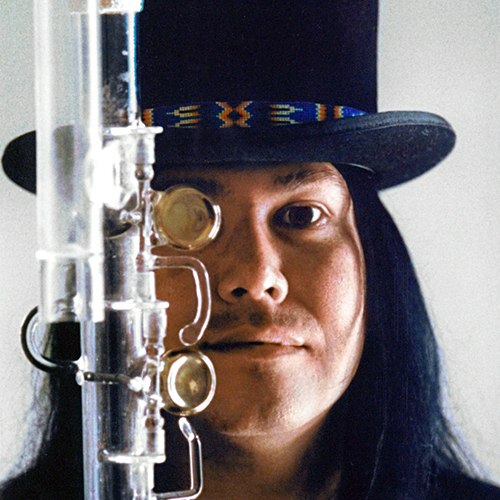
Valerie Coleman
Image courtesy of the composer’s website

Umoja: Anthem of Unity

By Valerie Coleman

The orchestral version of Umoja, by contemporary composer Valerie Coleman, was commissioned by the Philadelphia Orchestra and premiered in 2019. In her program note, Coleman explains that “Umoja” is “the Swahili word for Unity and the first principle of the African Diaspora holiday Kwanzaa.” Of the orchestral version, she adds, “This version honors the simple melody that ever was, but is now a full exploration into the meaning of freedom and unity. Now more than ever, Umoja has to ring as a strong and beautiful anthem for the world we live in today.”

Edmond Dédé

Mephisto Masque

By Edmond Dédé

Edmond Dédé (c.1827/9-1901) was born in New Orleans but emigrated to France to attend the Paris Conservatory and build a career as a composer and conductor. He composed Mephisto Masque in 1899, shortly after a concert tour in America, during which he’d faced much greater racial prejudice than he was used to in France. Mephisto Masque is a satirical piece with a prominent part for mirlitons, or kazoos – Dédé dedicated this snarky piece “aux Bigotopgonistes,” a pun which can mean either “to kazooists” or “to bigots.”  

Samuel Coleridge-Taylor

Violin Concerto in G minor, Op. 80

By Samuel Coleridge-Taylor

English composer Samuel Coleridge-Taylor (1875-1912) was one of the first composers of color to achieve international fame in classical music. He composed his Violin Concerto, Op. 80, for one of several visits to the United States. American violinist Maud Powell played the work’s premiere in Norfolk, Connecticut in July of 1912, less than three months before the composer’s untimely death in September of that year.  

William Levi Dawson

Negro Folk Symphony

By William Levi Dawson

William Levi Dawson (1899-1990) was an American composer and teacher. During his long tenure at Tuskegee University, he transformed the Tuskegee Choir into an ensemble of international acclaim. Dawson’s Negro Folk Symphony premiered in 1934 in a performance by the Philadelphia Orchestra under Leopold Stokowski. Dawson’s program note from the premiere explains, “The themes are taken from what are popularly known as Negro Spirituals. In this composition, the composer has employed three themes taken from typical melodies over which he has brooded since childhood, having learned them at his mother’s knee.” 

Scott Joplin

Treemonisha: Act 3 Finale: “A Real Slow Drag”

By Scott Joplin

Scott Joplin (1867/1868-1917) is well-known as the King of Ragtime; he was also one of the first African-American composers to write operas. His second opera, Treemonisha (1910) is a magical tale celebrating the power of education for African-American women and men. The opera remained unperformed during Joplin’s lifetime. In 1976, a year after the belated professional premiere of Treemonisha, Joplin was a awarded a posthumous Pulitzer Prize. 

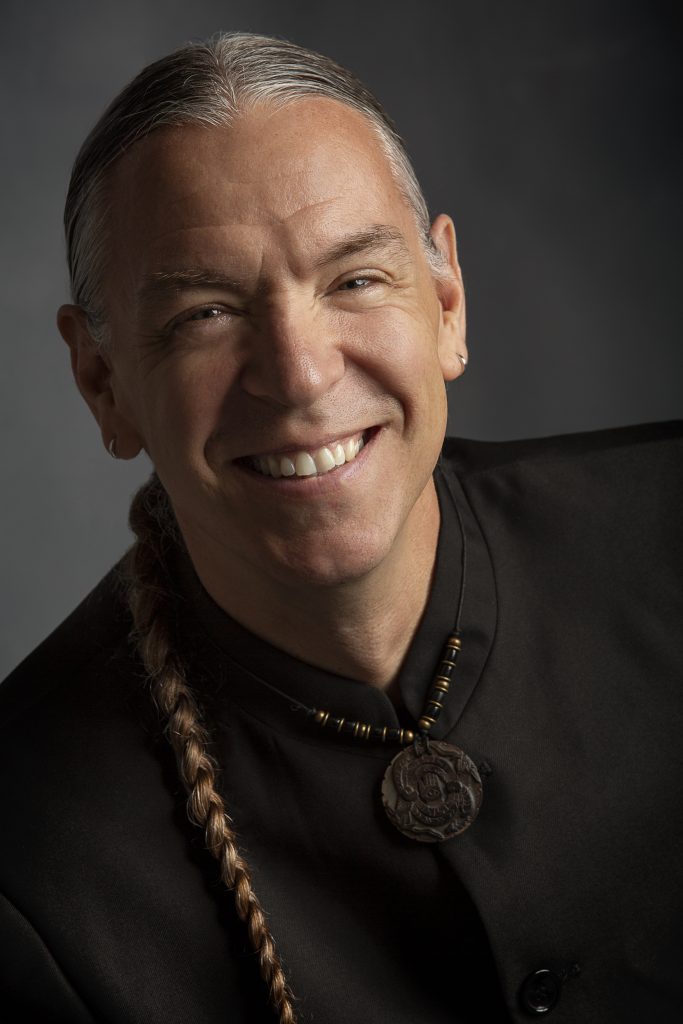
Dumisani Maraire
Photograph courtesy of Discogs.com

Mother Nozipo

By Dumisani Maraire

Zimbabwean composer and mbira virtuoso Dumisani Maraire (1944-1999) spent much of his career teaching ethnomusicology at universities in Washington State, and introducing the Pacific Northwest to African musics. He composed Mother Nozipo, a musical tribute to his mother, in 1990 for the Kronos Quartet. The work is scored for string quartet and percussion, and Maraire appears as the percussionist in the work’s recording, from the Kronos Quartet’s 1992 album Pieces of Africa

Nkeiru Okoye
Photograph courtesy of the composer’s website

Dancing Barefoot in the Rain

By Nkeiru Okoye

Nkeiru Okoye is a contemporary American composer who grew up in New York and Nigeria. In 2020, she became the inaugural recipient of the Florence Price Award for Composition. “Dancing Barefoot in the Rain” comes from Okoye’s African Sketches, a four-movement piano suite completed in 2008. The suite has found a place in the international repertoire of contemporary concert pianists. 

Florence Price

Symphony no. 3 in c minor

By Florence Price

American composer Florence Price (1887-1953) is perhaps best known as the first African-American woman to have a symphony performed by a major orchestra: her Symphony No. 1 in E minor, which the Chicago Symphony premiered in 1933. She composed her Third Symphony in 1940, for the Detroit Civic Orchestra, a branch of the Works Progress Administration’s Federal Music Project. Eleanor Roosevelt visited Chicago in 1940 and heard a rehearsal of Price’s symphony. In an article recounting her visit, she praised both the WPA orchestra and the composer, saying, “They played two movements in a new symphony by Florence Price, one of the few women to write symphonic music.”

William Grant Still

Afro-American Symphony

By William Grant Still

William Grant Still (1895-1978) is often called the “Dean of African American Composers,” and with good reason: he was the first African-American to have an opera premiered by a major opera company; he was the first African-American to conduct a major American orchestra; and in 1931, his Symphony No. 1 in A-flat Major, “Afro-American,” became the first symphony by an African-American composer premiered by a major orchestra. Built on a single blues-inflected motif that appears in the first movement, Still’s symphony explores African-American history in four movements, which he entitled “Longing,” “Sorrow,” “Humor,” and “Aspiration.”  

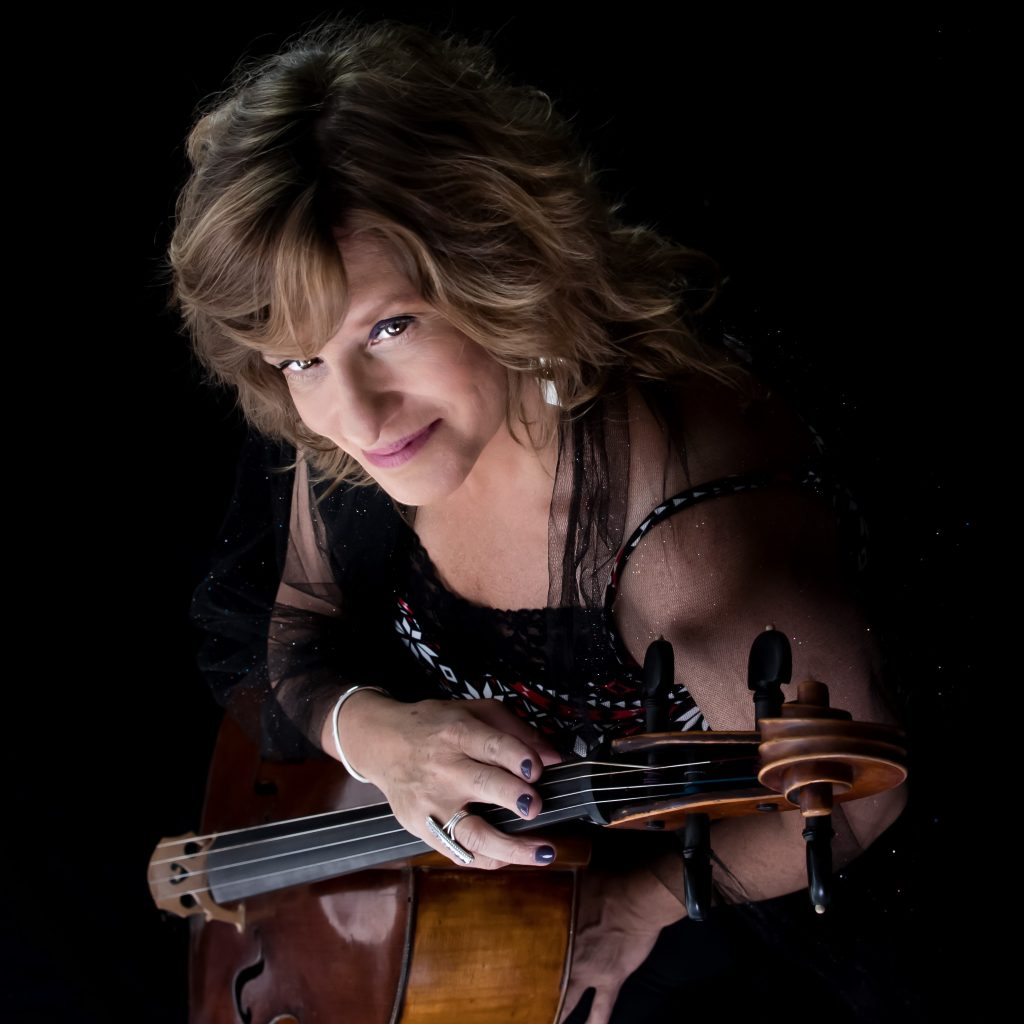
woman playing cello inside a large sculpture

Nancy Ives x AUXART

In a continued effort to support collaborative relationships between artists in the local community, on Saturday, June 12th, All Classical Portland facilitated an artistic collaboration between visual artist Philip Krohn and cellist Nancy Ives.

The AUXART sculpture and sound work grew from Philip Krohn’s 9 week residency in Portland’s new creative space Building 5. AUXART is a play on the idea of using an installation space and large scale structural sculpture to amplify various creative inputs across artistic disciplines. As an exclamation point and project finale Nancy Ives played her cello from the heart of the sculpture. Nancy’s performance combined the work of Bach and works of her own composition she felt were harmonically tuned to the spirit and feeling of the sculptural environment.

Nancy Ives’ program included —

Prelude from Suite for cello and Vocal Obligato
J.S. Bach: Prelude from Suite in G Major for Violoncello Solo
Nancy Ives: Allemande from Suite for cello and Vocal Obligato
J.S. Bach: Allemande from Suite in G Major for Voloncello Solo
Nancy Ives: Sarabande! from Suite for Cello and Vocal Obligato
J.S. Bach: Sarabande! from Suite in G Major for Voloncello Solo
Celilo Fisherman by Nancy Ives, poem by Ed Edmo (used with permission)
On the Root Glacier by Nancy Ives

AUXART x Nancy Ives
man playing the guitar with a forest in the background

Balkan Guitarist Miloš Debuts New Guitar Concertos

Montenegro-born, and London-based classical guitarist Miloš, celebrates his 10th anniversary with the recording label Decca by releasing The Moon and the Forest, which includes two concertos written for him.

Miloš (whose full name is Miloš Karadaglić), asked two composers as famous for their film music as for their concert works: Joby Talbot (who has residences in both Oregon and Great Britain), and Howard Shore. Both created concertos that the guitarist considers a dream come true: works that truly integrate the guitar and the orchestra, rather than works that pit the soloist against the orchestra. They are very original, distinctive works; atmospheric, rhythmic, melodic, exciting and meditative. These concertos both, as Miloš says in his conversation with John Pitman, “allow the guitar to sing.”

Lili'uokalani

The Songs of Lili‘uokalani, Queen of Hawai‘i

Lili‘uokalani (1838-1917) was the Queen Regnant of Hawai‘i from 1891-1893, and was the nation’s last monarch. During her reign, she resisted the annexation of Hawai‘i by the United States, and after the coup that deposed her, she remained dedicated to the interests of the Hawaiian people.  

A trained singer, choir director and organist, Lili‘uokalani composed more than 150 mele, Hawaiian songs and chants. Her legacy of music remains greatly loved: she is one of the most-performed composers among Hawaiian musicians. The Queen’s songs transcend genre and are constantly reinterpreted, whether it be in popular or folk styles, as accompaniment to Hawaiian dance, in hymnlike choral arrangements, or as songs with piano. 

“To compose was as natural as to breath…”

Lili'uokalani
Lili’uokalani in 1865

The Queen was born Lydia Kamaka‘eha on September 2, 1838. She would assume the name Lili‘uokalani when she was named heir-apparent to the Hawaiian throne. When she was a schoolgirl, her instructors discovered her remarkable talent for sight-singing. This skill, which depends on the ability to read and hear music accurately in one’s mind, served her well throughout her life: when she became a political prisoner with no access to a piano, the Queen was still able to compose.

In her autobiographical and political book, Hawaii’s Story, Lili‘uokalani reflected, “To compose was as natural to me as to breathe; and this gift of nature, never having been suffered to fall into disuse, remains a source of the greatest consolation to this day….Hours of which it is not yet in place to speak, which I might have found long and lonely, passed quickly and cheerfully by, occupied and soothed by the expression of my thoughts in music; and even when I was denied the aid of an instrument I could transcribe to paper the tones of my voice.” (Hawaii’s Story, 31).

Composing a National Anthem

Lili‘uokalani composed one of her first important early works in 1866. She tells the story herself in Hawaii’s Story: “In the early years of the reign of Kamehameha V. he brought to my notice the fact that the Hawaiian people had no national air. Each nation, he said, but ours had its expression of patriotism and love of country in its own music; but we were using for that purpose on state occasions the time-honored British anthem, ‘God save the Queen.’ This he desired me to supplant by one of my own composition. In one week’s time I notified the king that I had completed my task.” (Hawaii’s Story, 31)

Lili‘uokalani, who was then serving as choir director at Kawaiahao Church in Honolulu, conducted her choir in the premiere of the new anthem, He Mele Lāhui Hawai`i (Song of the Hawaiian Nation). As is the case with most of her compositions, Lili‘uokalani wrote both the lyrics and the musical setting. The King “admired not only the beauty of the music, but spoke enthusiastically of the appropriate words, so well adapted to the air and to the purpose for which they were written.” (Hawaii’s Story, 31-32)

The Queen’s Jubilee

In 1887, Princess Lili‘uokalani attended the celebration of Queen Victoria’s Golden Jubilee as a part of a royal delegation that included the Queen Consort Kapiʻolani. Upon their arrival in England, the royal Hawaiian party were given an audience with Queen Victoria and were seated with international royalty at the Queen’s Jubilee service at Westminster Abbey.

In only a few years, Lili‘uokalani would be fighting for the acknowledgement of her position: in fact, before the delegation returned from the Queen’s Jubilee, King David Kalākaua was forced to sign away most of his power at pressure from American plantation owners and annexation supporters, in what was called the Bayonet Constitution.

Lili‘uokalani composed a song in honor of Queen Victoria’s royal anniversary, known as “The Queen’s Jubilee.” Its lyrics, saluting Victoria as a fellow monarch, ring poignantly in hindsight.

A Kingdom Overthrown

In 1891, Lili‘uokalani ascended the throne after the death of her brother, King Kalākaua. When she proposed to reverse the Bayonet Constitution, restoring power to the monarchy, a group of American businessmen who owned lucrative plantations on Hawaii conspired to stage a coup. Calling themselves the “Committee of Safety,” the group created a militia which gathered outside the royal residence of Iolani Palace on January 17, 1893. They were supported by a contingent of United States marines sent by John L. Stevens, the United States’ minister to Hawai’i.

To avoid an outbreak of violence, Lili‘uokalani abdicated the throne. She explained her decision in a statement to President Benjamin Harrison: “This action on my part was prompted by three reasons: The futility of a conflict with the United States; the desire to avoid violence, bloodshed, and the destruction of life and property; and the certainty which I feel that you and your government will right whatever wrongs may have been inflicted on us in the premises.” (Hawaii’s Story, 395) 

Sanford Dole, an American lawyer who had served the Hawaiian kingdom as a Supreme Court justice, became leader of a “Provisional Government,” with the goal of convincing the United States to annex Hawaii and consolidating control of the islands in the hands of the island’s American plantation owners. 

Resistance Through Song

In 1895, an uprising took place to regain Hawaiian independence and reinstate the Queen. As a result, Lili‘uokalani was tried for treason and imprisoned in the former royal residence, Iolani Palace. During the Queen’s imprisonment, she was cut off from the outside world, and forbidden access to any political news. Kuʻu Pua I Paoakalani, one of the songs she composed during this time, offers a coded reference to her efforts to stay informed. The song is dedicated to John Wilson, the son of her companion Evelyn Townsend Wilson, who regularly sent the Queen flowers from her royal garden, Uluhaimalama. The flowers arrived wrapped in newspaper – pages which the Queen was able to read, and keep abreast of political developments. 

The Queen’s Prayer

Ke Aloha o ka Haku, or The Queen’s Prayer, is another composition from the Queen’s imprisonment at Iolani. Like many of her works, this song is in a style known as hīmeni, a genre that combines Protestant hymnody structure with the melodic contours of Hawaiian mele. The Queen’s Prayer is a direct response to her experience as a political prisoner, but its poetic text is broad enough to offer timeless spiritual resonance. The Queen dedicated this song to her royal heir apparent, Victoria Kaiulani.

To display the versatility of Lili’uokalani’s music, here are three interpretations of The Queen’s Prayer. This unaccompanied performance is sung by Hawaiian soloist Nalani Olds.

In this recording, the Kamehameha Schools Children’s Chorus sings The Queen’s Prayer.

This third interpretation is sung by The Rose Ensemble.

Annexation

Lili'uokalani in Boston, 1897
Lili’uokalani in Boston, 1897

When Liliʻuokalani was released from house arrest, she dedicated herself to advocating for Hawaiian independence. In early 1897, the Queen and her adopted daughter traveled to Washington, D.C. to meet with President Grover Cleveland and ask for his aid in reinstating the Hawaiian monarchy. Cleveland, an anti-imperialist, was an ally of the Queen, and had opposed the overthrow of the Hawaiian monarchy. However, his administration ended that same year, and the new President, William McKinley, favored the annexation of Hawaii.  

In the fall of 1897, the Queen was joined in Washington by delegates from Hawaii carrying a Petition Against Annexation, signed by 21,269 Hawaiians. They continued to lobby against the annexation of Hawaii, finally losing the in 1898, when the outbreak of the Spanish-American War convinced members of Congress that Hawaii was a valuable strategic location. McKinley signed the annexation into law on July 7, 1898. 

Liliʻuokalani lived the rest of her life as a private citizen in Hawaii, but remained a strong symbol of leadership and Hawaiian identity. Her continued resistance to the American annexation included years of tireless, but ultimately unsuccessful, efforts to regain royal land holdings that had been seized by the United States.  

Aloha ‘Oe

Queen Liliʻuokalani’s most famous composition remains Aloha ‘Oe, a tender song of two lovers parting. According to legend, the Queen was inspired to write this song when she saw a Hawaiian royal officer receiving a lei as a parting gift from a Hawaiian girl. This lovely mele eventually gained another layer of significance, as a song of mourning for the loss of Hawaiian independence. When the Queen died in 1917, a children’s choir sang Aloha ‘Oe at her entombment, at the close of a funeral procession that was attended by around 1500 people.

According to a contemporary report, elderly Hawaiians present at the funeral – those who remembered Hawaiian independence – were particularly sorrowful. “Tears flowed fast down their cheeks as they sensed the actuality of the departure of every vestige of former royalty and the existence of the monarchy from Iolani Palace. The spirit of Liliuokalani had winged its way to eternity.” (The Christian Advocate, December 27, 1917)

At her death, Queen Liliʻuokalani bequeathed what land holdings she still had in a trust to benefit the orphaned and destitute children of Hawaii. The Lili‘uokalani Trust endowed the Queen Liliʻuokalani Children’s Center, which continues to provide care for Hawaiian families to the present day.

Learn More

Liliuokalani
Lili ‘uokalani in 1908

The following sources were invaluable in writing this article. Check them out to learn more about Liliʻuokalani, Queen of Hawai‘i. 

“The Annexation of Hawaii: A Collection of Documents.” Univeristy of Hawai‘i at Manoa Library. 

The Lili‘uokalani Trust 

HawaiiHistory.org 

Daley, Jason. “Five Things To Know About Liliʻuokalani, the Last Queen of Hawaiʻi.” Smithsonian Magazine. November 10, 2017. https://www.smithsonianmag.com/smart-news/five-things-know-about-liliuokalani-last-queen-hawaii-180967155/

Fry, William Henry. “A Royal Funeral under the Stars and Stripes.” The Christian Advocate. December 27, 1917. In The Christian Advocate, Vol. 92. United States: T. Carlton & J. Porter, 1917. 1392-1393. 

Hawe, Jeff. “Ahead of Her Time.” Hawaii Business Magazine. August 7, 2018.  https://www.hawaiibusiness.com/ahead-of-her-time/

Lili‘uokalani. Hawaii’s Story. Boston: Lothop, Lee and Shepard Co., 1898. 

Proto, Neil Thomas. The Rights of My People: Liliuokalani’s Enduring Battle with the United States, 1893-1917. United States: Algora Publishing, 2009. 

Recker, Jane. “How the Music of Hawaiʻi’s Last Ruler Guided the Island’s People Through Crisis.” Smithsonian Magazine. March 26, 2021. https://www.smithsonianmag.com/smithsonian-institution/how-music-hawaiis-last-ruler-guided-islands-people-through-crisis-180971783/.  

Sadie, Julie Ann, and Rhian Samuel, eds. The Norton/Grove Dictionary of Women Composers. New York: W.W. Norton, 1995. 

Schamel, Wynell, and Charles E. Schamel. “The 1897 Petition Against the Annexation of Hawaii.” Social Education 63 no.7. November/December 1999. 402-408.  

Silva, Noenoe K. Aloha Betrayed: Native Hawaiian Resistance to American ColonialismDurham, CT: Duke University Press, 2004. 

Smith, Barbara Barnard, and Dorothy K. Gillett. The Queen’s Songbook. United States: Hui Hānai, 1999. 

All images courtesy of Wikimedia Commons.

painting of people on the subway

Simone Dinnerstein’s “An American Mosaic”

John’s latest conversation with American pianist Simone Dinnerstein on her second recording made at home during the pandemic: An American Mosaic. The title is for the multi-movement piece written for her by Richard Danielpour who, finding himself isolated during lockdown, found solace in Ms. Dinnerstein’s recordings. Each movement is a portrait of groups of people who responded to the pandemic, both in helpful and obstructive ways.

An American Mosaic was commissioned by the Oregon Bach Festival and debuted (online, understandably), by Dinnerstein, and is now available on disc. John’s recorded chat with Simone sheds more light on this timely, moving and very personal work.

JAHM Image

A Playlist of Music by Jewish-American Women

Composers, teachers, performers, conductors, singersand cantors: the outstanding contributions of Jewish women to American music are ubiquitous. May is Jewish-American Heritage Month, and as part of our celebration at All Classical Portland, we hope you enjoy this playlist of music by remarkable Jewish-American women. 

Check out our Spotify Playlist, which features these composers in a slightly different lineup of compositions.

Sun Splendor, Op. 19c

Marion BauerPhotograph of Marion Bauer Courtesy of Wikimedia Commons

Marion Bauer (1882-1955) 

Marion Bauer was a significant American modernist composer, as well as a teacher and a music critic. She was Nadia Boulanger’s first American student, and became an influential pedagogue herself, teaching composition at New York City University and the Julliard School. Bauer was also a Pacific Northwest composer: she was born in Walla-Walla and her parents were married at Temple Beth Israel right here in Portland, Oregon!

In this video, the Portland Youth Philharmonic plays Bauer’s tone poem Sun Splendor in a 2016 performance at Arlene Schnitzer Concert Hall. Sun Splendor originally premiered in 1947, in a performance by the New York Philharmonic directed Leopold Stokowski. 

Prelude, Op. 73

Mana-ZuccaPhotograph of Mana-Zucca courtesy of Wikimedia Commons

Mana–Zucca (1885-1981) 

Piano prodigy, singer, actress, and composer Gussie Zuckermann was born in New York City to a Polish immigrant family. She adopted her unique stage name in her teens. Mana–Zucca’s early successes included a Carnegie Hall performance in 1902 in a concert presented by Walter Damrosch, followed by a European concert tour, during which she met musical luminaries such as Teresa Carreño. Mana–Zucca was incredibly versatile: she wrote orchestral music, chamber music, and popular songs; she sang in musical comedies; she established a musical salon at her Miami home. In this video, you’ll hear three of her piano works: her Prelude, Op. 73; Bolero de Concert, Op. 72, No. 2; and Badinage, Op. 288. 

New England Suite

Vally WeiglPhotograph of Vally Weigl courtesy of Wikimedia Commons

Vally Weigl (1884 or 1889-1982) 

Born in Austria, Vally Weigl studied musicology at Vienna University, as well as composition and piano. She and her husband, composer Karl Weigl, emigrated to the United States in 1938 to escape Nazi oppression. (Weigl’s sister, Käthe, would be murdered at a Nazi death camp several years later). In addition to composing, Weigl was an influential music therapist, serving at New York Medical College and publishing widely in her field.

Our Weigl selection is her New England Suite, composed in the 1950s. This lyrical, rapturous chamber work describes scenes from New England in four movements: “Vermont Nocturne,” “Maine Interlude,” “Berkshire Pastorale” and “Connecticut Country Fair.”  

Piece for Muted Strings (Elegiac Song)

Vivian FInePhotograph of Vivian Fine courtesy of VivianFine.com

Vivian Fine (1913-2000) 

American composer and pianist Vivian Fine enrolled at Chicago Musical College at a mere five years of age, and as an adult, she went on to study with Ruth Crawford Seeger and Roger Sessions. Her work as a collaborative pianist for New York dance companies led to several dance compositions, including one for Martha Graham. Among Fine’s many accomplishments, she taught at the Julliard School, New York University, and Bennington College in Vermont, and she helped found the American Composers’ Alliance. Vivian Fine composed her Piece for Muted Strings (Elegiac Song) in 1937, and it premiered in March of 1939 at a League of Composers concert in New York City. The work is a response to the Spanish Civil War: Fine was strongly opposed to Franco’s Fascist regime. Fine designated the work “for the children of Spain.”  

Air for Violin and Piano

Miriam GideonPhotograph of Miriam Gideon courtesy of the Milken Archive

Miriam Gideon (1906-1996)  

Miriam Gideon was particularly drawn to sacred music. Her father was a Reform rabbi, and her uncle, whom she visited every summer as a child, was the director of music at Temple Israel in Boston. Gideon studied composition with Lazare Saminsky and Roger Sessions, as well earning degrees from Columbia University and the Jewish Theological Seminary, where she also taught for forty years. Gideon holds the distinction of being the first woman commissioned to compose a setting for Jewish liturgy. In addition to her many sacred and choral works, Gideon’s instrumental pieces, like this Air for Violin and Piano (1950) display a compelling, expressive, freely atonal musical language. 

Hark My Love

Photograph of Judith Shatin by Peter Schaaf, courtesy of JudithShatin.com

Judith Shatin (b. 1949) 

Judith Shatin is a composer equally at home in traditional classical sonorities and electronic music. A graduate of the Julliard School and Princeton University, Shatin is Professor Emerita at the University of Virginia and the founder of the Virginia Center for Electronic Music. Shatin’s Hark My Love (1991) is a tender piece for choir and piano, dedicated to Shatin’s husband.

In her program note, Shatin writes, Hark My Love is a setting of verses from the Song of Songs in Marvin Pope’s translation for the Anchor Bible (verses 8-10, 14, 16-17). This richly-textured symbolic text sparked my musical imagination, and the lyrical translation and rhythmic flow of this translation seemed especially apt for musical interpretation. I tried to capture something of the spirit and content of the word in the musical flow and text setting.”

Birds of Paradise

Shulamit RanPhotograph of Shulamit Ran courtesy of the Milken Family Foundation

Shulamit Ran (b. 1949) 

Israeli-American composer Shulamit Ran wrote her first songs in Hebrew when she was a child growing up in Tel Aviv. Ran studied at the Mannes School of Music, and she serves on the faculty of the University of Chicago. Her many accolades include a Guggenheim Fellowship and the 1991 Pulitzer Prize for music. Our playlist features Ran’s Birds of Paradise, a work for flute and piano commissioned by the Chicago Flute Club’s 25th Anniversary Commission. In her program note for Birds of Paradise, Ran writes, “My decision to name this 12-minute work Birds of Paradise was based purely on the imagined vision of a fantastical bird of many bright and amazing colors and the ability to soar high and in different speeds, conjured up in my mind.” 

Fire in My Mouth

Photograph of Julia Wolfe by Peter Serling, courtesy of JuliaWolfeMusic.com

Julia Wolfe (b. 1958) 

Julia Wolfe is an American composer whose eclectic style draws on classical, folk, minimalist and rock musics. In 2015, her oratorio Anthracite Fields, about Pennsylvania coal mining, won the Pulitzer Prize for music. The oratorio was part of a series she has created about the American worker, which continued in 2019 with Wolfe’s Fire in My Mouth. Scored for women’s and girls’ choirs and orchestra, this composition explores the 1911 fire at the Triangle Shirtwaist Factory, a tragedy in which 146 garment workers perished due to the lack of safety precautions taken by factory management. Wolfe commemorated the fire’s victims by scoring the piece for exactly 146 vocalists. 

In her program note, Wolfe explains, “I had been thinking about immigrant women in the workforce at the turn of the century. They fled their homelands to escape poverty and persecution. The garment workers arrived to these shores with sewing skills. Many of the women wound up working on these huge factory floors — hundreds of women sitting at sewing machines. Fire in My Mouth tells the story of the women who persevered and endured challenging conditions, women who led the fight for reform in the workplace.” 

24 Preludes for Violin and Piano, Op. 46

Lera AuerbachPhotograph of Lera Auerbach by Friedrich Reinhold, courtesy of LeraAuerbach.com

Lera Auerbach (b. 1973) 

Lera Auerbach is a leading contemporary composer and a versatile artist: she is also a concert pianist, visual artist and poet. Her catalogue includes symphonies, string quartets, ballets and operas: she frequently explores traditional genres in a contemporary voice. Aurebach’s 1999 set of 24 Preludes for Violin and Piano is part of a tradition laid down by Bach’s Well-Tempered Clavier, which explored each major and minor key in preludes and fugues for keyboard. Chopin’s 24 Préludes extended this tradition in a curious way: Chopin’s “preludes” were not a prelude to anything else, simply standalone miniatures in forms of his own devising. Chopin’s take on preludes gave composers a genre that offers a great deal of freedom. Auerbach first dove into this tradition with her 24 Preludes for Piano, Op. 41 (1998), and she explored it further in her 24 Preludes for Cello and Piano, Op. 47. 

Learn More

“Jewish Women and Jewish Music in America”  by Adrienne Fried Block, in The Encyclopedia of Jewish Women.   

“Women Composers of the Milken Archive” (March 2, 2019) in The Milken Archive of Jewish Music.  

The Jewish Virtual Library  

Many thanks to Ed Goldberg and Andrea Murray for their advice in compiling this playlist.

woman in grey dress sitting for a portrait

An Emily Dickinson Playlist

Music is a natural complement to the poetry of Emily Dickinson (1830-1886). Her lyrical voice is often cast in the singable meters of American hymnody: for example, just try singing this Dickinson text to the tune of “Amazing Grace:”

The Bee is not afraid of me.
I know the Butterfly.
The pretty people in the Woods
Receive me cordially —

The line between music and text can blur in Dickinson’s poetry. Not only does poetry sing for Emily Dickinson, but music talks as well:

I’ve heard an Organ talk, sometimes —
In a Cathedral Aisle,
And understood no word it said —
Yet held my breath, the while —

It’s no wonder that composers are often drawn to Emily Dickinson. In honor of National Poetry Month, here is a playlist featuring just a few of the pieces inspired by her work.

Dickinson’s idiosyncratic punctuation and syntax led to a variety of editorial changes in printed versions of her poems. The poems quoted in this article are mostly taken from The Poems of Emily Dickinson, edited by Thomas H. Johnson. In some of these musical works, the text set to music differs slightly.

Heart, We Will Forget Him

From Twelve Poems of Emily Dickinson by Aaron Copland

Aaron Copland composed this song cycle in 1950, and it is among the best-known musical settings of Dickinson. The cycle became a recital staple for many singers, including the late American soprano Phyllis Curtin, who admired Copland’s sensitivity to Dickinson’s unique syntax: “It is the pattern of Emily’s remarkable speech that Aaron understood absolutely.

Heart! We will forget him!
You and I — tonight!
You may forget the warmth he gave —
I will forget the light!

When you have done, pray tell me,
That I may straight begin!
Haste! lest while you’re lagging
I remember him!

Summer of Hesperides

From Three Pieces after Emily Dickinson by Mary Howe

Three Pieces after Emily Dickinson (1941) is a work for string quartet by American composer and pianist Mary Howe. Howe, a student of Nadia Boulanger, was an important musical force in early 20th-century Washington, D.C.: she was a co-founder of the National Symphony Orchestra and the Chamber Music Society of Washington. Along with Amy Beach, Howe also co-founded the Society of American Women Composers in 1925. “Summer of Hesperides” is inspired by the last line this Dickinson poem:

Except the smaller size
No lives are round —
These — hurry to a sphere
And show and end —
The larger — slower grow
And later hang —
The Summers of Hesperides
Are long.

I Went to Heaven

From Nine Songs by George Walker

American composer George Walker had a strong affinity for vocal music. His Lilacs, for voice and orchestra, won the Pulitzer Prize for music in 1996 – the first won by an African-American composer. Walker’s many art songs include several Emily Dickinson settings, including “I Went to Heaven,” from his 1991 cycle of Nine Songs.

I went to Heaven —
‘Twas a small Town —
Lit — with a Ruby —
Lathed — with Down —

Stiller — than the fields
At the full Dew —
Beautiful — as Pictures —
No Man drew.
People — like the Moth —
Of Mechlin — frames —
Duties — of Gossamer —
And Eider — names —
Almost — contented —
I — could be —
‘Mong such unique
Society —

The most triumphant Bird I ever knew or met

From Of Being Is a Bird by Augusta Read Thomas

Of Being Is a Bird (Emily Dickinson Settings) is a 2015 work for soprano and orchestra by American composer Augusta Read Thomas. “The most triumphant Bird I ever knew or met” is the third movement in the cycle. This exuberant setting portrays the bird’s delightfully unpredictable flight patterns, and its contrapuntally treated melodies show the stylized influence of birdsong.

The most triumphant Bird I ever knew or met
Embarked upon a twig today
And till Dominion set
I famish to behold so eminent a sight
And sang for nothing scrutable
But intimate Delight.
Retired, and resumed his transitive Estate —
To what delicious Accident
Does finest Glory fit!

Quotation of Dream: “Say sea, take me!”

By Tōru Takemitsu

Quotation of Dream (1991) for two pianos and orchestra is a neo-impressionist work inspired by the ocean. Water, in all its forms, is a common theme in the music of Japanese composer Tōru Takemitsu. This work, which the composer wrote for Paul Crossley and Peter Serkin, explores its extra-musical theme with quotations: musical quotations from Debussy’s tone poem La mer, and a subtitle quoted from Emily Dickinson’s “My river runs to thee.”

My River runs to thee —
Blue Sea! Wilt welcome me?
My River wait reply —
Oh Sea — look graciously —
I’ll fetch thee Brooks
From spotted nooks —
Say — Sea — Take Me!

I Never Saw a Moor

From Seven Dickinson Songs by Emily Lau

American composer Emily Lau is the founder of The Broken Consort, an innovative chamber ensemble that is in residence with Portland’s own Big Mouth Society. Lau’s Seven Dickinson Songs come from The Broken Consort’s 2019 album, Isle of Majesty. “I Never Saw a Moor” is a haunting, neo-Renaissance work scored for early instruments and percussion, which beautifully captures the mystery of Dickinson’s rather metaphysical text. You may have heard Emily Lau’s Dickinson settings recently on our show Club Mod!

I never saw a Moor —
I never saw the Sea —
Yet know I how the Heather looks
And what a Billow be.

I never spoke with God,
Nor visited in Heaven —
Yet certain am I of the spot
As if the Checks were given —

Chorus: “Hope” is the thing with feathers

From Letters from Emily by Grant Edwards

Letters from Emily is a new oratorio by Portland composer Grant Edwards, which premiered in 2019. The work sets twenty-seven Dickinson poems to music, and one is referenced in the title:

This is my letter to the world
That never wrote to me,—

Edwards explains, “Our lives are our ‘letters to the world’—a world which promises nothing in return. The sun sets, the sun rises, love is gained and lost, sanity is exposed as madness (and vice-versa)—yet, at times, hope flies in from where we least expect it.

The ninth movement is an exhilarating chorus on one of Dickinson’s most beloved poems.

“Hope” is the thing with feathers—
That perches in the soul—
And sings the tune without the words—
And never stops—at all—

And sweetest—in the Gale—is heard—
And sore must be the storm—
That could abash the little Bird
That kept so many warm—

I’ve heard it in the chillest land—
And on the strangest Sea—
Yet, never, in Extremity,
It asked a crumb—of Me.

tiny grey bird with black head

Songbirds of Oregon

From the Gorge to Mt. Hood, the Alvord Desert to Crater Lake, Oregon provides unique geological and ecological sites with incredible diversity in flora and fauna.  Even with nature all around us, we can sometimes forget to appreciate it in urban spaces or in our own backyards. For Earth Day, we’d like to show appreciation for some of the best natural music-makers we get to listen to every day. 


 The Song Sparrow (Melospiza melodia)

The song sparrow
Courtesy of Patrice Bouchard from Unsplash

These birds could be the poster-chick for songbirds. Common across much of the Western United States and across all seasons, they are usually found in thickets, marshes, and gardens. Their colors can vary across the continent, but in the Pacific Northwest they are generally reddish-brown with a white belly, and a spotted patterning. They eat mostly seeds and insects, and in coastal marshes they sometimes eat small crustaceans. They nest under or on low shrubs, or other vegetation close to the ground. Their song generally consists of three short notes and a trill.

The Dark Eyed Junco (Junco Hyemalis)

The dark eyed junco
Courtesy of Kellie Shepherd Moeller from Unsplash

These birds are common all year throughout the Pacific Northwest, making them a staple of backyard bird songs. They can be seen in suburban areas as well as on the edges of woodland areas. They stay in semi-open areas with thick vegetation that also have clearings nearby. The most common plumage is grey and white, but they can also have various patterns that are reddish-brown. They eat mostly insects foraged on the ground, but they don’t turn their beak up at seeds or berries. Their nests are almost always on the ground hidden under foliage or rocks. Their song is a ringing trill, sometimes softer in flight.

The Yellow-rumped Warbler (Setophaga coronata)

The Yellow Rumped Warbler
Courtesy of Trac Vu from Unsplash

These birds like woodlands and streams, but then again, don’t we all? In the West they like to have their breeding season in coniferous, mountain forests. Their coloring is mostly white, black, and brown, but they get their name from the striking bits of yellow peeking out. They eat mostly insects and berries, helping with garden pests such as aphids, wasps, and gnats. They can sometimes be seen flying out of a tree to catch a bug in mid-air. They prefer to nest in trees, on branches or in the fork between a branch and the trunk of the tree. Their song, as the name might suggest, is a high pitched warble.

The American Robin (Turdus migratorius)

The American Robin
Courtesy of Evan King from Unsplash

The robin is so familiar and widespread, that when we don’t see it in areas where humans live it can be a warning sign of environmental problems. From cities to rural farmlands, across a variety of climates, they are a constant companion in the outdoors. Mostly dark and light grey, they can be easily spotted by their orange belly. Their eggs are the iconic ‘robin’s-egg blue’, although they can vary slightly in paleness. They eat insects, fruit, and earthworms, as well as snails and slugs. They nest in trees and shrubs, but also on porches and windowsills, barns and bridges. Their song is caroling, with cheery notes that rise and fall.

The Black-capped Chickadee (Poecile atricapillus)

The Black Capped Chickadee
Courtesy of Patrice Bouchard from Unsplash

These birds are common across the Western United States. They are very active little birds, and can be seen and heard even in winter. They generally live in open woods or on the edges of forests, and they have a preference for deciduous trees. They can also sometimes be found in suburban areas. Their plumage is white, grey, and light brown, with the black and white pattern on the head giving them their ‘black-capped’ appearance. They eat mostly insects, fruit, and seeds, and are eager visitors to birdfeeders. They nest in small holes in trees, from a woodpecker or rotting wood, and will happily habitate a nesting box. Their song consists of 2-4 whistles, but they’re more easily recognised by their call which is said to sound like ‘chick-a-dee-dee-dee’, hence their name.

Hands holding a plant
Courtesy of Noah Buscher from Unsplash

If these birds are around making music, they probably already like your backyard, but you can always attract more birds by making it an even better habitat! Take a look at this helpful guide from the Portland Bureau of Planning and Sustainability on indigenous plants for the area. Portland Audubon Society and the Columbia Land Trust have also partnered on the Backyard Habitat Certification Program, which can help give detailed guidance for and acknowledgement of spaces that support local wildlife.

Happy Earth Day!

collage of a man in a white suit

Samuel Coleridge-Taylor is “Uncovered”

Program Director John Pitman talks with violinist Karla Donehew Perez, of Catalyst Quartet, about the exciting new project they launched in January called “Uncovered”, focusing on underrepresented composers in classical music. Volume 1 sheds light on three beautiful works by Samuel Coleridge-Taylor (1875-1912), a British composer who was greatly admired by contemporary audiences, as well as composers such as Edward Elgar. Ms. Donehew Perez shares the story of bringing this music to life – through the challenges of neglected manuscript scores, to educating audiences about composers such as Coleridge-Taylor – and give an indication of an important new series that will go a long way toward restoring these composers to radio playlists and concert programs.

St Kassiani

Kassiani: The Enduring Works of a Trailblazing Female Composer

Kassiani, sometimes called Kassia, was an abbess, a poet, and a composer in 9th century Byzantium, and she is the earliest female composer whose music has survived to the present day. In this article, we’ll explore Kassia and her music, the enduring works of a trailblazing female composer.


Kassia was born between 805-810 CE to a wealthy family in Constantinople. Chroniclers of the time period claim that her beauty, intellect, and social standing resulted in her being considered to marry the future Emperor Theophilos.


The story claims that Theophilos said to her: “Through a woman came forth the baser things,” in reference to Eve.

To which Kassia responded: “And through a woman came forth the better things,” in reference to Mary.


Byzantine architecture An example of 9th century Byzantine Art and Architecture.

Theophilos married someone else, and Kassia founded a convent. Kassia was outspoken against him during his reign as he caused the second iconoclastic period of the Byzantine Empire, which ended with his death in 842 CE.

Iconoclasm is a frequent feature of religious history, in which one group believes in art (specifically icons) of holy figures, while an opposing group believes that such icons and the veneration of them amount to idolatry. Iconoclasms (difference of belief aside) have resulted in the destruction of a great deal of art over the centuries. Icon veneration in Byzantine was officially restored by another notable woman, Theophilos’ widow Empress Theodora, a year after his death.

During this iconoclastic period, Kassiani is recorded as having said, “I hate silence when it is time to speak.” Outside of her religious compositions, she wrote some two hundred secular verses of poetry, some of which point out injustices or hypocrisies she saw in her contemporary world. Kassia traveled from Constantinople to Italy, before settling in Greece and dying sometime between 867-890 CE.

Kassia is recognized in the Orthodox Church for genuine religious devotion, many of her works being hymns and twenty-three being in the Church’s liturgical books. However, it’s also theorized that she may have joined the church and started her convent because it helped ensure the survival of her works.Icon of Kassiani Depiction of Saint Kassiani in the style of a Byzantine icon, holding a quill and paper.

And survive they have. Her works have endured well relative to any single composer from medieval times, but especially for female composers from any time period. Women in the historical record are often excluded or downplayed, either through purposeful censorship or unthinking omission, and women in arts history are no exception. Even without prejudices in play, history is a filter and luck can decide what passes through. Despite not knowing exactly when she was born, having an almost thirty year period where it is thought that she could have died, we know what her songs sound like. We are over a thousand years removed from her, but we can listen to them still.

It is notable that she wrote in her own name at all. So often the obfuscation can start before anyone besides the artist interacts with the work, countless compositions and writings coming from pseudonyms or simply ‘anonymous.’ Yet, we have her name, in fact we have multiple names for her: Kassia, Cassia, Kassiani. We have pieces of her story. Not only is her name assigned authorship in her works but the most famous of them, a piece sung at matins on Holy Wednesday, is called the Hymn of Kassia. Many people make a point of coming to the service just to hear her music. It is beautiful and haunting, and you can listen to it below.

Sources:

Briscoe, J. (1987). Historical anthology of music by women. Bloomington: Indiana University Press.

Britannica, Editors of Encyclopaedia (2020, September 4). Iconoclastic Controversy. Encyclopedia Britannica. https://www.britannica.com/event/Iconoclastic-Controversy

Tripolitis, A. (1992). Kassia : The legend, the woman, and her work. New York: Garland Library of Medieval Literature.

KQAC 89.9 Portland/Vancouver
KQOC 88.1 Newport/Lincoln City
KQHR 88.1 Hood River/The Dalles
KQHR 96.3 Columbia Gorge East
KQMI 88.9 Manzanita
KSLC 90.3 McMinnville
95.7 FM Corvallis/Flynn