5 vintage photos of composers in the military

Composers in the Great War

The “war to end all wars” claimed many lives, and forever altered the lives of those who survived. Here’s a look at some of the composers who served in World War 1 and the music they created.

George Butterworth (1885-1916)

George Butterworth (1885-1916) was a promising young English composer who collected folk songs and found inspiration in the poetry of A.E. Houseman, whose texts he set to music in Six Songs from A Shropshire Lad (1911). The next year, Butterworth revisited his Houseman settings in an orchestral rhapsody. It closes by quoting his setting of Houseman’s text, which seems almost prescient of the coming war’s loss of life:

With rue my heart is laden
For golden friends I had.

Butterworth enlisted in 1914, served at the Battle of the Somme, and died shortly afterward. The place of his death is named Butterworth Trench in his memory.

William Grant Still (1895-1978)

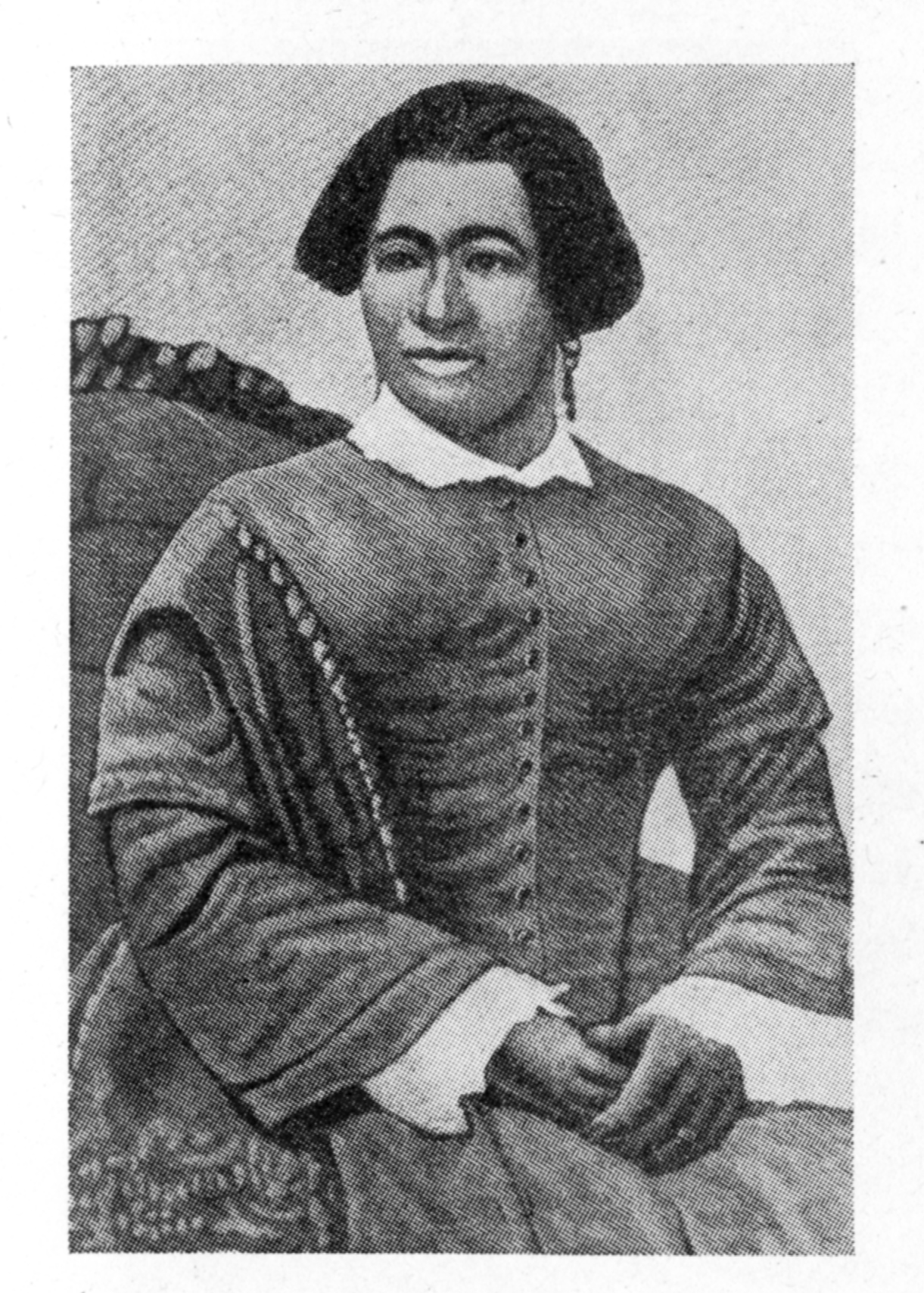
By 1917, the United States had entered the Great War, and among American composers to enlist was William Grant Still (1895-1978). Still’s professional training was interrupted by the war: in 1918 he left his music studies at Oberlin College to serve in the Navy. After his military service, Still went on to compose pioneering works like his blues-inflected Afro-American Symphony (1930), the first symphony by an African-American to be premiered by a major orchestra.

Maurice Ravel (1875-1937)

Maurice Ravel tried to enlist in the French Air Force, but due to his age and small stature, he was assigned to drive a lorry instead. Ravel drove petrol and other supplies to the front lines during the Battle of Verdun in 1916, wearing a thick coat to try and stay warm in his open truck (which he named Adelaide). After the war, Ravel composed his Piano Concerto for the Left Hand for Austrian pianist Paul Wittgenstein, who had lost his right arm while serving in the war.

Alban Berg (1885-1935)

In 1915, Serialist composer Alban Berg was coming off several years of intense composition study with Arnold Schoenberg and trying to establish an independent musical career when he was called up to serve in the Austrian army. The rigorous army camp training proved too much for his health, so he was transferred to serve in a War Ministry office until 1918. Berg’s opera Wozzeck, completed in 1922, was inspired partly by his own traumatic experiences upon enlistment.

Ivor Gurney (1890-1937)

English poet and composer Ivor Gurney left the Royal College of Music in 1915 when he joined the 2/5th Gloucesters to serve in France, where he was wounded. Gurney published two collections of war-influenced poetry, Severn and Somme (1917) and War’s Embers (1919), and he published his first collection of songs in 1920. Tragically, Gurney struggled with his mental health throughout his life, dying in 1937 while hospitalized for his condition. Among Gurney’s sensitive, rhapsodic songs is “Severn Meadows,” a setting of one of his own poems from Severn and Somme:

Only the wanderer
Knows England’s graces,
Or can anew see clear
Familiar faces.

And who loves joy as he
That dwells in shadows?
Do not forget me quite,
O Severn meadows.

classical musicians in front of italian coast

John Pitman Review: Sharon Isbin’s “Souvenirs”

Guitarist Sharon Isbin has recorded nearly everything in her instrument’s repertoire. Still, it’s refreshing to hear that, when an artist such as Ms. Isbin revisits a work (such as the Vivaldi D Major concerto), she gives us an interpretation with subtle differences from what came before. On “Souvenirs of Spain and Italy”, Isbin partners with Pacifica Quartet, so the Vivaldi has an especially intimate feel to it. The disc also sheds light on works that have stayed in the shadows somewhat. The Quintet by Mario Castelnuovo-Tedesco is such a work. Turina’s “Bullfighter’s Prayer” and Boccherini’s Quintet with the Fandango finale (complete with castanets and tambourine) give us a well-rounded tour of the Iberian and Italian peninsulas.

Hispanic Heritage Month

National Hispanic Heritage Month

In the United States, National Hispanic Heritage Month is recognized from September 15th to October 15th. It is a time allotted to recognize the influence of Hispanic and Latino Americans in the history of the country.

Although Hispanic and Latino are often used interchangeably, they mean two different things. The term Hispanic refers to people who speak Spanish, or are descended from communities who speak Spanish, while Latino refers to people who are from or descended from people from Latin American regions. This article includes both Hispanic and Latino composers.

Spain

Manuel de Falla

Manuel de Falla (1876-1946)

Listen: “El retablo de maese Pedro” (“Master Peter’s Puppet Show”)
“El retablo de maese Pedro” is a one-act puppet opera commissioned by the Princess of Polignac in 1919 and premiered in 1923. The libretto was based on chapter 26 of the Spanish novel “Don Quixote” by Miguel de Cervantes.

De Falla studied both piano and composition formally from various instructors. In 1904 he won both the Real Academia de Bellas Artes composition and a prestigious piano prize by the piano makers Ortiz y Cussó. He wrote works that were successful in multiple countries including Russia, England, and France, and his native country of Spain, and is recognized as the most distinguished Spanish composer of the early 20th century. His portrait was featured on Spain’s 1970 100-peseta banknote.

Mexico

Manuel Ponce

Manuel Ponce (1882-1948)

Listen: “Concierto del Sur”
Composed in 1941, “Concierto del Sur” is a guitar concerto dedicated to Ponce’s long-time friend and guitar virtuoso Andrés Segovia.

Manuel Ponce was a pianist and composer whose earlier style was inspired by Moszkowski and Chaminade, and included lots of light compositions for piano and many sentimental songs. After studying the works of Dukas later in his life, he developed a style that combined both French Impressionism and neo-Classical contrapuntal techniques. This later practice is reflected in his guitar music and more of his serious and larger works.

Silvestre Revueltas

Silvestre Revueltas (1899-1940)

Listen: “Sensemayá” (1937)
“Sensemayá” is an orchestral composition written in 1937 based on a poem of the same title by Cuban poet Nicolàs Guillén.

In 1924 and 25, Silvestre Revueltas and Carlos Chàvez organized the first concerts of contemporary music in Mexico. Until then, that kind of music was unknown to the capital. He held the position of assistant conductor of the Orquesta Sinfónica de México from 1929-1936. His works as a composer were original and technically inclined and contributed significantly to the form of the national Mexican symphonic poem.

Arturo Marquez

Arturo Màrquez (1950- )

Listen: “Danzón No. 2; Conga del Fuego”
This full orchestral composition was commissioned by the National Autonomous University of Mexico and premiered in 1994. It was inspired by a visit to a ballroom in Veracruz; it reflects the dance style known as danzón, a very important part of the folklore of the Mexican state of Veracruz.

Màrquez began to study various instruments and methods of composition while in junior high in the early 1960s. At 17, he was named director of Municipal Band Director in Navojoa. He studied further in Mexico, France, and the U.S., finally receiving an MFA degree from the California Institute of the Arts.

Jose Pablo Moncayo

José Pablo Moncayo (1912-1958)

Listen: “Huapango”
Composed in 1941, “Huapango” is a bright, short symphonic piece composed for orchestra.

In 1931, Moncayo joined the Mexican Symphony Orchestra as a percussionist, and became the conductor from 1949 to 1954. He formed the notorious Group of Four in 1934 with Blas Galindo Dimas, Daniel Ayala Pérez and Salvador Contreras. The group’s mission was to withhold Mexican nationalist spirit within new, original Mexican music. Moncayo uses inspiration from indigenous music and Mexican tradition in many of his compositions. His work helped define Mexican modernism, and his death in 1958 is considered by many to mark the end of the nationalist school of Mexican music.

Argentina

Alberto Ginastera

Alberto Ginastera (1916-1983)

Listen: “Estancia” (“The Ranch”)
“Estancia” is an orchestral suite and one-act ballet. The music references gaucho literature, rural folk dances, and urban concert music. It was commissioned in 1941 and premiered in 1943 in its orchestral form and in 1952 in its ballet form. The story of the piece tells of a city boy who wins the heart of a rancher’s daughter. The concert suite is made up of four dances: “Los trabajadores agrícolas” (“The Land Workers”), “Danza del trigo” (“Wheat Dance”), “Los peones de hacienda” (“The Cattlemen”), and “Danza final (Malambo).” The last movement, inspired by the Argentinian malambo dance, is one of Ginastera’s most popular pieces.

Ginastera is known for his use of both local and national musical idioms in his compositions. He was a musically talented child who studied in Buenos Aires at the Conservatorio Williams and the National Conservatory and received a Guggenheim award for his artistry. Although he is considered a traditionalist, he commonly mixed traditional musical ideals with modern techniques, including microtones, serial procedures, and aleatory.

Astor Piazzolla

Astor Piazzolla (1921-1992)

Listen: “Libertango”
The word “Libertango” is a portmanteau blending the words “Libertad” (“Liberty”) and “Tango.” Written in 1974, this piece is a prime example of Piazzolla’s switch from the classic tango to the nuevo tango.

Piazzolla popularized the tango and its principal instrument, the bandoneón, which he began playing at age 8. Through his composition and performance, he created a new type of tango, nuevo tango, that blended elements of jazz and classical music. Many of his compositions were written for his quintet Quinteto Nuevo Tango, formed in 1960. His music was also featured in many 1970s and 80s commercials, television programs, film scores.

Paraguay

Augustin Barrios

Augustín Barrios (1885-1944)

Listen: “La Catedral”
Written in 1921, “La Catedral was performed very often by Barrios throughout his lifetime. Small sections of the piece were changed over time as Barrios performed, and even to this day the work has many different interpretations and arrangements that can be performed.

Barrios is considered one of the most prolific Latin American guitarists, although his music was hardly known for over three decades after his death. He never studied music formally, and spent his life traveling, playing guitar, and composing.

Venezuela

Antonio Lauro

Antonio Lauro (1917-1986)

Listen: “Natalia”
“Natalia” is one of three valses venezolanos (Venezuelen waltzes) that Lauro composed for guitar between 1938 and 1940.

Lauro grew up studying piano and composition at the Academia de Música y Declamación. In 1932, he witnessed a concert by guitarist Augustín Barrios that inspired him to focus primarily on guitar in his music. He was a Venezuelan nationalist who toured nearby countries with other musicians to introduce more people to Venezuelan music. He composed a variety of works for orchestra, piano, and voice, but is most known for his guitar work. He was appointed professor of guitar at multiple distinguished schools including Juan José Landaeta Conservatory, was named president of the Venezueland Symphony Orchestra, and presented with the Premio nacional de música, Venezuela’s highest artistic award.

Photo Credits (from top to bottom)

play.primephonic.com

peermusicclassical.com

amiraarmenta.com

redmayor.wordpress.com

Desde La Plaza

album cover for "lamentationes"

New York Polyphony’s “Lamentations”

New York Polyphony‘s bass, Craig Phillips, shares the story of how his group rediscovered music of the 16th century composer, Francisco de Peñalosa, and how that composer’s “Lamentations of Jeremiah” are so perfectly suited to his group’s voices, that it seems Peñalosa wrote the work for them. On the recording, New York Polyphony include works of Peñalosa’s contemporaries, to provide context for this unique style of multiple-line music.

cd cover with cartoon of man playing violin

Augustin Hadelich links Brahms to Ligeti

German-American violinist Augustin Hadelich says that he is attracted to the idea of contrasts in music, and in making choices of repertoire. Mr. Hadelich tells program director John Pitman that despite those contrasts, often similarities arise by putting two disparate works together.

In this case, Mr. Hadelich leads with the familiar and beloved concerto by Brahms, and follows with the concerto of Hungarian 20th century composer, György Ligeti. Hadelich also lends his own touch to the Brahms, by playing his own cadenzas. A performance notable for the intensity of Hadelich’s interpretation as well its beauty.

American rapture

Harpist Yolanda Kondonassis: American Rapture

Yolanda Kondonassis is a harpist that may be described as “fearless”, as she enthusiastically takes on any idea that contemporary composers send her way. A while back, Ms. Kondonassis made a wonderful recording of the Ginastera concerto. Now, she shares what may become the first great harp concerto of the 21st century: a commissioned work by Jennifer Higdon.

The work is colorful, inventive, and just plain “cool” (a word that both Ms. Kondonassis and I agree with on this work). Conductor Ward Stare joins in the conversation about “American Rapture.”

Lara Downes

Lara Downes is making “Holes in the Sky”

A few years back, American pianist Lara Downes found a quote by Georgia O’Keefe that stuck in “my head and my heart”, which inspired the title for her new collaboration: “I want real things – live people to take hold of – to see- and talk to – music that makes holes in the sky – I want to love as hard as I can.”

“Holes in the Sky” is an artistic presentation unlike any other that I have seen in classical music: Not only a disc made up of works entirely and exclusively by women, but with all-women artists as well. She is joined by some of the genres’ most outstanding creatives, including violinist Rachel Barton Pine, Simone Dinnerstein, and Rhiannon Giddens. The iconic singer / songwriter Judy Collins not only provides one of her songs, but sings “Albatross” (from 1967) with the pianist. Collins goes further in the liner notes by sharing her wisdom about music, art and life with Lara and, indeed, all of us. Downes’ projects, which marry excellent performance, interpretation and care in repertoire are never conventional. This one, is exceptional. – John Pitman, Director of Music and Programming

Holes in the Sky – Lara Downes
BUY NOW

Hee Young Lim

A Korean cellist in Paris (Hee-Young Lim plays French cello concertos)

This is the debut disc by Hee-Young Lim, a Korean-born cellist who started her path in music in her parents’ living room. A neighbor brought over a cello that wasn’t being used, and it remained unplayed until one of Hee-Young’s friends showed interest in it. Hee-Young determined that she would play that cello.

Her years living in Paris inspired her to make her debut of French concertos. Besides the expected Saint-Saens and Lalo, Lim surprises with the somewhat jazzy Concerto No. 1 by Darius Milhaud. This, coupled with her appointment as the first Korean professor at the Beijing Academy, make this an auspicious debut for this gifted cellist.

French Cello Concertos – Hee-Young Lim
BUY NOW

My Spanish Heart album cover

Katarzyna Musiał and her “Spanish Heart”

Polish-Canadian pianist Katarzyna Musiał loves to play Chopin. She also loves Gershwin. However, the music that truly stirs her heart? The music of Spain. With good reason, too. In her conversation with program director John Pitman, Musiał shares how Spanish music and culture became her passion: it was a part of her upbringing, thanks to her parents who took her there many times.

“My Spanish Heart” is Musiał’s second CD, and celebrates the diverse styles, rhythms, and cultures of the Iberian Peninsula, in music from the late 19th and early 20th centuries. The familiar (Sevillanas, Ritual Fire Dance), and refreshing (Danza de la rosa is exquisite) populate a CD program that is as colorful as Spain itself. Katarzyna Musiał performed in Portland when she was here to record the interview; here’s hoping that her “Spanish Heart” will lead her back so that Portland audiences can experience her passion for this music sometime again.

Jan Lisiecki

Pianist Jan Lisiecki explores Mendelssohn’s piano concertos

Canadian pianist Jan Lisiecki continues his exploration of, an interest in the different facets of Romanticism, following his Chopin CD with this new one of Mendelssohn’s piano concertos. The concertos anchor the CD, but are not the only highlight: Lisiecki tells me (in our conversation), that from the beginning he wanted to incorporate the “Serious Variations”, and the “Rondo Capriccioso”, which capture your attention with their virtuosity and melodic content. Jan’s parents are Polish, and was able to record these works in his adopted country (he has dual citizenship), with New York’s Orpheus Chamber Orchestra. Lisiecki collaborates with the OCO in such as way that the concertos have the intimacy of chamber music, which lets their various facets shine.

KQAC 89.9 Portland/Vancouver
KQOC 88.1 Newport/Lincoln City
KQHR 88.1 Hood River/The Dalles
KQHR 96.3 Columbia Gorge East
KQMI 88.9 Manzanita
KSLC 90.3 McMinnville
95.7 FM Corvallis/Flynn