
By Portland Business Journal
The “Broadcastle” and performance hall are among the highlights of All Classical’s new digs.
Keep reading at bizjournals.com.


By Portland Business Journal
The “Broadcastle” and performance hall are among the highlights of All Classical’s new digs.
Keep reading at bizjournals.com.


By Radio World staff
Radio World’s 2025 eBook provides readers with a look inside more than a dozen recently built radio studios. Published annually, it has become one of our most popular recurring features. Engineers, managers and suppliers comment on the design choices and the technical decisions involved. Featured broadcasters include Audacy, SiriusXM, Cumulus, Chicago Public Media, All Classical Radio, and more.
Keep reading at radioworld.com.

American pianist Simone Dinnerstein’s latest album, The Eye is the First Circle, features iconic American composer Charles Ives’ Concord Sonata. The album is a live recording of Dinnerstein’s multimedia production at the Alexander Kasser Theater in Montclair State University, New Jersey.
The Eye is the First Circle was inspired in part by a quote from Ralph Waldo Emerson’s essay Circles: “The life of man is a self-evolving circle, which, from a ring imperceptibly small, rushes on all sides outwards to new and larger circles, and that without end.”
All Classical Radio host John Pitman speaks with Simone about this monumental and challenging yet profound and personal piece – and journey, by the artist in this case – learning, performing and recording a piano sonata inspired by American literature, the landscape and experience.
Hear their conversation below:
Simone Dinnerstein’s The Eye is the First Circle is available to stream and purchase on her website simonedinnerstein.com.

The composers we love have written some of the most iconic pieces in classical music. Works like Beethoven’s Für Elise and Symphony No. 5, Mozart’s Marriage of Figaro, Tchaikovsky’s The Nutcracker, and many more are synonymous with the genre of classical music and recognized by classical music appreciators of all levels. While these composers wrote some of the most quintessential works in the genre, many listeners may not be aware of their “hidden gems.”
Today, All Classical Radio is exploring lesser-known works by legendary composers. We are highlighting pieces that are not particularly popular in the concert hall, were written earlier on in the composer’s career, or were written outside of the composer’s typical instrumentation or genre. If you enjoy these composers, we think you will enjoy some of their more overlooked music as well.
Beethoven is often regarded as the greatest composer to have ever lived. Most famous for his nine symphonies, including the Eroica Symphony or the Pastoral Symphony, as well as his concerti and piano sonatas, it is inevitable that some of his compositional output has gone unnoticed to some extent. While it can be difficult to categorize any of Beethoven’s works as a “hidden gem,” his Bagatelles, Op. 126 were composed as a complete set of six light and short works for piano and were some of his last works for piano. Upon getting this work published, Beethoven stated that these bagatelles were “the best pieces of this kind I have written.”
Mozart composed over 600 works in his 35 years of life. Given his immense popularity, it can be difficult to see any of his works go unnoticed; however, one notable hidden gem for Mozart is his Divertimento for 3 Basset Horns No. 5. A basset horn is an instrument within the clarinet family. While most clarinet players are familiar with Mozart’s quintet and concerto, not many know of his five divertimenti for basset horn (a divertimento is an 18th-century genre of music that is usually light-hearted and written for small ensembles). This work sets itself apart from the already unique instrumentation by beginning with a slow Adagio movement and ending with a Polonaise, a Polish dance.
Considered one of the “Three B’s” of classical music, along with Bach and Beethoven, Brahms was a leading figure in the Romantic period. A few exemplary pieces include his First and Third Symphonies, Piano Concerto No. 1, Hungarian Dances, Wiegenlied (also known as “Lullaby”), and many chamber music works that capture the composer’s tender and warm sound. Perhaps a lesser-known work that encapsulates the gentle and romantic Brahmsian voice is his choral work, Geistliches Lied. This piece was originally part of a series of contrapuntal exercises (counterpoint in music is the relationship between two or more simultaneous musical lines) that were traded back and forth between Brahms and violinist Joseph Joachim. Regardless of its origins, the work’s mournful character is full of complexity.
British composer Ralph Vaughan Williams was a key figure in influencing the style of 20th-century British classical music. An avid collector of English folk songs, Vaughan Williams used these traditional melodies to craft his unique folk sound, which can be heard in works like Fantasia on a Theme by Thomas Tallis, The Lark Ascending, and English Folk Song Suite. However, many of his earlier works, such as the Piano Quintet in c minor, were hidden from the public once he had developed his “mature” style. While this quintet contains hints of who the composer was soon to become, it was shelved for over 80 years after its premiere. You will find that this hidden gem with violin, viola, cello, double bass, and piano has the romantic elements of Brahms and Dvorák.
Many listeners are familiar with Tchaikovsky’s ballets, such as The Nutcracker, Sleeping Beauty, and Swan Lake, or perhaps his symphonic works such as Symphony No. 5 and the 1812 Overture (the one with the cannons). While his large-scale works are frequently performed all over the world, Tchaikovsky’s handful of chamber or small ensemble compositions don’t receive the same level of attention. Only eight pieces in his catalog of 169 works are chamber music, and only three of those chamber pieces are string quartets, with his first string quartet being the most popular. To shed light on the composer’s small and often overshadowed chamber music output, we’re highlighting String Quartet No. 3. This work may not be as lively or grand as some of Tchaikovsky’s symphonic works, but it is just as expressive, dramatic, and powerful. Dedicated to violinist and teacher, Ferdinand Laub, a friend of Tchaikovsky, the opening movement is full of melancholic expression, and the third movement, Andante funebre e doloroso, is an emotional funeral march filled with grief as it commemorates Laub’s death.
Known as one of the greatest Italian composers, Giacomo Puccini’s operas are among the most recorded and performed works in the genre. Arias such as “O mio babbino caro” (“Oh my dear Papa”) from Gianni Schicchi and “Nessun dorma” (“Let no one sleep”) from Turandot are recognizable even in popular culture, from movies, TV, commercials, and more. Puccini himself recognized his operatic talent when he said, “Almighty God touched me with his little finger and said: ‘Write for the theatre – mind, only for the theater!’ And I have obeyed the supreme command.” While his operas are immensely popular, many may not know Puccini’s instrumental and chamber music. Let’s listen to his prelude for string quartet, Crisantemi. Produced in a single night, Crisantemi is an elegy written for Puccini’s friend, Prince Amadeo, Duke of Aosta. Although this piece stands on its own, Puccini ended up using themes from this string quartet in his opera, Manon Lescaut.
Do you recognize any of these hidden gems we explored today? Perhaps you have a favorite lesser-known work that we didn’t mention? Get in touch to let us know your favorite composer’s hidden gem!


By Radio+Television Business Reporter
The home of Fine Arts programming in Portland, Ore., and its surrounding communities is the recipient of a cash award from the National Endowment of the Arts.
KQAC-FM and its All Classical Radio operation is receiving $20,000 as part of the NEA’s Grants For Arts Projects bequeathments.
The grant will support All Classical Radio’s Access Recording Project, set to launch later this year.
Keep reading at rbr.com.


By Radio Online
KQAC-FM/Portland, OR, known as All Classical Radio, has received a $20,000 grant from the National Endowment for the Arts (NEA) to support its upcoming Access Recording Project. This initiative is designed to lower financial hurdles to quality recording and performance facilities for artists and groups from diverse backgrounds.
keep reading at news.radio-online.com.


Cellist Joshua Roman began to experience something beyond a case of Covid, early in the pandemic. It soon became apparent that the virus had advanced to become long Covid, which consists of symptoms that vary widely from one person to the next. While coming to terms with this life-changing condition, Joshua had to learn a new way of approaching the playing of the cello, performing publicly, and collaborating with musicians.
Immunity, Joshua’s first solo album, is a form of document of those experiences, but also functions as a line of communication to his audience, especially as a connector to others with long Covid.
In this interview with All Classical Program Director John Pitman, Roman shares his encounters with this serious, long-term illness, how it changed his approach to music and performing, and how it strengthened his connections with friends and fellow musicians, and the people who come to hear him play.
Hear their conversation below:
Joshua Roman’s Immunity is available now on Bright Shiny Things on the artist’s website, joshuaroman.com.


As we begin a new year together, we’d like to take a moment to reflect, with gratitude, on 2024. Together, we have achieved so much!
Thanks to your generous support, All Classical has had an exciting year full of high notes and crescendos—from a new state-of-the-art home in downtown Portland to innovative community collaborations and artist residencies, and a project profiling trailblazing artists of the Pacific Northwest.
All Classical Radio is community-focused and community-supported. Your financial support will help to keep the music playing in the year ahead, and ensure that All Classical can continue sharing comfort, inspiration, and healing music with our community every day. Thank you.
Click to view PDF or read highlights below
Thank you for supporting All Classical Radio. Your tax-deductible contribution will help protect the future of classical music in the Pacific Northwest, and beyond.

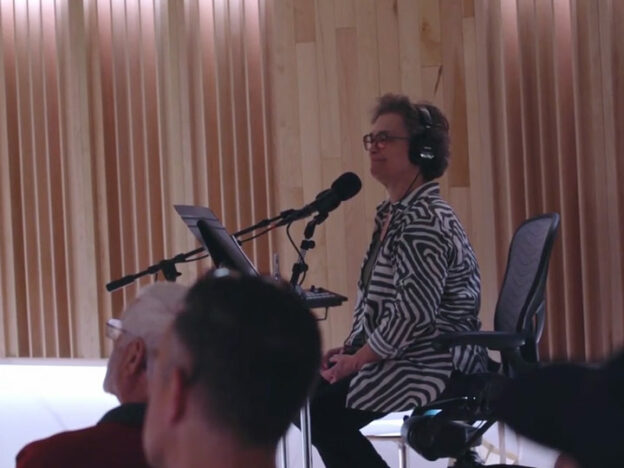
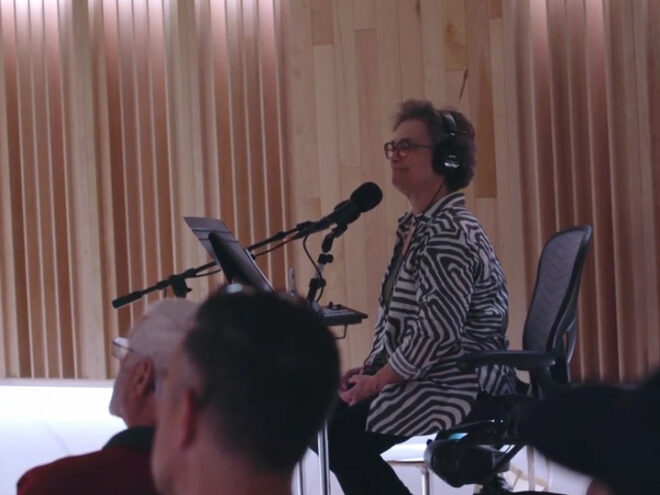
By Brett Campbell for Oregon ArtsWatch
The venerable broadcaster’s move to new studios in downtown’s KOIN Tower opens space for an energetic and expanded mission beyond the radio dial.
Portland’s All Classical Radio, one of the nation’s most successful classical radio stations, is entering a new incarnation. ArtsWatch’s Joe Cantrell was on hand — trusty camera in hand — a couple of weeks ago for the public opening of the station’s gleaming new headquarters on the third floor of downtown Portland’s KOIN Tower.
Keep reading at orartswatch.org.

Celebrating the magic of the season is one of All Classical Radio’s most beloved traditions. Each December, our Program Director, John Pitman, selects twelve pieces from our extensive Festival of Carols library for a deep dive into their origins.
Since 2019, we’ve explored holiday classics on the Arts Blog, such as “Hark, the Herald Angels Sing,” “O Tannenbaum,” and “Silent Night.” Each year, we’ve expanded our exploration of carols to cover several centuries, origins, languages, and even holidays beyond Christmas. This year, we’re thrilled to continue in this tradition and cover a mix of dear favorites and lesser-known jewels.
Be sure to tune in to our Festival of Carols on All Classical Radio from December 22-25, and check out the rest of our holiday programming!
The words of the carol Hodie Christus Natus Est (Today Christ is born) originate from a 6th-century Gregorian chant that was traditionally sung at Christmas. One of the text sources comes from the Gospel of Luke: “For unto you is born this day in the City of David a Savior, which is Christ the Lord…” Another comes from Psalm 32, which begins, “Be glad in the Lord, and rejoice…” In the time since its Medieval origins, the chant has emerged as a popular Christmas carol and has been interpreted by many composers throughout the subsequent centuries, including Jan Pieterszoon Sweelinck, William Byrd, and Giovanni Palestrina.
Let’s listen to Dutch composer Jan Pieterszoon Sweelinck’s interpretation of the chant published in 1619. Sweelinck’s music straddles the Renaissance and Baroque eras and is a shining example of the power of polyphony (the combination of several melodies sung together to create a rich vocal tapestry). You can follow along with the English translation of the Latin text here.
Renowned English composer and choral director John Rutter is no stranger to holiday music and has written many beloved Christmas carols. One such work, What Sweeter Music, was composed in 1988 for the choir of King’s College for their Festival of Nine Lessons and Carols. (And in case you didn’t know, All Classical broadcasts this Christmas Eve tradition every year. Be sure to tune in at 7:00 AM PT on Tuesday, December 24, 2024). For What Sweeter Music, Rutter chose to set words by 17th-century English poet Robert Herrick which celebrate the birth of Jesus through joyful song.
J. S. Bach originally composed Cantata 147, Herz und Mund und Tat und Leben (Heart and mouth and deed and life) for the Advent season in 1716, rewriting it a few years later while serving in his new position as music director at St. Thomas School in Leipzig. Bach wrote this well-known cantata for the Feast of the Visitation to the Virgin Mary, which is closely associated with the anticipation of the birth of Jesus. For text, Bach looked to the Gospel of Luke for inspiration. The most famous movement from the work, “Jesu, Joy of Man’s Desiring,” appears twice in Cantata 147: once in the middle, and once as a reprise at the end with new text. As you listen to this holiday anthem, read along with an English translation of the German text here.
Gabriel’s Message (“The angel Gabriel from heaven came…”) originated as an anonymous Medieval Basque hymn that has since been arranged by several choral composers, including Edgar Pettman, John Rutter, and Stephen Paulus. The text tells the story of the Annunciation as it relates to the celebration of Christmas and relays an intimate interaction between Gabriel and Mary. Not long after it was written, the carol became popular across regional boundaries and even crossed the English Channel.
Fun fact: Chaucer quoted the carol as part of The Miller’s Tale in his Canterbury Tales.
The gentle Catalan Christmas carol, El Noi de la Mare (The Son of the Virgin), could easily double as a lullaby. Written in three variations, the carol’s three verses ask, “What shall we give the son of the Mary?” The narrative refers to figs in all three verses, and in the final stanza, the figs that are “still green” are a reference to Jesus as an innocent child, and the fig’s “ripening” is his coming work of redemption. Read an English translation of the text here. Given its Spanish origins, this carol is frequently arranged for guitar, as seen below. In fact, guitarist Andrés Segovia is largely responsible for the work’s popularity outside of Spain.
English composer Peter Warlock (born Philip Arnold Heseltine) contributed several beloved carols and choral works to the seasonal repertory, including his striking Cornish Christmas Carol. If you feel like this carol gives you a bit of aural whiplash, Warlock wrote the following note in his score: “To be sung fairly fast, with sudden alternations of hardness and sweetness, of rude heartiness and tenderness touched with awe.” Be sure to listen for the fleeting musical reference to another carol we’ve discussed already featured on the Arts Blog.
Composed in 1917 by Pietro Yon, this Italian Christmas carol quickly became a seasonal staple across many nations. Born in Italy, Yon emigrated to the US at age 21 and wrote his famous carol while serving as organist of St. Francis Xavier Church in Manhattan. You might notice that the melody and text for the chorus are extracted from Adeste Fideles (Oh Come All Ye Faithful). Since its publication, Gesu Bambino has been performed both in Italian and English and recorded by such notable singers as Luciano Pavarotti and Kathleen Battle. You will find the English translation of the original Italian lyrics here.
Using text of German origin from the 16th century, English composer Benjamin Britten created his Christmas cantata, A Boy Was Born, while still a student at the Royal College of Music. This soaring a cappella piece marked Britten’s first major composition for voice and his first significant religious contribution. It’s important to note that the title, A Boy Was Born, is both the title of the cantata and the name of the work’s first movement. This first movement serves as the main theme upon which the subsequent six variations are built. When performed by itself, the first movement is hymn-like and sincere, evoking musical traditions of both centuries past and present.
Originating from the Burgundy region of France, the traditional Christmas carol Patapan was written around 1700 by Bernard de la Monnoye. In addition to his work as a lawyer, La Monnoye wrote a well-known collection of thirteen Burgundian Christmas carols under the pseudonym “Gui Barozai,” with Patapan being the most popular today. Telling a story of two boys and their musical lessons in celebration, the original title of the carol was “Willie, Take Your Little Drum” and can be interpreted as a predecessor to The Little Drummer Boy. The carol’s title is meant to mimic the drummer’s sound while celebrating the baby Jesus’s birth. As you listen, follow along with an English translation of the text here.
American composer Charles Ives’s A Christmas Carol was written with a calm, sweet, and lilting melody that offers a soft air of devotion. Composed in 1894, Ives wrote both the text and music for this carol himself and published it in a collection of 114 Songs in 1922. While the title might call to mind a certain Dickensian novella, Ives titled his carol in literal reference to the holiday celebrating the birth of Jesus.
German composer and arranger Franz Biebl’s interpretation of the Marian antiphon is a sublime choral masterpiece. Written for double-male chorus (and later arranged for mixed voices), Biebl wove elements of Medieval chant into a resolutely 20th-century piece. Originally composed in the 1950s, Biebl’s Ave Maria became widely popular in the U.S. after being recorded by the famed vocal ensemble Chanticleer. Interestingly, Biebl actually wrote the piece for a firemen’s choir in Bavaria. As for the text, while not directly connected to Christmas, the ancient prayer to Mary has become a consistent literary counterpart to other nativity texts.
Gloucestershire Wassail (“Wassail, Wassail, All Over the Town”) is a joyful traditional English carol dating from the 18th century and commemorates the Christmastime wassailing tradition known throughout parts of England. Wassailing involves going from house to house and singing of good health while carrying a large, decorated bowl filled with mulled wine to offer townsfolk. The verses of text refer to many food items the carolers wish for in the new year, such as a good crop of corn and a good Christmas pie, as well as acknowledge many of the local livestock.
Read about more favorites from the Festival of Carols in previous years’ editions of “The Stories of Twelve Carols”:
Be sure to tune in starting December 22nd, 2024 to hear your favorites played on air. Learn more about All Classical Radio’s 2024 Holiday Programming.