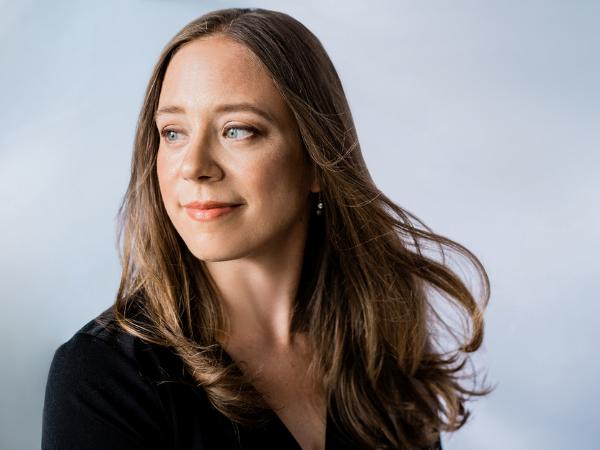
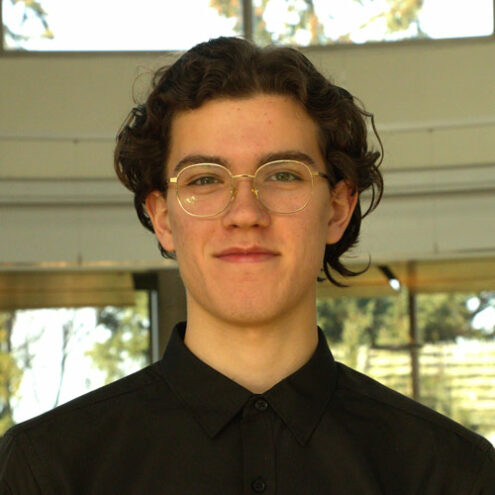
Dana Sparling, All Classical Radio’s 2025 Young Artist in Residence. Photo by Frankie Tresser.

CLASSICAL MUSIC UK: All Classical Radio names composer and young artist in residence

Dana Sparling, All Classical Radio’s 2025 Young Artist in Residence. Photo by Frankie Tresser.

By Florence Lockheart

Portland’s independent, classically-focused radio station All Classical Radio has named Kirsten Volness as its composer in residence, and multi-instrumentalist Dana Sparling as young artist in residence. During their residencies the duo will also serve as the media network’s 2025-2026 young artist ambassadors.

The Oregon-based listener-supported radio station as one of the first in the US to offer artist residencies, and will offer Volness and Sparling access to All Classical Radio’s state-of-the-art facilities, plus opportunities for professional and creative development.

Keep reading at classical-music.uk.

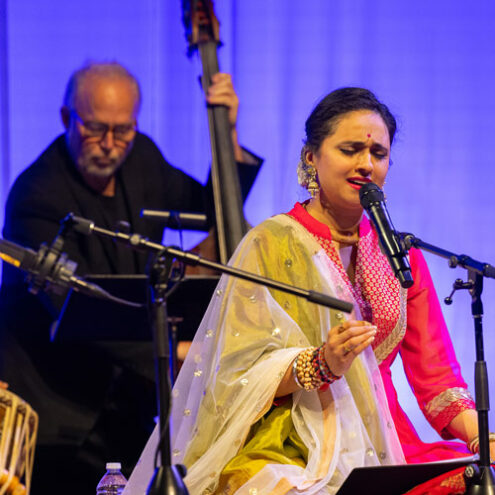
Kirsten Volness, All Classical Radio's 2025 Composer in Residence

CURRENT; MUSICALAMERICA; BROADWAY WORLD: All Classical Radio Names Kirsten Volness as Composer in Residence and Dana Sparling as Young Artist in Residence

Kirsten Volness, All Classical Radio's 2025 Composer in Residence

Current by Julian Wyllie

Broadway World by Stephi Wild

All Classical Radio has named Kirsten Volness as a Composer in Residence, and flute, piccolo, and saxophone player Dana Sparling as Young Artist in Residence. Additionally, Kristen Kim and Kaden Prichard will serve as the Media Network’s 2025-2026 Young Artist Ambassadors. One of the first radio stations in the nation to offer artist residencies, ACR has provided opportunities to numerous young and professional musicians for career advancement, creative development, and audience exposure since the program’s launch in 2019.

This announcement was featured on:

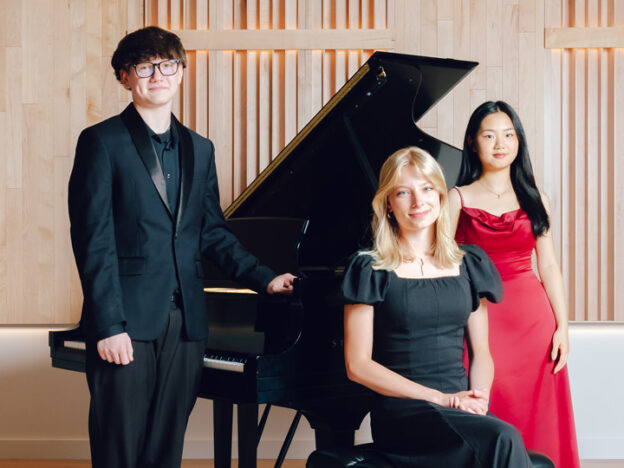
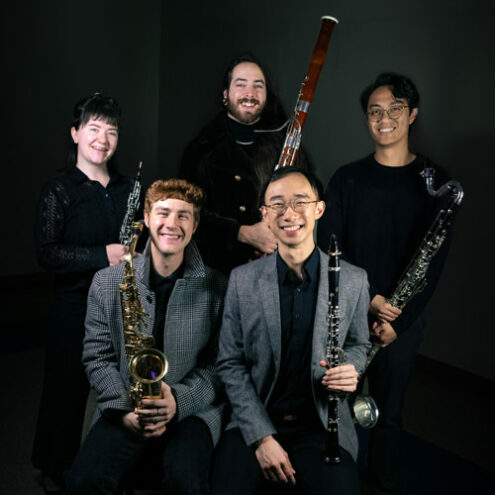
All Classical Radio’s 2025 Young Artists Ambassadors. Photo by Frankie Tresser.

2025 Young Artist & Composer Residencies

Dana Sparling, All Classical Radio’s 2025-2026 Young Artist in Residence. Photo by Frankie Tresser.

All Classical Radio is thrilled to announce flutist Dana Sparling as the station’s 2025-2026 Young Artist in Residence. A junior at Camas High School in Washington, Dana has played flute and clarinet since middle school. She now plays flute and piccolo with Metropolitan Youth Symphony’s Symphony Orchestra, and alto saxophone with MYS’s Symphonic Wind Ensemble.

“Through this residency, I hope to uplift other young musicians in my community by sharing young artist-focused projects on All Classical’s airwaves and online platforms,” says Dana. “I hope to build more connections within the Pacific Northwest’s classical community and gain meaningful performance experience.”

Dana will help create content for the station’s blog and digital channels, as well as perform on a future episode of Thursdays @ Three.


2025 YOUNG ARTIST AMBASSADORS

All Classical Radio’s 2025-2026 Young Artists Ambassadors
All Classical Radio’s 2025-2026 Young Artist Ambassadors. Photo by Frankie Tresser.

Dana will be joined by All Classical Radio’s new cohort of Young Artist Ambassadors for 2025-2026:

  • 16-year-old cellist Kristen Kim from Portland, OR

  • 16-year-old clarinetist Kaden Prichard from Oak Grove, OR

Meet our 2025-2026 Young Artist in Residence and Ambassadors.

First launched in 2019, All Classical Radio’s Young Artist in Residence program has continued to grow and flourish since its inception. In 2022, the station expanded its youth residency program with the first-of-its-kind Young Artist Ambassadors, building upon its commitment to serving youth regionally and across the country.


2025 COMPOSER IN RESIDENCE

Kirsten Volness, All Classical Radio's 2025-2026 Composer in Residence. Photo by Rachel Hadiashar.
Kirsten Volness, All Classical Radio’s 2025-2026 Composer in Residence. Photo by Rachel Hadiashar.

All Classical has also named Kirsten Volness as the station’s 2025-2026 Composer in Residence. She is known for her emotive soundscapes which integrate electronics and modern composition techniques with jazz and pop influences.

Kirsten takes inspiration from nature, myths, spirituality, and environmental and sociopolitical issues. She will help the station helm the Recording Inclusivity Initiative’s third album. Her original work, little tiny stone, full of blue fire, will be included on All Classical Radio’s third RII album in 2026.

Learn more about All Classical Radio’s award-winning Recording Inclusivity Initiative at recordinginclusivity.allclassical.org.


ABOUT

The Artists in Residence program provides young and professional musicians with opportunities for career advancement, creative development, and audience exposure. The program is a part of All Classical Radio’s initiatives dedicated to equity and inclusivity in the arts.

All Classical Radio is committed to supporting our Artists in Residence by providing them with new resources and opportunities to connect with audiences, expand their musical portfolio, and reach new creative heights as our partners, including:

  • Access to All Classical Radio’s recording facilities
  • Access to the station’s digital music archives for research and development
  • Encouragement and support for professional development as artists
  • A financial award to assist with projects and performances

We believe All Classical Radio’s Artists in Residence program is a truly unique and all-encompassing opportunity for musicians to learn and grow. Learn more at allclassical.org/artists-in-residence.


PAST ARTISTS IN RESIDENCE

Previous Young Artists in Residence include composer, trombonist, and vocalist Elaina Stuppler (2024); pianist and violinist Amir Avsker (2023); double bass player Maggie Carter (2022); pianist Natalie Tan (2020); and cellist Taylor Yoon (2019). The station named its first-ever Young Artist Ambassadors in 2022.

All Classical Radio’s current Artists in Residence are violinist Emily Cole and clarinetist James Shields. Previous professional Artists in Residence include pianist María García (2022-2023); flutist Adam Eccleston (2020-2021); and concert pianist Hunter Noack (2019).

Meet all of All Classical Radio’s Artists in Residence.


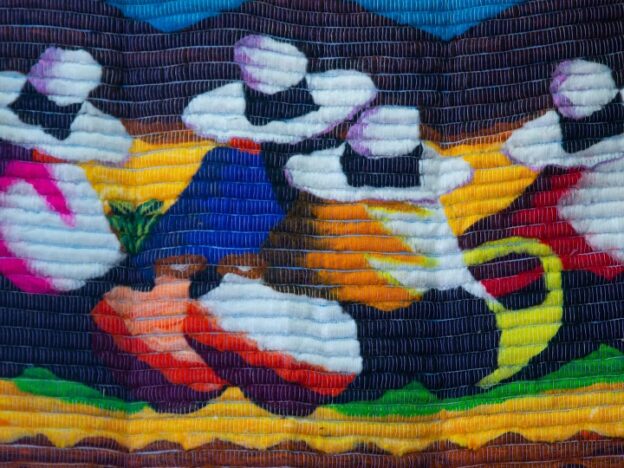
Colorful Argentinian tapestry

Six Composers We’re Celebrating for National Hispanic Heritage Month

At All Classical Radio, we celebrate the musical contributions of Hispanic and Latino composers—both past and present—every day on the air. In honor of National Hispanic Heritage Month, we’d love to share about the lives of six extraordinary Hispanic composers you will hear as part of our daily programming.

José White Lafitte (1836-1918)

Born in Cuba, violinist and composer José White Lafitte showed signs of musical talent from a young age. At 19 years old, White Lafitte performed the violin publicly for the first time with American pianist Louis Moreau Gottschalk. The performance’s success led to White Lafitte’s enrollment at the Paris Conservatory, where he won the First Grand Prize for Violin within his first year of study.

White Lafitte went on to enjoy a fruitful career as a touring performer, composer, and educator. Fun fact: one of his students was George Enescu.

For over a decade, White Lafitte worked as the director of the Imperial Conservatory in Rio de Janeiro, as well as the court composer of Emperor Pedro II. As a composer, his works often feature the violin and elegantly straddle the traditions of the romantic era with musical features from his homeland.

Photo of Jose White Lafitte

Carlos Chávez (1899-1978)

The prolific career of Mexican composer and conductor Carlos Chávez spanned over 50 years. Appreciated as one of the most influential musical figures in Mexican history, Chávez created a distinct sound world that honored his home country. His emergence into adulthood coincided with the end of the Mexican Revolution in 1921, after which a new cultural nationalism emerged that made a significant impression on the young composer.

Chávez wrote over 200 works, from ballets and symphonies to pieces for piano and small ensemble. As a conductor, he led nearly every major orchestra in the U.S., Latin America, and Europe. However, perhaps his most significant impact was his advocacy for increased access to the arts in Mexico. As founder and head of the Orquesta Sinfónica de México (OSM), Chávez organized concerts for workers and children. He even took the orchestra out to rural Mexican provinces, bringing classical music to many audiences for the first time.

Photo of Carlos Chavez

José Pablo Moncayo (1912-1958)

Speaking of Carlos Chávez, the illustrious composer taught our next subject, José Pablo Moncayo, at the National Conservatory of Music in Mexico City. Moncayo was a pianist and percussionist, though he is best remembered today as a conductor rather than a composer. His orchestral piece, Huapango, is a popular choice for the concert hall. Along with three other Mexican composers, Moncayo formed the “Group of Four” to foster a nationalist school of Mexican music, similar to France’s “Les Six” and Russia’s “The Five.” He championed idioms from Mexican folk music in his works and sought to incorporate these sounds into the Classical vernacular.

Fun fact: Moncayo was invited to study composition with Aaron Copland at Tanglewood during the summer of 1942.

Photo of Jose Pablo Moncayo
Image courtesy of Classical KUSC

Carlos Guastavino (1912-2000)

Argentinian composer Carlos Guastavino showed talent for the piano from an early age. A self-proclaimed lover of melody and song, Guastavino would write hundreds of songs over the course of his career (many of which have not been published), leading admirers to claim him as “The Argentine Schubert.” He was devoted to tonal harmony and traditional musical forms amid the rise of experimental musical styles in the mid-20th century, and he was inspired by the folk music of Argentina. Guastavino felt that simple, memorable melodies were the way to a listener’s heart.

Guastavino set words by León Benarós to music in over 60 songs and maintained a long, collaborative friendship with the poet. In addition to art song, Guastavino also wrote works for orchestra, piano, and guitar.

Photo of Carlos Guastavino

Violeta Parra (1917-1967)

Violeta Parra was a highly influential Chilean composer, singer-songwriter, and artist. Her father taught her and her siblings to sing and play the guitar from a young age. Unsurprisingly, Parra took to songwriting right away with passion. She was particularly inspired by Chilean folk music, which led her to co-create a new musical genre—Nueva canción chilena (“Chilean New Song”), merging native folk music with themes of social justice. Parra endeavored to keep the traditions of Chile, especially those from rural regions, alive for future generations.

Recognized as the “Mother of Latin American Folk,” Parra mastered the art of storytelling through her songs. Parra’s work as a folk musician also proved that the boundaries between classical and popular music are artificial, with recordings of her music by classical artists such as Elīna Garanča and Yo-Yo Ma.

Photo of Violeta Parra

José Elizondo (b. 1972)

Composer José Elizondo was born in Mexico and currently resides in the U.S. He holds degrees in Music and Electrical Engineering from the Massachusetts Institute of Technology (MIT); he also studied music at Harvard University. Elizondo has built a dual career for himself as both a composer and an engineer—his engineering work focuses on speech-recognition technology, combining his interests in computer science, linguistics, natural language processing, and artificial intelligence.

As a composer, Elizondo has become best known for his compositions written for cello despite never learning how to play the string instrument. While studying music in college, Elizondo was introduced to the cello after hearing a performance by Carlos Prieto and becoming immensely inspired by the musician. Elizondo’s music is regularly performed by distinguished artists such as Yo-Yo Ma, Allison Eldredge, Sheku Kanneh-Mason, and many more. Elizondo prides himself on writing music that is joyful, heartfelt, and accessible to all audiences.

Photo of Jose Elizondo
Image courtesy of the composer’s website

Discover More

Check out these posts from the Arts Blog to continue learning about Hispanic composers we love to play on air:

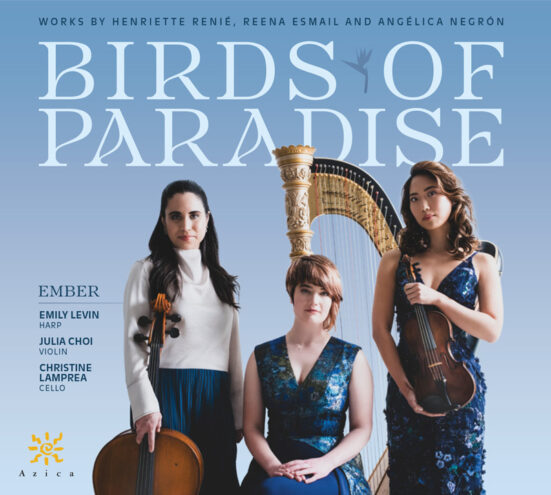
Featured image for John Pitman Reviews: Ember's 'Birds of Paradise'

John Pitman Reviews: Ember’s ‘Birds of Paradise’

Featured image for John Pitman Reviews: Ember's 'Birds of Paradise'

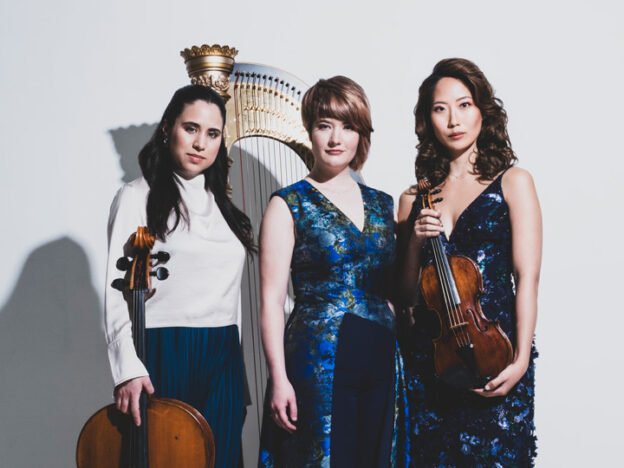
John Pitman’s latest conversation is with harpist Emily Levin, and a new group named Ember. They specialize in works for harp, violin and cello. Ember’s new album (on Azica, to be released in September 2025) is titled Birds of Paradise, which echoes one of the pieces on their album.

Levin, who is also principal harpist of the Dallas Symphony Orchestra, invited violinist Julia Choi and cellist Christine Lamprea to explore this specialized, though gradually growing, repertoire for their combination of instruments. In her chat, Emily shares the history of the harp and its role in society, including the contrast of how historically the instrument was played by women domestically, but by men in larger forums, such as the symphony orchestra. The music, by Henriette Renié, Angélica Negrón, and Reena Esmail, is stunningly beautiful, and full of invention and variety.

Hear the conversation below:


Ember will release its debut album Birds of Paradise on Azica Records in September 2025. Learn more at emilylevinharp.com/ensembles.


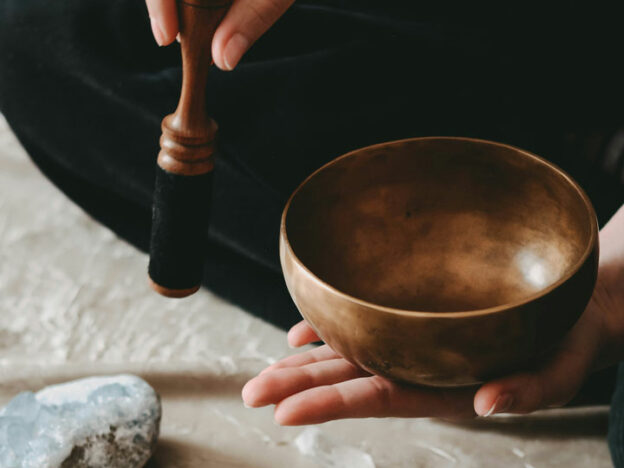
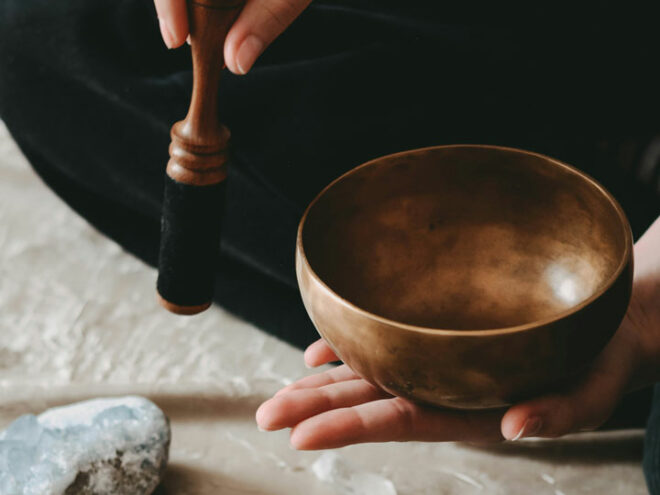
Tibetan singing bowl

Healing Tone Frequencies and the Seven Chakras

Tibetan singing bowl

Music is one of the most powerful stimulators of emotion. We all have that one piece that makes us cry, or a song that we can’t help but dance to. However, some people believe that music and sound have a profound effect on their physical and spiritual well-being as well. Healing tones, also referred to as solfeggio frequencies, are seven frequencies that correspond with the seven chakras in the body. They are often used during sound baths with Tibetan singing bowls, and each frequency is associated with its corresponding chakra, offering specific benefits . Similarly, musical keys are also said to evoke certain feelings. Think about the simple, cheerfulness associated with C major, or the deep sadness that’s conveyed through D minor.

To get a better understanding of how these frequencies work, we first need an understanding of the seven chakras. Chakras are an energy system that runs through the body with seven main points along the spine. Mentions of chakras date back to India, between 1500 to 1000 BCE. These points, sometimes referred to as wheels, are spinning disks of energy that stay “open.” Blockages in a chakra cause a myriad of physical and spiritual problems. Let’s dive into what each chakra affects and how to use these healing frequencies for your health.

Root Chakra

Located at the base of the spine, the root chakra is linked to grounding, safety, and emotional security. When blocked, it can cause feelings of insecurity in our basic needs and our well-being. Physical issues that arise may be arthritis or blockages of the bladder and colon.

The root chakra is stimulated by the lowest solfeggio frequency, 396 Hz . In combination with meditation, reflection, and self-care, this tone removes blockages and lets the energy flow freely.


Sacral Chakra

The sacral chakra is below the navel and is stimulated by the frequency of 417 Hz. We link this energy point to creativity, pleasure, and sexuality. It also has deep ties with our emotional expression. A blockage here can manifest feelings of social insecurity, as well as illnesses within the urinary tract and lower back. To unblock the chakra, partake in creative expression, like dancing, painting, or creating, while listening to the frequency of 417 Hz.


Solar Plexus Chakra

Situated above the navel, the solar plexus chakra represents our personal power. When open, it is the seat of confidence, self-esteem, and self-discipline. This chakra determines how we move through the world and our ability to assert ourselves. When blocked, digestive issues are often the resulting consequence. Problems like stomach ulcers, heartburn, indigestion, and eating disorders stem from the solar plexus.

To help unblock the chakra, listen to the frequency of 528 Hz while doing activities that foster discipline. Core workouts or energetic yoga practices are great exercises, but be sure to check in with yourself and connect to what is best for you.


Heart Chakra

As the name suggests, the fourth chakra is over the heart. This energy point is all about finding peace, compassion, and forgiveness. When blocked, diseases of the heart and asthma can manifest. But, most often, people with a blocked heart chakra are likely to be people pleasers and put the needs of others before their own. To unblock the energy point, listen to tones at 639 Hz during meditative practices.


Throat Chakra

The throat chakra is located over the voice box and relates to the frequency of 741 Hz. You’d be right in assuming this chakra is heavily involved with our ability to communicate. Blockages can lead to behaviors such as lying, gossiping, and miscommunication. When open, this energy point helps us to express ourselves with authenticity and empathy.

Chanting, singing, and other vocalizations stimulate the point and allow energy to flow. Some added benefits of unblocking this chakra are emotional detox, and pain relief.


Third Eye Chakra

The third eye is the source of our intuition and spiritual sight. Linked with the frequency of 852 Hz, this tone balances the energy in the middle of the forehead. The benefits are deep relaxation and increased perception. People with blockages in the third eye can appear to be “know-it-alls,” and can suffer from chronic headaches or poor vision.

To boost the flow of energy, listen to 852 Hz while practicing meditation or visualization. Some people have also reported the benefits of keeping a dream journal.


Crown Chakra

The final of the seven chakras is the crown chakra. This energy point is at the crown of the head and connects to our highest form of consciousness. Many consider it the chakra of enlightenment. When it’s open, it allows all the other energy points in the body to flow more easily.

To stimulate this point, deep reflection and honesty are required. The most powerful tone, 963 Hz, helps with feelings of well-being, mental clarity, and a positive outlook on life. When you’re not sure exactly what is misaligned within the body, listening to this frequency is recommended to help pinpoint where your emotions are getting stuck.


Curious to learn more about music and healing? Here are some other posts we think you’d enjoy from All Classical’s Arts Blog:

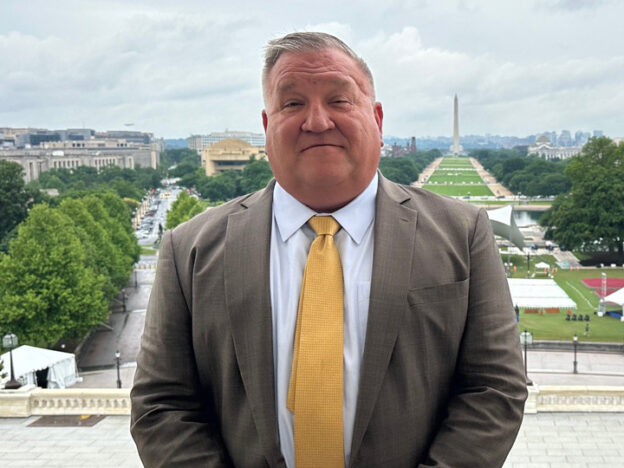
All Classical Radio Welcomes Greg Arntson as Interim CEO

All Classical Radio offers a warm welcome to Greg Arntson, who has assumed the role of Interim Chief Executive Officer. A civic leader with deep ties to Portland, Arntson is a dedicated supporter of the arts and has been an engaged member of the All Classical Radio Board of Directors since 2024.

“All Classical Radio has shown that building community through music and storytelling can have a global positive impact,” said Arntson earlier this month. “I am honored to serve as All Classical Radio’s Interim CEO. I look forward to working with the Board of Directors and the leadership team to ensure this Media Network enters its next chapter with strength, stability, and a continued dedication to excellence.”

Featured image for All Classical Radio's Access Recording Project, close up of a microphone

Access Recording Project 2025 Participants

Featured image for All Classical Radio's Access Recording Project, close up of a microphone

We are thrilled to announce the inaugural participants of All Classical Radio’s Access Recording Project. The first-of-its-kind initiative will invite Pacific Northwest artists to make use of the station’s Irving Levin Performance Hall and James DePreist Recording Studio to develop creative projects and advance their careers, at no cost.

“Through the Access Recording Project, All Classical Radio is removing barriers for local creatives, artists, and organizations,” says President and CEO Suzanne Nance. “This program opens the doors to world-class opportunities — performing, recording, and documenting their work as artists, storytellers, and musicians. Our goal is to share resources that spark lasting, positive change for regional artists and our community.”

Selected from 40+ applicants by a panel of community leaders, the three awardees represent varied backgrounds, ambitions, and activities. All projects in the Access Recording Project’s pilot year will be completed in 2025.

Read on to meet the visionary participating creatives and learn about their projects, in their own words. Find out more about the Access Recording Project in the official press release.

All Classical Radio’s Access Recording Project is made possible by a generous grant from the Oregon Cultural Trust.


Access Recording Project 2025 Awardee: The Immigrant Story

The Immigrant Story

Known for documenting and sharing stories about immigrants living in the Pacific Northwest to promote empathy and advance inclusivity in our communities, the Immigrant Story will use the station’s studios to produce a high-quality recording of an inspiring commission. Fusing traditional sounds of South West Asia with Western Classical music, their still unnamed groundbreaking 45-minute work is a powerful cross-cultural expression of community and creativity.

“At The Immigrant Story, we ask: what becomes of the traditions immigrants carry with them? Do they remain unchanged, quietly preserved? Do they fade away? Or do they evolve—fusing with new influences, passed to the next generation, and reimagined into something profoundly original? In this work, we witness that transformation: where Indian classical and Western classical traditions meet, not to replace one another, but to create something entirely new—something born of many cultures, yet rooted here. It is a shared creation, uniquely ours, and deeply worth cherishing,” says Sankar Raman, Founder and Board President of the Immigrant Story.


Access Recording Project 2025 Awardee: Pianist Nikita Istratov

Nikita Istratov

18-year-old award-winning instrumentalist Nikita Istratov has been playing the piano since the age of 6. Now in his first year of college, he will perform and record a recital in All Classical’s Irving Levin Performance Hall, showcasing the music of Sofia Gubaidulina. He aims to draw greater attention to the achievements of women composers in classical music. The program will explore Gubaidulina’s innovative harmonic language and traditional musical forms, and how 19th-century romantic Slavic cultural elements influenced her music. Nikita’s recital will showcase Gubaidulina’s Chaconne (1962), her most significant work for solo piano and her first commissioned work.

Nikita shares: “As a young musician, collaborating with a major arts organization like All Classical Radio is an exciting opportunity to amplify my artistic voice. This project allows me to bring greater attention to an intriguing composer I’ve recently discovered, and to generally advocate for broader recognition of female classical composers. I’m grateful to All Classical Radio for helping me to realize my vision. The Access Recording Project supports my mission of connecting with larger audiences and sharing, through musical performance, perspectives that I believe deserve to be heard.”


Access Recording Project 2025 Awardee: nonesuch.reedquintet

nonesuch.reedquintet

Based in Eugene, OR, the nonesuch.reedquintet is a professional chamber ensemble dedicated to inspiring the next generation of music students. Studio time will be used to record music for a new children’s book designed to stimulate curiosity and participation in their music and arts education efforts. Jimbo’s Dreamland includes narration set to music by beloved composers including George Gershwin and Claude Debussy, performed by the quintet. The book will feature words and artwork by a commissioned children’s book author and illustrator based in the Pacific Northwest.

“The resources provided by All Classical Radio’s Access Recording Project offer us a valuable opportunity to realize a core component of our project, Jimbo’s Dreamland,” says David Kwek, founding member and Board Secretary of nonesuch.reedquintet.

“Our mission to provide accessible music education is strengthened by the work we’ve done—and will continue to do—in schools across the Pacific Northwest and beyond. The publication of Jimbo’s Dreamland will enable nonesuch.reedquintet to expand our reach to classrooms around the world.”


Stay tuned for more updates on these projects and behind-the-scenes looks as these talented creatives bring their ideas to life using All Classical Radio’s Hall and studios.

Learn more about the Access Recording Project at allclassical.org/access-recording-project.


Feature image for blog post: All Classical Radio: For Humans, By Humans

KGW: PNW mainstay radio stations take budget hits from funding cuts

Feature image for blog post: All Classical Radio: For Humans, By Humans

By Evan Watson for KGW News

Local public broadcasters that receive federal funding are facing significant cuts after Republicans in Congress narrowly agreed on Thursday to grant President Donald Trump’s request to revoke billions of dollars in funding for foreign aid and public broadcasting.

Due to the cuts, All Classical Radio — an independent Pacific Northwest staple since 1983 — just lost about $500,000, or roughly 10% of its annual operating budget.

“That rescinding of funding is catastrophic not only for all classical radio, but for so many stations across the nation that rely on this funding to ensure free, accessible programming for all, regardless of your background, your means,” said Suzanne Nance, CEO and president of All Classical Radio.

The station will now need to reassess its programming, staffing and community outreach, she said, along with its 24-hour children’s network.

Keep reading at kgw.com.

Image of radio waves

All Classical’s Federal Funding has been canceled

On July 18, 2025, Congress officially passed a budget rescission package which included a catastrophic provision: the complete elimination of federal funding for the Corporation for Public Broadcasting (CPB). This decision cancels $500,000 in critical annual support previously approved by Congress for All Classical Radio. That’s 10% of our operating budget for the 2025-2026 fiscal year; previously allocated funding for the 2026-2027 fiscal year was also rescinded.

We’ve promised to keep you informed about developments around federal funding, and maintain transparency around our operations and sustainability.

The impact of this funding loss is severe, and the need is urgent.


WHAT YOU CAN DO

DONATE NOW: contribute at allclassical.org/donate. Your gift will help All Classical Radio continue operations during this challenging transitional time, as we fortify and implement a new plan for the future.

Give now at allclassical.org/donate or call 888-899-5722.

Read on to learn more about All Classical Radio, our funding model, and the Corporation for Public Broadcasting.


About Corporation for Public Broadcasting (CPB)

The Corporation for Public Broadcasting (CPB), is a private, nonprofit corporation authorized by Congress in the Public Broadcasting Act of 1967. CPB is the steward of the federal government’s investment in public broadcasting and the largest single source of funding for public radio, television, and related online and mobile services. In addition to distributing federal funds (which have historically been approved, in advance, in two-year cycles), the CPB also negotiates music licenses for public radio stations across the United States of America. CPB’s grants and operational/licensing support are essential for public media organizations like All Classical Radio, which offers accessible, enriching, and educational content. In addition, All Classical Radio provides critical emergency alerts and public service announcements.

CPB Funding Eliminated: 10% of All Classical’s Budget

In July 2025 congress voted to approve a budget rescission package which eliminated ~$1.1 billion in previously allocated funds to be granted to public media organizations, including All Classical Radio. Through this rescission, roughly 10% of All Classical Radio’s operating revenue for the 2025-2026 and 2026-2027 fiscal years has been taken away.

This is not just a number. That funding sustains the music, voices, and stories you rely on every day. It helps us broadcast performances from local artists, bring music education to children, and keep classical music freely accessible to all—regardless of income, location, or background. The loss of this federal support places everything we do at risk, immediately.

Independent Radio: Donate Directly

All Classical Radio does not share funds or infrastructure with national public media networks, radio stations, television stations, news networks, arts organizations, universities, or other nonprofits or businesses have. Money that is donated or paid to other entities and organizations will not benefit All Classical Radio. To support this music and radio station, donations must be made to All Classical Radio directly.


How All Classical is funded

While All Classical Radio’s revenue varies somewhat year to year, the overall makeup of our funding remains largely consistent. Annually, up to 90% of our revenue is contributed by the community. This includes 70% to 80% from individual donors and listeners, with the rest contributed by arts partners, corporate sponsors, and local, regional, and national foundations. Historically, 5%-10% of All Classical Radio’s annual budgeted revenue is contributed by the Corporation for Public Broadcasting. Other funding sources include space rental revenue and nationally syndicated program revenue.

Independent, but not invulnerable 

As an independent public media nonprofit organization, All Classical Radio is not part of any national network, educational institution, or other radio or television station. We rely on direct community support to operate All Classical and the International Children’s Arts Network. Our independence, however, does not make us invulnerable.

This is an urgent and catastrophic loss. Put simply, the abrupt cancelation of this federal funding puts everything we do at risk.

The most impactful and essential source of support for All Classical is donations from individual listeners who believe in this service. The path forward will be paved by the generosity of community members, whose continued and increasing support could offset the loss of federal funding within one to three years—especially through increasing numbers of Sustaining donors and increased monthly amounts from those already Sustaining this service.

You can help

All Classical Radio’s commitment to this mission, and our long-proven and essential impact on the arts community of our region, relies on you. This service was born in Portland’s Benson Polytechnic High School in 1983 fueled by the vision and enthusiasm of youth and community members who believed in music and public radio. It simply would not exist without you, and now is not a time to pull back on arts, culture, and lifelong learning.

Now is the time to redouble our commitment to access to music, arts education, opportunities for youth arts engagement, and cultural experiences for all. The arts have lasting impacts on literacy, creativity, cultural understanding, sharing of knowledge, and curiosity. To ensure that future shocks and shifts will not hinder All Classical Radio’s ability to provide access to the arts for all community members, your action and commitment is absolutely essential.


INVEST IN THE MUSIC

  • Donate now
    A gift right now will help All Classical Radio continue operations as we fortify and plan for the future. Give at allclassiscal.org/donate or call 888-899-5722
  • Become a Sustainer
    Reliably monthly income has a profound impact on All Classical Radio’s ability to adapt and plan. There is no amount too large or too small. Become a Sustainer at allclassical.org/donate.

  • Increase your Sustaining gift
    If every Sustaining donor—a group of over 6,000 generous individuals—could increase their monthly gift amount by 10%, we could immediately bridge the budget shortfall gap during this critical time of transition. Make a meaningful difference by increasing your gift amount today at allclassical.org/donor-portal.

  • Invest in the future
    Including All Classical in your will or estate plans will protect this service for future generations. Learn more at allclassical.org/support.

TURN UP THE VOLUME

Chances are there’s someone in your life who could benefit from All Classical Radio—whose life would be enriched, uplifted, and brightened by tuning in for music, connection and beauty. However you listen, please grow this community, and turn up the volume by sharing this service with your friends, colleagues, neighbors, and loved ones. You can help broaden the awareness of what All Classical Radio brings to the community, and what it means to you.

KQAC 89.9 Portland/Vancouver
KQOC 88.1 Newport/Lincoln City
KQHR 88.1 Hood River/The Dalles
KQHR 96.3 Columbia Gorge East
KQMI 88.9 Manzanita
KSLC 90.3 McMinnville
95.7 FM Corvallis/Flynn