Sing Out! A History of the LGBTQIA+ Choir

Lesbian, Gay, Bisexual, Transgender, Queer, Intersex, Asexual/Aromantic/Agender (LGBTQIA+) Pride Month is observed each year in commemoration of the June 1969 Stonewall Uprising in New York, a tipping point for the Gay Liberation Movement in the United States. Nationally, Pride Month is observed in June. Locally, the city of Portland, Oregon celebrates its queer community in July.

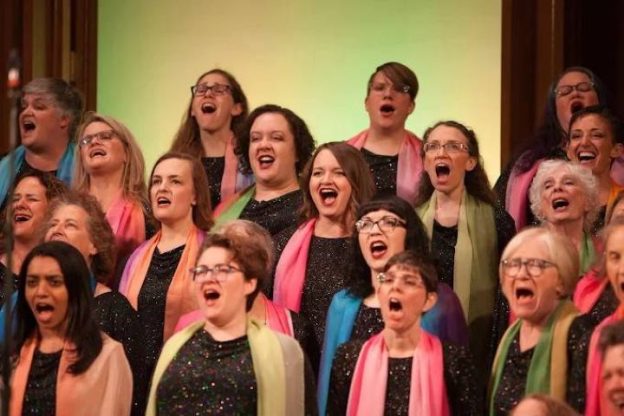
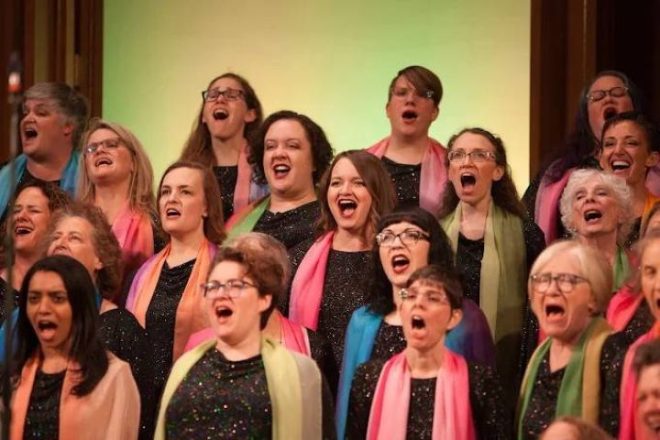
This Pride Month, we’re taking a moment to highlight the vibrant history of the LGBTQIA+ chorus and share a heartwarming story about the Seattle Women’s Chorus.

History: from Stonewall to Portland

Choirs specifically featuring LGBTQIA+ singers create a space where performers and audiences can come together to build community, foster personal expression, and celebrate their authentic joy. The earliest gay men’s choruses were founded alongside the beginning of the HIV/AIDS crisis and became spaces of connection, where classical music brought a sense of unity and hope to a suffering community. New York City’s Stonewall Chorale describes itself as “the nation’s first LGBTQ+ chorus.” Founded in 1977 as the Gotham Male Chorus, the group originally specialized in Gregorian Chant and Renaissance Music. In 1979, they made the shift to begin including women. Today, the Stonewall Chorale aspires to “unify the greater community through the transformative power of music” (stonewallchorale.org). They perform throughout the year in New York and across the tri-state area.

Founded 1978 by Jon Reed Sims, the San Francisco Gay Men’s Choir (SFGMC) formed on the heels of the Stonewall Chorale and remains perhaps the biggest name in LGBTQIA+ choirs today. Their first public performance was a rendition of Mendelssohn’s “Thou, Lord our Refuge” at a vigil following the assassination of Harvey Milk, the first openly gay man to be elected to public office in California. This performance cemented the group as a pillar of both the LGBTQIA+ and choral music communities in the city. It also demonstrated that classical music and the fight for equality could go hand in hand. In the following years, the chorus “became a refuge where [gay men] could process their shared trauma, celebrate their identities, and quite literally sing their joy even in the face of immense pain” (sfgmc.org).

In more recent years, the network of US-based gay and lesbian choirs has expanded to become inclusive of gender-diverse performers and audience members, welcoming people of all identities. Pioneering the inclusion of gender diverse voices in the choral world is the Trans Chorus of Los Angeles, which aims to uplift and spread awareness around the trans, non-binary, gender nonconforming and intersex community (transchorusla.org).

Here in Oregon, the LGBTQIA+ choir is alive and well. The Portland Gay Men’s Choir (PGMC) was founded by Portlander Mark Richards after he was inspired by a San Francisco Gay Men’s Chorus concert he attended in 1980. The PGMC performs locally and has toured across the United States and internationally. The Portland Lesbian Choir (PLC) was formed shortly after in 1986 and seeks to build “harmony and community through compelling musical performances” (plc.org). PLC has performed at venues such as the Keller Auditorium, and the Arlene Schnitzer Concert Hall. They also volunteer locally at food banks, women’s shelters, and other community organizations.

Coming Home: Jane Abbott Lighty and Pete-e Petersen

While the SFGMC is the chorus most known for its involvement in LGBTQIA+ activism, there is another choir closer to home that intersects the road to marriage equality in Oregon and Washington: The Seattle Women’s Chorus. Founded in 2002, the group provides a musical community for LGBTQIA+ singers, particularly lesbians. In 2012, the group performed at the fist same-sex marriage to take place in Washington, which happened to be between two of its founding members, Pete-e Petersen and Jane Abbott Lighty.

Loretta “Pete-e” Petersen came out late in life and found community with members of the Seattle Men’s Chorus before realizing that she wanted to cultivate a similar space for women. In 2002, she helped to found the Seattle Women’s Chorus, whose members came to include both Petersen and Lighty (Seattle Times). After spending years fighting for marriage equality, and in many ways acting as the face of the movement in Washington, Lighty and Petersen “married on the first day it [was] allowed, December 9, on stage with their beloved Seattle Women’s Chorus and Seattle Men’s Chorus providing the musical background at Benaroya Hall” (ACLU). At the time of their marriage, Lighty was 77 years of age, and Peterson was 85. Petersen died in 2025 at age 97 and is survived by her wife.

In an article following Petersen’s death, the Seattle Times writes that, in the late 1990s, Petersen and Lighty “became two of the state’s fiercest gay rights advocates, helping found Seattle Women’s Chorus and appearing in TV advertisements pushing for marriage equality in Washington.” These women serve as an inspiration for many and remind us of the power that choral music holds to build community and generate lasting change in the world.

Forged in the crucible of the AIDS crisis and driven the fundamental desire for belonging and personal expression, LGBTQIA+ Choirs are a thriving thread in the greater fabric of the classical music world. These institutions remind us of the power of classical music in building community that can carry us through the hardest of times and change the world for the better.  


MORE TO EXPLORE


Featured image for Announcing Anthea Kreston as 2026-2027 Artist in Residence

Announcing Anthea Kreston as 2026-2027 Artist in Residence

Featured image for Announcing Anthea Kreston as 2026-2027 Artist in Residence
Photo by Christine Dong.

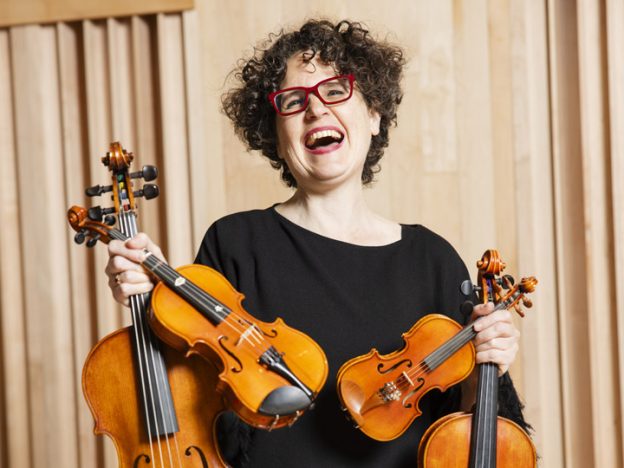
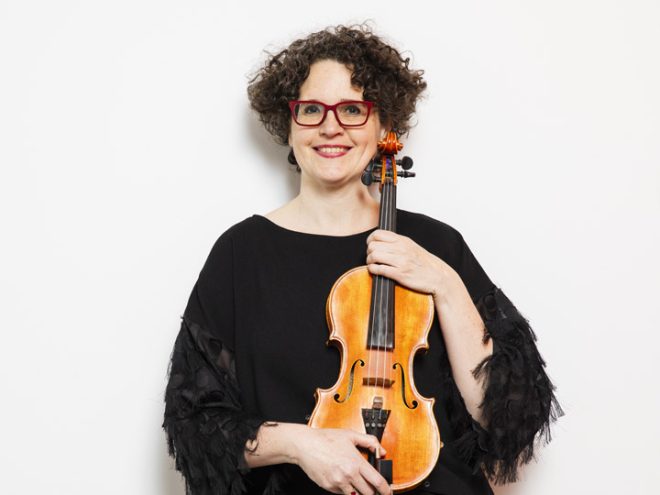
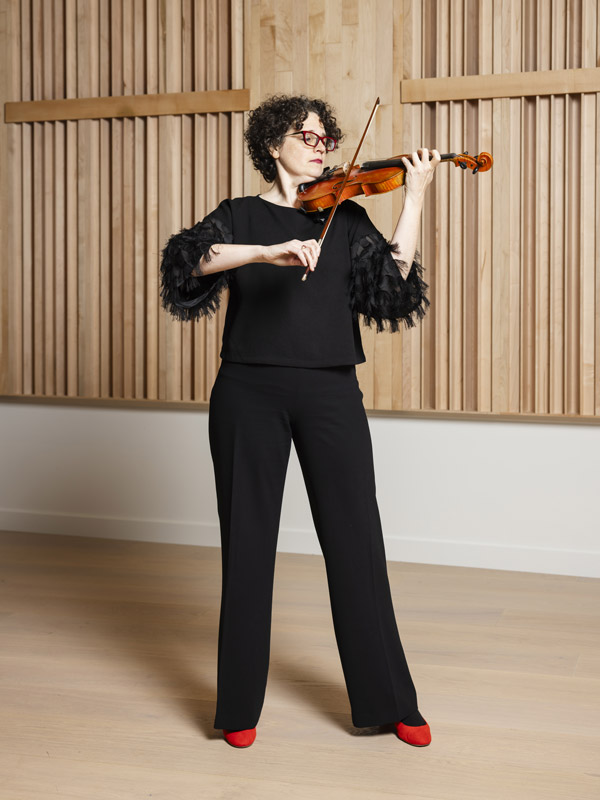
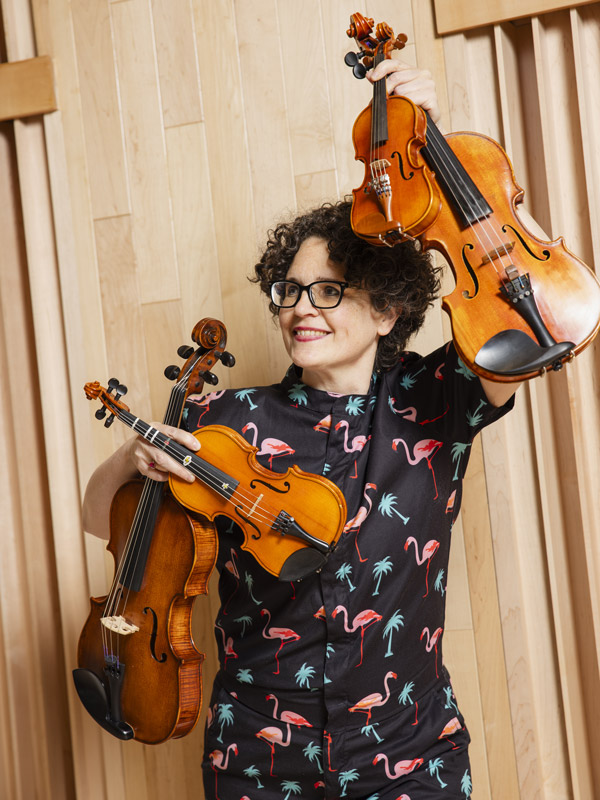
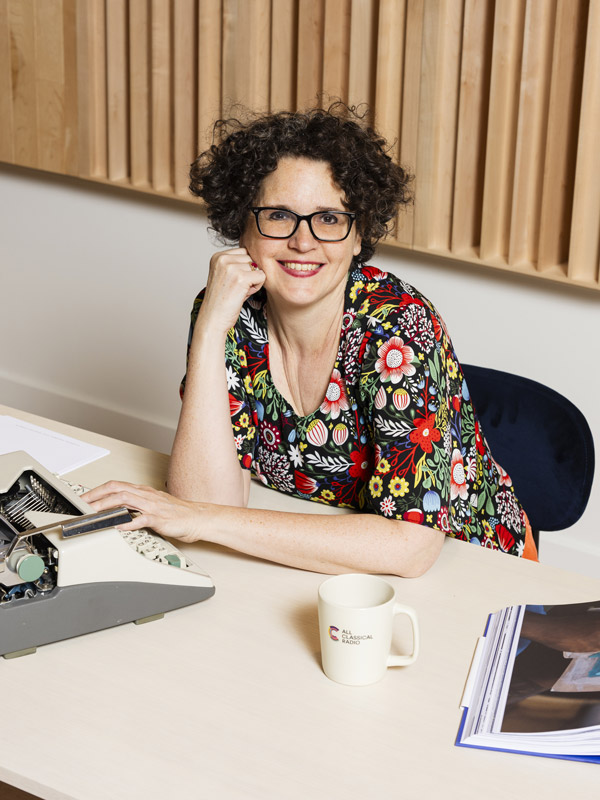
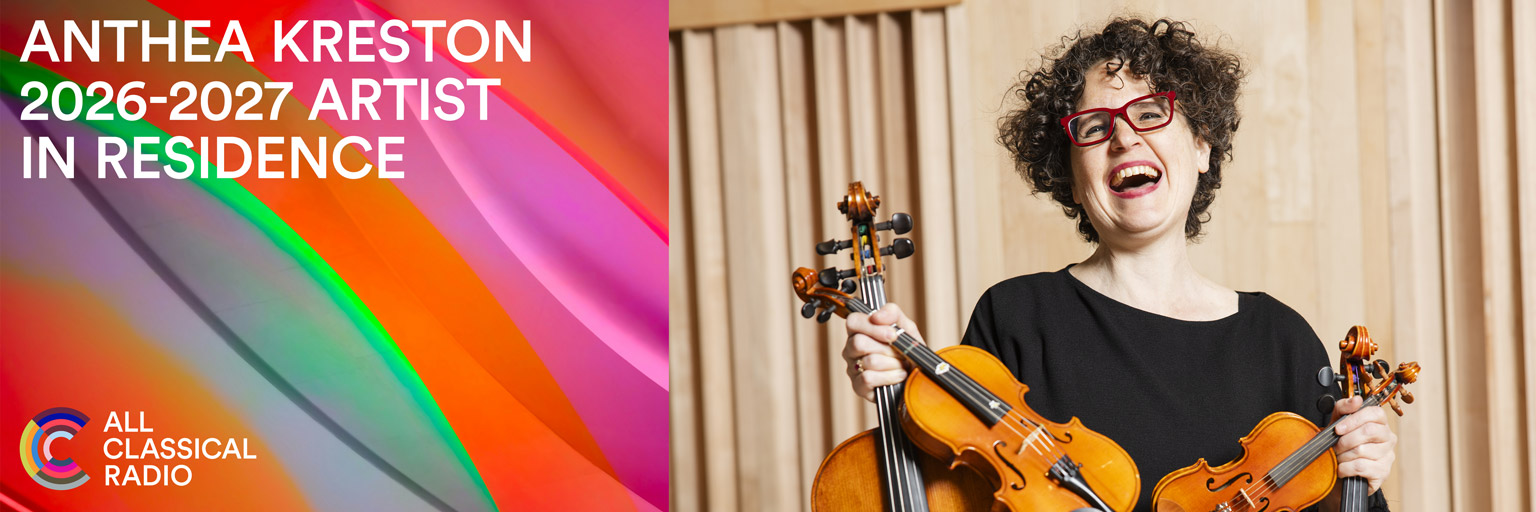
All Classical Radio is thrilled to announce violinist, chamber musician, educator, and author Anthea Kreston as the station’s 2026-2027 Artist in Residence.

If you’ve had the chance to hear Anthea perform, you already know the magic she brings—thoughtful, expressive, and deeply connected to the music she plays. Whether she’s performing on stage, collaborating with fellow musicians, or exploring new creative ideas, she has a way of making classical music feel both intimate and alive. We’re so excited to welcome her into our community in this special role.

“As a classical musician, public radio stations are an integral part of our lives,” says Anthea. “I grew up listening to a classical radio station in Chicago, and later was a frequent guest performer. Being a part of All Classical Radio gets me fired up on all cylinders — as a performer, educator, collaborator, and creator. I am honored to be the next Artist in Residence, and so look forward to being a part of this most magnificent team.”

Anthea is first violinist of the Delgani String Quartet and a former member of Germany’s Artemis Quartet. She is a member of the piano quartet The Thunder Egg Consort and the host of the Oregon Symphony’s pre-concert conversations at Smith Auditorium in Salem. She is also an author; in her upcoming memoir, Crescendo: Chronicles of an Adventurous Violinist, Kreston describes her life growing up in Chicago, studying at the Curtis Institute of Music, leaving it all behind for a commune in Oregon, and finally returning to make it to the top of the classical music world.

Anthea will perform with The Thunder Egg Consort on June 4, 2026, on All Classical Radio’s Thursdays @ Three, hosted by Christa Wessel.

“All Classical Radio is honored to name Anthea Kreston as its Artist in Residence,” says Fred Child, President and CEO of All Classical Radio. “This program reflects our commitment to championing exceptional artists and connecting our global audience with the creative voices shaping classical music today. Through the Artist in Residence program, Anthea will have the space, resources, and community to explore new artistic possibilities and share her work in meaningful ways.”

Throughout the coming year, you can look forward to hearing Anthea on the air and beyond, in exclusive performances, and behind-the-scenes glimpses into her artistic world. She’ll be sharing her insights, inspirations, and personal connection to the music, helping all of us listen a little more closely and discover something new along the way.

Join us in giving Anthea a warm All Classical Radio welcome—we can’t wait for you to get to know her better in the year ahead.


Anthea Kreston is a violinist who has performed on almost every major concert stage in the world, including Carnegie Hall, Lincoln Center, Kennedy Center, Royal Academy of Music (London), Prince Regent Theater (Munich), Teatro Nacional (Panama City), and Chateau d’Ainay-le-Veil (France). She is currently first violinist of the Delgani String Quartet and a member of the piano quartet The Thunder Egg Consort. She was a member of the Artemis Quartet, a major European string quartet — the only American violinist to hold such a position.

Kreston has played in the Berlin Philharmonic, as principal violin in the St. Paul Chamber Orchestra, as concertmaster of the Deutsche Oper Berlin, and with Yo-Yo Ma’s Silk Road Project. She was a professor at the Universität der Kunste Berlin, and a master teacher at the Queen Elizabeth Chapel in Brussels. She also enjoys returning to teach at the Curtis Institute of Music, from where she graduated. Her teachers include Ida Kavafian, Shmuel Ashkenasi, the Emerson Quartet, and Isaac Stern.

As a writer, Kreston is a frequent columnist for the international classical music website Slipped Disc and the founder and curator of the Inside Music Book Club. Her first book is Crescendo: Chronicles of an Adventurous Violinist (Paul Dry Books). She lives in Corvallis, Oregon, with her husband and two daughters. Learn more at antheakreston.com.


ARTIST IN RESIDENCE PROGRAM

All Classical Radio’s Artist in Residence is a program designed to foster creative and professional growth for emerging and established artists. Launched in 2019, the Young Artist in Residence (YAIR) and Artist in Residence (AIR) positions provide selected musicians, vocalists, and composers with access to the station’s world-class facilities and studio time. Artists in Residence also receive a financial award to advance their creative projects and career development.

Anthea Kreston’s residency is made possible in part by a generous grant from the Regional Arts & Culture Council.

Previous professional Artists in Residence include pianist violinist Emily Cole and clarinetist James Shields (2024-2025); María García (2022-2023); flutist Adam Eccleston (2020-2021); and concert pianist Hunter Noack (2019).

Meet All Classical’s past Artists in Residence and learn more about this program.

Blue, black, and orange abstract painting

Music Terminology 101: Instrumental Terms

As part of our mission to advance knowledge of and appreciation for classical music, All Classical Radio recently launched a new resource for those curious to learn more about this beloved genre: the Classical Music Glossary.

In this glossary, we comb through commonly used terminology and historical timelines to help you feel more confident about and connected to the music you love.

Today’s blog post is another preview of this new resource, this time focusing on terms related to instrumental music, including popular genres you are likely to encounter while listening to classical music.


Symphony

An elaborate musical composition for an orchestra, typically in four movements. Out of all classical music works, symphonies are the longest, the most complex, and involve the most instruments. The word “symphony” comes from the Greek word symphonia, which translates to “sound together.”

Example: Beethoven’s Symphony No. 9 in d minor, “Choral”

Concerto

A musical composition that is similar to a symphony but written for a featured soloist and orchestra. A concerto is traditionally written in three movements.

Example: Rachmaninov’s Piano Concerto No. 2 in c minor

Overture

An orchestral piece at the beginning of a play, opera, oratorio, or extended composition. Sometimes, an overture can be written as a stand-alone, single-movement orchestral piece.

Example: Bernstein’s overture to his operetta, Candide

Chamber Music

Music written for smaller instrumental ensembles, maybe just one or two musicians per instrument, such as a string quartet, piano trio, or wind quintet.

Program Music

Instrumental music that carries some extra-musical meaning, such as a literary tale, a famous legend, or a scenic description. Fun fact – Vivaldi’s The Four Seasons was one of the earliest examples of program music.

Example: Rimsky-Korsakov’s Scheherazade, based on One Thousand and One Nights

Prelude & Fugue

A prelude is a short piece of music that serves as an introduction to another piece or movement.

A fugue is a composition in which a short melody or phrase is introduced by one player or instrumental section, successively taken up by others, and developed by interweaving the parts.

In classical music, these two musical forms are often paired in a two-movement format, as seen in J. S. Bach’s The Well-Tempered Clavier.

Sonata

Over centuries of development, the sonata has taken on two meanings in classical music:

  1. A solo instrumental piece comprised of several movements, such as Beethoven’s Piano Sonata No. 8 in c minor, “Pathétique” 
  2. A musical form consisting of an exposition, development, and recapitulation and used in one movement of a larger, multi-movement work, such as the first movement of Mozart’s Symphony No. 41, “Jupiter.”

Basso Continuo

A form of accompaniment used during the Baroque Era, where a keyboard instrument harmonically elaborates on a bass line through improvisation. During this time, it was common for only the bass line to be written out in a score (typically played by a cellist or bassoonist), leaving the full harmonic accompaniment for a piece of music unspecified. The keyboard would consequently be tasked with fleshing out said bass line into a fuller harmonic foundation.

Basso continuo (continuous bass) is also referred to as “figured bass” or simply “continuo.”


If you enjoyed this post and would like to dive deeper, be sure to check out the Classical Music Glossary!

Featured image for Announcing All Classical Radio’s Recording Inclusivity Initiative Releases Third Album, AWAKEN

OREGON ARTSWATCH:  All Classical Radio’s Recording Inclusivity Initiative Announced New Album, AWAKEN

Featured image for Announcing All Classical Radio’s Recording Inclusivity Initiative Releases Third Album, AWAKEN

Oregon ArtsWatch by Matthew Neil Andrews

Dear reader: Celilo Falls is already making its way to your speakers and headphones. It’s coming this very summer, as part of All Classical Radio’s Recording Inclusivity Initiative. You can pre-order it at shop.allclassical.org.

“The third installment in All Classical Radio’s award-winning Recording Inclusivity Initiative, AWAKEN continues the network’s monumental effort to rectify inequities in classical music recording. Chamber pieces little tiny stone, full of blue fire by Kirsten Volness and Innovative Elegance by Nicole Buetti stand alongside the orchestral work Celilo Falls by Nancy Ives, casting women composers in the spotlight and inviting listeners from across the globe to hear imaginative new music. These talented contemporaries partner up with award-winning and GRAMMY®-nominated performers to send a powerful message regarding the importance of artistic collaboration.”

Keep reading at orartswatch.org.

Featured image for John Pitman Reviews: Jan Lisiecki Return to Mozart

John Pitman Reviews: Jan Lisiecki Return to Mozart

Featured image for John Pitman Reviews: Jan Lisiecki Return to Mozart

“Engaging with the genius of Mozart’s music is a true privilege” –Jan Lisiecki

Listening to pianist Jan Lisiecki talk about Mozart and his piano concertos, it becomes apparent that the 31 year old Canadian artist means what he says.

In John Pitman’s latest Arts Blog feature, Lisiecki shares why Mozart is indeed a privilege to play, as well as the reasons for pairing these two seemingly distant (in Mozart’s output) piano concertos on the same album. The answers reveal quite a few.

Lisiecki returns to the concertos of Wolfgang Amadeus Mozart, a decade after recording Nos. 20 and 21 for his DG debut album (“beautiful Mozart playing, direct, unmannered and fresh” – The New York Times). Set for release as the music world marks the 270th anniversary of Mozart’s birth, Lisiecki’s latest recording presents a contrasting but complementary pair of works in E flat major, Concertos Nos. 9 and 22. Joining the pianist are conductor Manfred Honeck and the players of the Bamberger Symphoniker.

Ever since he first worked with Maestro Honeck in Chicago in 2019, Jan Lisiecki had been keen to record with him. “I immediately felt that he had such an affinity and respect for Mozart’s music and was able to communicate it with the orchestra – the phrasing, the elegance, the beauty,” he recalls. “So to work with him on a recording of Mozart is an absolute joy and privilege.”

Lisiecki’s praise extends to the musicians of the Bamberger Symphoniker. “They’re dedicated, passionate and also respectful of tradition,” he says. “It’s inspiring to find musicians who have vigour and freshness, but also follow the indications of the composer and the urgings of the conductor – and of the soloist too!”

Hear John Pitman’s recent conversation with Jan Lisiecki below.


Jan Lisiecki’s Mozart Piano Concertos Nos 9 & 22 is available now on Deutsche Grammophon.


Featured image for Announcing All Classical Radio’s Recording Inclusivity Initiative Releases Third Album, AWAKEN

Announcing the Recording Inclusivity Initiative’s Third Album: AWAKEN

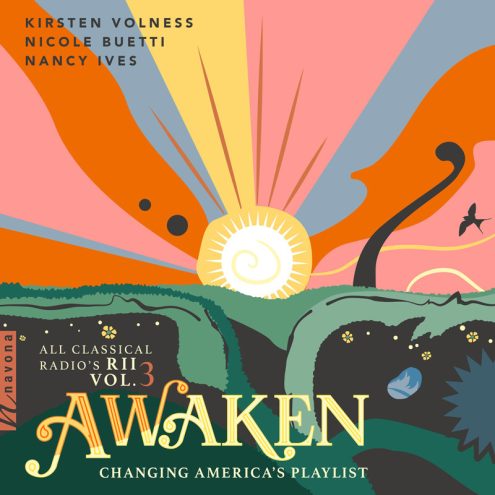
Album cover for Recording Inclusivity Initiative Third Album: AWAKEN RII Vol. 3

All Classical Radio’s award-winning Recording Inclusivity Initiative (RII) is thrilled to announce its third album: AWAKEN.

Released on GRAMMY® award-winning Navona Records and PARMA Recordings, RII Vol. 3: AWAKEN will be available on all major streaming platforms and the physical CD will be available in the All Classical Gift Shop on July 10, 2026.

Featuring music by contemporary composers Kirsten Volness — All Classical Radio’s 2026 Composer in Residence — Nicole Buetti, and Nancy Ives, AWAKEN casts women composers in the spotlight. All Classical Radio’s Recording Inclusivity Initiative was created to address the gap of classical music composers from underrepresented communities who make it into the concert hall and onto radio airwaves. With classical music radio stations across the nation, All Classical Radio is working to update America’s playlists by producing new high quality recordings by underrepresented composers.

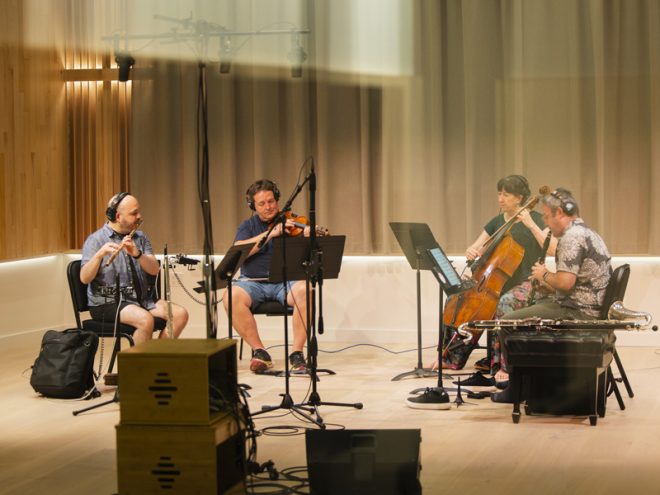
The new album features never-before-recorded chamber pieces by Kirsten Volness and Nicole Buetti, and an expansive orchestral work by Nancy Ives. Volness’s piece little tiny stone, full of blue fire was inspired by Dorothea Lasky’s dreamlike 2011 poem “Beyond the Blue Seas.” Lasky’s evocation of blue fire reminded Volness of the newly discovered YInMn Blue, a brilliant inorganic blue pigment created by accident at Oregon State University in 2009. The poem served as inspiration, exploring surreal images of a long journey, sacrifice, self-actualization through transformation, and cyclic inevitability. little tiny stone, full of blue fire is scored for flute, clarinet, violin, and cello. It was commissioned in 2016 by Hub New Music.

little tiny stone, full of blue fire recording session
little tiny stone, full of blue fire recording session. Photo by Christine Dong.

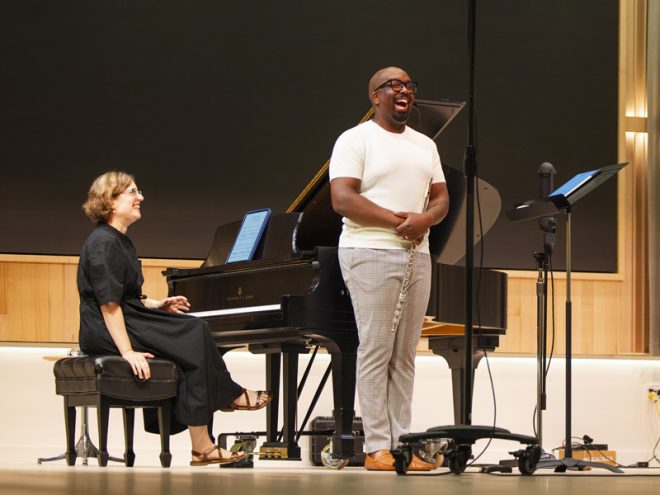
On Innovative Elegance, Buetti’s trio for flute, violin, and piano, she honors All Classical Radio’s pioneering former president & CEO, Suzanne Nance, who led the station from 2017 to 2025. Buetti notes that the commission by Orchestra Nova Northwest is “a fun, energetic piece that reflects the brilliance, innovation, and beauty of one of Portland’s brightest stars.” Nance steered All Classical into a new era of expansion, with a focus on building community, kindness, and connection around the arts.

Innovative Elegance recording session
Innovative Elegance recording session. Photo by Christine Dong.

Ives‘s sprawling and evocative Celilo Falls anchors the album in an 11-movement multimedia musical experience, composed in collaboration with Shoshone-Bannock poet Ed Edmo and Cherokee photographer Joe Cantrell. The work combines large-scale orchestral architecture with poetry and prose to depict the history of Celilo Falls — from the Missoula floods that formed the gorge, to the inundation of the Falls in 1957, and the present-day experience of the Native communities who called the Falls home and lost so much.

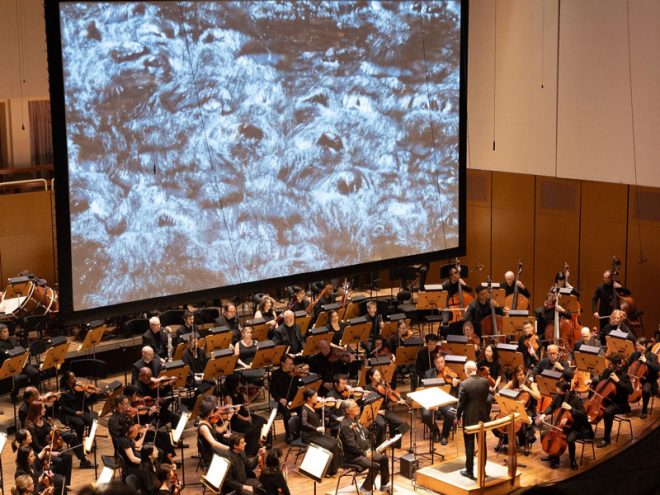
Originally broadcast live on All Classical Radio in June 2025, Celilo Falls was recorded at the Arlene Schnitzer Concert Hall in downtown Portland, OR. This radio premiere of the brand-new arrangement for full orchestra was performed by the Oregon Symphony, under the direction of David Danzmayr, with narration by Brent Florendo Sitwalla-Pum. The piece is a realization of an earlier version for chamber orchestra, commissioned and premiered in 2022 by Portland Chamber Orchestra.

The Oregon Symphony performing Celilo Falls at the Arlene Schnitzer Concert Hall
The Oregon Symphony performing Celilo Falls at the Arlene Schnitzer Concert Hall.

Following All Classical’s 2025 broadcast, Celilo Falls was syndicated to radio stations across the United States at no cost. Now, All Classical Radio is proud to bring this important work to listeners around the world on AWAKEN. A stunning collection of images by Joe Cantrell enhancing the listening experience can be viewed at allclassical.org/scenes-from-celilo.

RII Vol. 3: AWAKEN will be available on streaming platforms on July 10, 2026. Pre-order your physical CD now in the All Classical Gift Shop.

Learn more about All Classical Radio’s award-winning Recording Inclusivity Initiative at recordinginclusivity.allclassical.org.


ALBUM ARTISTS

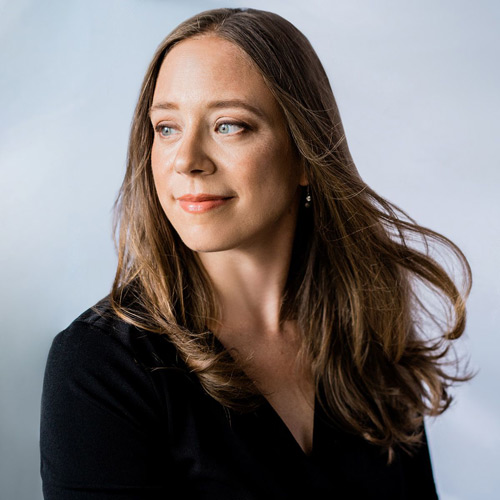
Kirsten Volness by Rachel Hadiashar
Photo by Rachel Hadiashar

KIRSTEN VOLNESS, COMPOSER

Smart, transcendent, and immersive, Kirsten Volness’ emotive soundscapes integrate electronics and modern composition techniques with jazz and pop influences. “Irresistible” (San Francisco Chronicle) and “nothing short of gorgeous” (New York Arts), each of her compositions reveals “an exquisite sound world” (New Classic LA) inspired by nature, myth, spirituality, and environmental and sociopolitical issues. She received commissions from New Music USA, ASCAP/SEAMUS, BMI Foundation, Metropolis Ensemble, The American Opera Project, and MacColl Johnson and RISCA Fellowships.

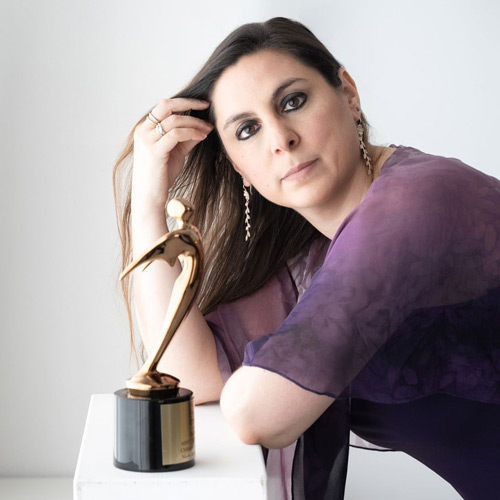
Nicole Buetti by Rachel Hadiashar
Photo by Rachel Hadiashar

NICOLE BUETTI, COMPOSER

Nicole Buetti is an award-winning composer with over 400 recorded and published musical works in a wide variety of genres. She has been composing professionally for more than 25 years. Buetti composes extensively for chamber ensembles, large ensembles of various configurations, as well as children’s music and music for media. Prior to completing her master’s degree at the University of Northern Colorado, she spent a decade in the Los Angeles area working as a composer in the film and television industry. Buetti’s chamber and orchestral music have reached audiences all over the world.

Nancy Ives, composer and cellist, by Rachel Hadiashar
Photo by Rachel Hadiashar

NANCY IVES, COMPOSER

Composer and cellist Nancy Ives is a musical icon, having “built a career of such spectacular diversity that no summation will do her achievements justice.” (Artslandia). She offers both depth and approachability with enduring and eloquent music inspired by the natural world. Many of Ives’ projects involve working with Indigenous communities to authentically capture, amplify, and relay their stories to wider audiences, including the multimedia orchestral work Celilo Falls. With a DMA from the Manhattan School of Music, Ives is the Principal Cellist with the Oregon Symphony and serves on the Board of Directors for All Classical Radio.

Ed Edmo, Shoshone-Bannock poet, playwright, performer, and traditional storyteller

ED EDMO, POET/STORYTELLER

Ed Edmo is a Shoshone-Bannock poet, playwright, performer, traditional storyteller, tour guide, and lecturer on Northwest tribal culture. Edmo offers guided tours to sacred Native sites, conducts workshops, and offers traditional storytelling performances, dramatic monologues, and lectures on issues such as cultural understanding, substance abuse, and mental health. Edmo is a published short story writer, poet, and playwright, and serves as a consultant to the Smithsonian Museum of the American Indian.

Joe Martin Cantrell, Cherokee photographer. Photo is by Jim Lommasson.
Photo is by Jim Lommasson

JOE CANTRELL, PHOTOGRAPHER

Cherokee photographer Joe Martin Cantrell uses his personal depth of perspective in combination with sophisticated techniques to make visible the things that often go unseen. After two tours as a Navy officer in Vietnam, Cantrell worked as a photojournalist for UPI, Black Star, Time, Newsweek, The New York Times, The Washington Post, and hundreds of other publications worldwide. He has taught at Oregon School of Arts and Crafts, Pacific Northwest College of Art, Mount Hood Community College, and was Artist in Residence at Crow’s Shadow Institute. Cantrell carries the name of an ancestor who died on the Trail of Tears and offers his own meaningful legacy through generous contributions to benefit humanitarian causes and the arts.

Cantrell was one of over 40 creatives of the Pacific Northwest profiles in All Classical Radio’s Artist Anthology. Learn more about Joe Cantrell and the Artist Anthology at anthology.allclassical.org.

Logo for the Oregon Symphony

OREGON SYMPHONY

The multi-GRAMMY Award-nominated Oregon Symphony, led by Jean Vollum Music Director David Danzmayr, serves hundreds of thousands of people annually through concerts, education initiatives, and community programs. With a 130-year legacy, it is the oldest orchestra in the Western United States.

Learn more at orsymphony.org and follow the Oregon Symphony on Facebook, Instagram, TikTok, and YouTube.


RECORDING INCLUSIVITY INITIATIVE

Logo for All Classical Radio’s award-winning Recording Inclusivity Initiative

All Classical Radio challenged listeners, Pacific Northwest artists, and performing arts organizations to nominate musical works by underrepresented classical composers to be recorded and published through the Recording Inclusivity Initiative (RII). The RII Panel and Executive Advisors, comprised of leaders from radio, recording, publishing, and performing arts industries, selected winning compositions. Living composers were offered a week-long residency with All Classical Radio and N M Bodecker Foundation, which included in-studio recording sessions, and a financial award. All selected compositions, including contemporary and posthumous works, were recorded by N M Bodecker Foundation, published if applicable, and distributed by All Classical Radio.

RII Vol. 1: AMPLIFY was released in 2022, and features compositions by Jasmine Barnes, Keyla Orozco, and Lauren McCall. AMPLIFY also includes two posthumous works by Mélanie Hélène Bonis (1858-1937) and Coleridge-Taylor Perkinson (1932-2004).

RII Vol. 2: ELEVATE was released in 2024, with music by Yuko Uébayashi, Nobu Kōda, and Damien Geter.

Learn more about All Classical Radio’s award-winning Recording Inclusivity Initiative at recordinginclusivity.allclassical.org.


Gray, red, and orange paint strokes

Music Terminology 101: Expressive Terms

Have you ever wondered why classical music is referred to as a “work” or “piece” rather than a song? Or perhaps the difference between a motif and a theme? Do you want to understand what differentiates classical music from other genres and what aligns with music heard all over the world?

As part of our mission to advance knowledge of and appreciation for classical music, All Classical Radio recently launched a new resource for those curious to learn more about this beloved genre: the Classical Music Glossary.

In this glossary, we comb through commonly used terminology and historical timelines to help you feel more confident about and connected to the music you love.

Today’s blog post is another sneak peek into this new resource — this time, sharing insights into terms that instruct musicians on how to play the notes and the composer’s musical vision.


Tempo

Tempo is the speed of a piece of music. Tempo can also indicate the mood in which a piece, or a section of a piece, should be played. In classical music, tempo is usually indicated in Italian at the beginning of a score. In modern classical pieces, this word may be replaced by a metronome mark in beats per minute (bpm).

Tempo markings provide a general “feel” to the tempo of a piece. Tempo does not have to be fixed; it can change within a piece of music. Some examples of tempo markings are:

  • LARGO – Very slowly and broadly. Translates to “wide” or “broad;” similar tempo to Lento but with a sense of expansiveness.
  • ADAGIO – Slowly and stately, “at ease.”
  • ANDANTE – Moderately slow and sometimes described as “at a walking pace.”
  • MODERATO – Translating to “moderate”, this term implies a medium pace tempo typically ranging from 108-120 bpm.
  • ALLEGRO – A faster tempo that translates to “cheerful.”
  • VIVACE – A fast and brisk tempo that translates to “lively.”
  • PRESTO – The fastest tempo marking that can be described as rapid, quick, and immediate.

Dynamics

Dynamics are markings in a score that indicate the volume at which notes or phrases within a piece of music should be played, such as:

  • p [piano] – played softly.
  • f [forte] – played loudly.
  • Crescendo – Increasing in volume.
  • Decrescendo – Decreasing in volume.

Articulation

Similar to the way we articulate our words, composers and musicians use articulation markings to indicate how notes should be played. Each marking can affect the start or “attack” of a note, the end or “release,” and the overall length and connection to and from the next note.

Articulation markings are usually placed above or below a note or phrase in written music. Here are some examples:

  • STACCATO – Meaning “detached.” Notes are played short and disconnected, creating a detached, buoyant, and crisp sound. In music, it is marked as a dot above or below the note.
  • LEGATO – Meaning “tied together.” Notes are played smoothly and connected. Legato articulation is played or sung in the same breath/bow stroke.
  • ACCENT– A note played with more emphasis compared to notes without an accent. This can be achieved by playing the note louder with more “front” to the start of the note. An accent looks like “>” above or below a note.

If you enjoyed this post and would like to dive deeper, be sure to check out the Classical Music Glossary!

Illustration of water lilies

Five Contemporary Asian American Composers You Should Know

All Classical Radio is proud to feature artists of Asian heritage on our playlist every day. We’re constantly adding new voices to our programming, both past and present. In honor of Asian American, Native Hawaiian, and Pacific Islander (AANHPI) Heritage Month, we’re highlighting five contemporary composers who are expanding the cultural landscape and making the music we love all the richer and more diverse.

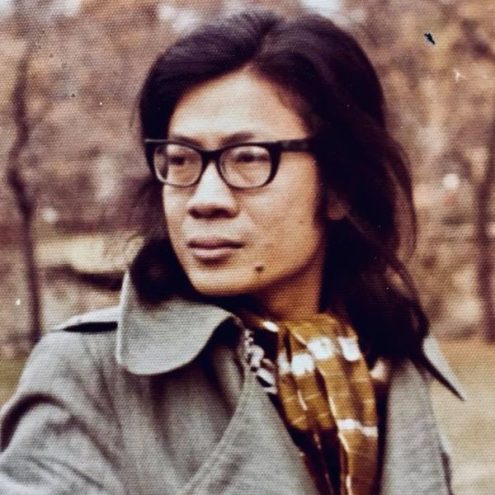
Chinary Ung (b. 1942)

Photo of Chinary Ung
Image source: composer’s website

Born in Cambodia, Chinary Ung grew up immersed in the traditional music of his homeland — he wasn’t exposed to Western classical music until his late teens. Ung became one of the first graduates of the Ecole de Musique in Phnom Penh, earning a degree in clarinet performance (the clarinet was the only instrument available to him at the time). In 1967, Ung emigrated to the United States, where he shifted his focus from playing the clarinet to composition and earned a DMA with distinction from Columbia University. After over a decade of composing and teaching at several universities, Ung gained significant international recognition when he won the Grawemeyer Award for his orchestral work, Inner Voices.

As a composer, Ung doesn’t view “East” and “West” as separate entities but rather incorporates musical influences in line with his overall vision for a work, whether it be a Late Romantic symphony or a Cambodian folksong he heard as a child.


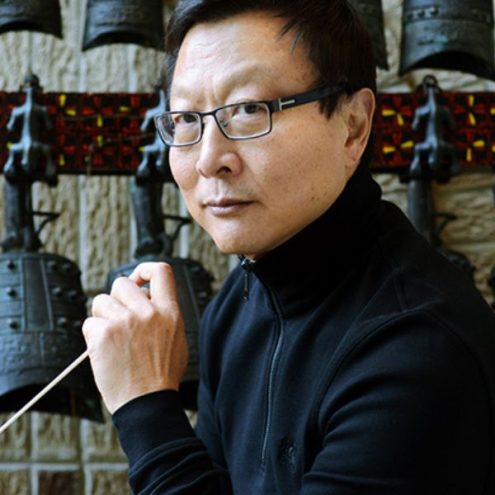
Bright Sheng (b. 1955)

Photo of Bright Sheng holding a conducting baton
Image source: composer’s website

Chinese-American composer Bright Sheng was born in Shanghai and began his piano studies at age 4. During the Cultural Revolution, Sheng collected regional folk music and participated in a dance troupe near the Tibetan border. After earning a Bachelor’s Degree in music composition from the Shanghai Conservatory, he moved to New York and earned his doctorate from Columbia University—Leonard Bernstein was among his principal teachers there. Over the past few decades, Sheng has earned numerous honors, including Guggenheim, Naumburg, Rockefeller, and MacArthur Foundation fellowships.

Sheng’s compositions have prominent Asian influences, a testament to his study of a diverse array of musical customs. He is not afraid to tackle recent global events and explore social tension through music. In addition to composing and performing as a concert pianist, Sheng has been the Leonard Bernstein Distinguished University Professor of Music at the University of Michigan since 1995.


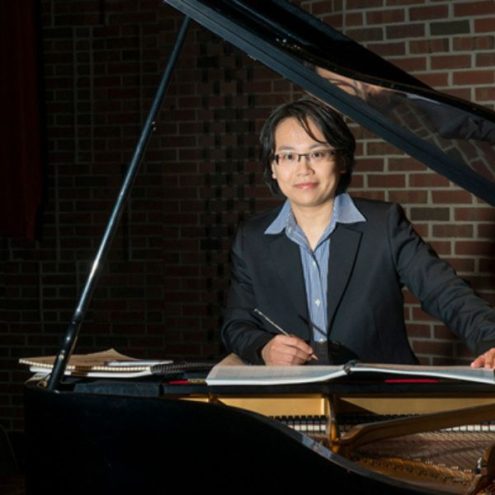
Chiayu Hsu (b. 1975)

Photo of Chiayu standing behind a piano
Image source: composer’s website

Born in Taiwan, Chiayu earned degrees from the Curtis Institute of Music, Yale School of Music, and Duke University. Having undertaken residencies throughout the U.S. and Europe, she now resides in the States and, in addition to composing, serves as an associate professor of composition at the University of Wisconsin, Eau-Claire. Having studied with the likes of Jennifer Higdon and Joan Tower, Chiayu continues the legacy of groundbreaking women composers who are leading the evolution of classical music in America and beyond. Her numerous awards include the Lakond Prize from the American Academy of Arts and Letters and first prize at the FemFestival in Italy for her piece, EC Sketches.

When writing a new piece of music, Chiayu often draws inspiration from extra-musical materials, such as poems, myths, and images. She also draws on her heritage and regularly combines Chinese elements with Western techniques, showing a keen interest in cultural fusion.


Andy Akiho (b. 1979)

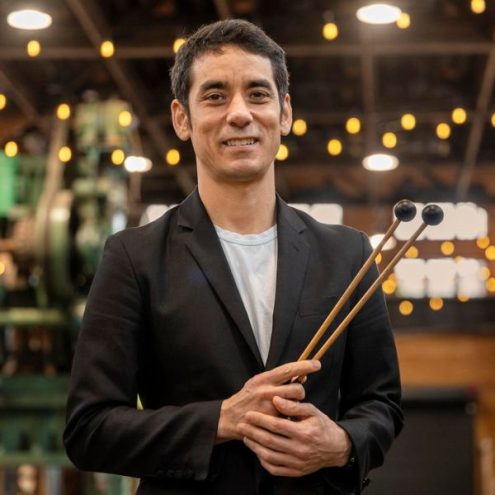
Photo of Andy Akiho holding drum mallets
Photo by Jim Lommasson

American composer of Japanese descent, Andy Akiho, is no stranger to Portland, OR. In addition to residing in the Rose City, Akiho currently serves as the Oregon Symphony’s Composer-in-Residence. Born in South Carolina, he began his musical journey as a percussionist. He earned degrees in percussion performance, followed by an extensive period of study of the steel pan. Amazingly, he only began writing music in his late 20s.

As a Grammy- and Pulitzer-nominated composer, Akiho writes large-scale works that transcend common assumptions about classical music, even what one would consider a percussion instrument in the first place. Performances of his works are theatrical, captivating, and utterly unique.  

Akiho was one of 40 creatives of the Pacific Northwest profiled in All Classical Radio’s Artist Anthology. You can read his artist profile here.


Jung Sun Kang (b. 1983)

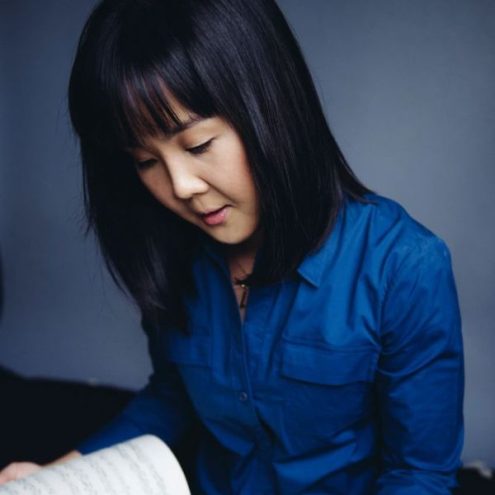
Photo of Jung Sun Kang looking at a score
Image source: Lindeblad School of Music

Korean composer Jung Sun Kang began learning the piano at age 3, and after discovering her love for Bach’s music, she added harpsichord to her studies as well. After receiving her Bachelor’s Degree from Ewha University in South Korea, Kang moved to the U.S., where she earned her doctorate from the Eastman School of Music as well as an Artist Diploma from McGill University. Now a resident of New York City, Kang has made a name for herself as a composer, performer, and educator.

Kang’s compositions strike a balance of influences from many different cultures while remaining anchored in traditional classical structure. Her works are typically written for small ensembles or duos, allowing the musicians to fully engage with each other and bring the music to life.


Keep Learning

To keep learning about AANHPI musical artists we love to play on air, check out these posts from the Arts Blog:


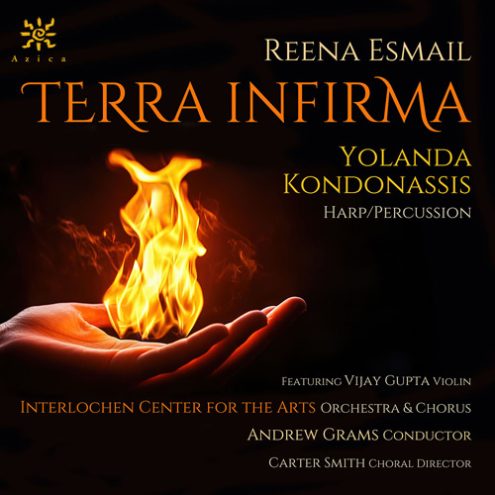
Featured image for John Pitman Reviews: 'Terra Infirma'

John Pitman Reviews: ‘Terra Infirma’

Featured image for John Pitman Reviews: 'Terra Infirma'

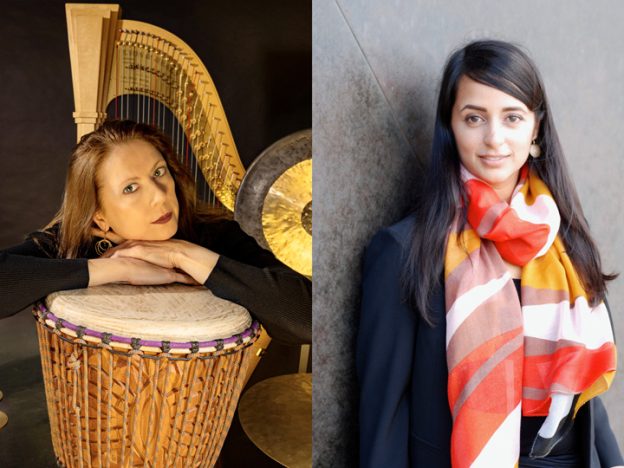
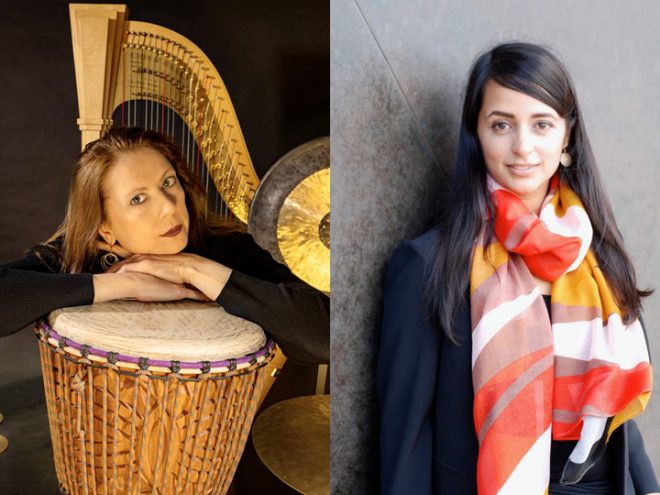
John Pitman’s latest conversation is with two artists who knew each other’s work, but who had not worked together, before this project. In this bold new work, with a title taken from a poem by Robert Walters, the harp symbolizes the protagonist Earth, both fragile and powerful.

Terra Infirma was directly inspired by the experiences of its creative team. Composer Reena Esmail, who resides in the Los Angeles neighborhood of Altadena, was forced to evacuate her home during the catastrophic fires of January 2025. Harpist Yolanda Kondonassis, a committed advocate for the environment, is founder and director of the non-profit organization Earth at Heart.

The towering instrument is moved choreographically by Kondonassis across the stage as she journeys through various arrays of suspended percussion. In the composer’s words, the work is “part virtuoso concerto, part performance art, and part theater.”

Hear John Pitman’s interview with Kondonassis and Esmail about their new joint project, Terra Infirma below:


Featured image for John Pitman Reviews: 'Terra Infirma'

Terra Infirma by harpist Yolanda Kondonassis and composer Reena Esmail is available now on Azica Records.

YAIR UPDATE: Elaina Stuppler

YAIR UPDATE: Elaina Stuppler

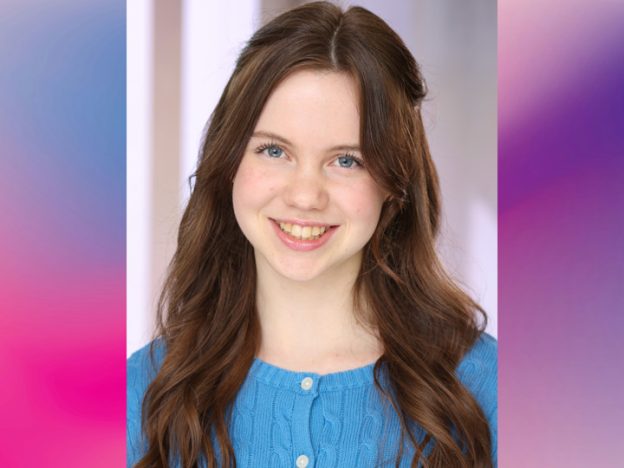
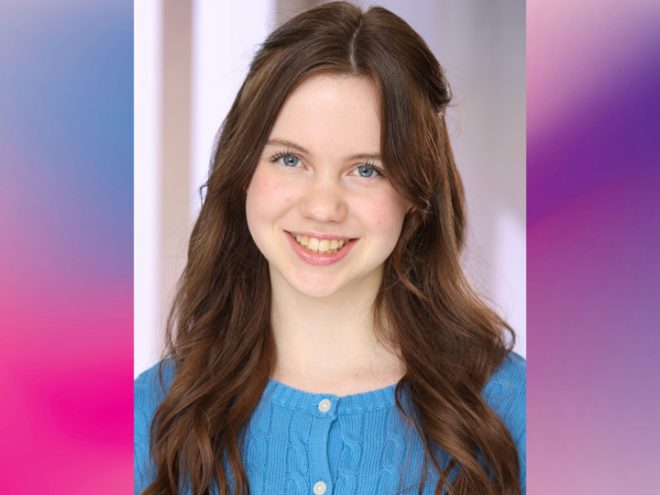
Elaina Stuppler is a talented young composer, trombonist, and vocalist who served as All Classical and ICAN Radio’s 2024-2025 Young Artist in Residence (YAIR).

She can be heard on All Classical each Saturday at 5:00 PM PT, as a Youth Reporter sharing pieces of music that inspire her.

Elaina was recently accepted into Yale University, where she will continue her music studies and performances. In celebration of all of her achievements, All Classical Radio caught up with the rising star to learn what she has been up to since her time as YAIR.

All Classical: How has your time as All Classical Radio’s YAIR influenced your career and musical adventures since?

Elaina: The mentorship and generosity of the station’s Young Artist Residency program cemented my love of composing music. Being surrounded by a team of creative professionals at All Classical Radio was an extraordinary gift, and learning first-hand about the research and dedication that goes into creating radio programs taught me the importance of time management.

All Classical Radio is so thoughtful and inclusive of the community, especially children. The station is such a generous organization that champions music education with its unique programming. The staff showed me the tremendous impact of how each person can make a collective difference.


All Classical: Is there anything you learned in your time as YAIR that has helped your creativity?

Elaina: Being All Classical’s Young Artist in Residence was a one-of-a-kind, inspiring experience. Having access to state-of-the-art studios and broadcasting my music live was priceless as a young composer!

(Revisit more videos from Elaina’s appearance on Thursdays @ Three in January 2025.)

The kindness, guidance, and financial support of All Classical Radio encouraged me as a musician. I also appreciate how the station always highlights underrepresented composers, and I am constantly hearing new works.


All Classical: What have you been up to since your year as YAIR?

Elaina: I am so grateful to continue serving as a Youth Reporter on All Classical Radio (Saturdays at 5:00 PM PT) and continue receiving mentoring from long-time hosts John Pitman and Brandi Parisi. They have helped me expand my musical knowledge and patiently given me a broadcast education.

The first half of this year was spent submitting college applications, and I recently committed to Yale, where I will continue my musical studies! Between school and orchestra commitments, I have been composing new songs for my musical about Maria Anna Mozart. I also perform musical storytimes at libraries with my Popera PDX program, introducing very young children to music and instruments.


All Classical: Do you have anything exciting coming up, or that you have been working on?

Elaina: Yes! I have 4 upcoming shows with my original orchestral compositions:

  • This spring, my orchestral composition will be performed at Hunter College in NYC by the Little Orchestra Society and dancers from the New York Theatre Ballet for their “Leonard Bernstein’s America!” concert with Grammy Award-winning conductor David Alan Miller

  • Then, on May 9, 2026, at the Newmark Theatre, I’ll perform with Portland Youth Philharmonic‘s Youth String Ensemble and Wind Ensemble.

  • And June 14, 2026, at the Arlene Schnitzer Concert Hall, Fear No Music’s Young Composers Project presents “Joy Manifest: Beethoven’s Ninth,” including a world premiere as part of The Authentic Voice Commissioning Series.

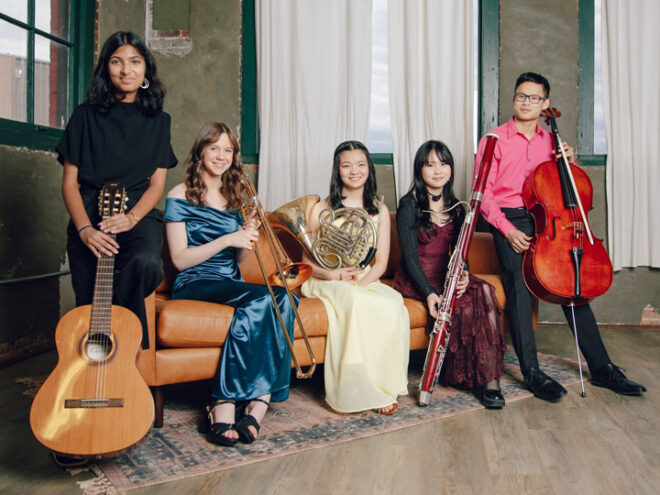
Featured image: All Classical Radio's 2024 Young Artist in Residence and Young Artist Ambassadors

All Classical Radio’s Artists in Residence program provides young and professional musicians with opportunities for career advancement, creative development, and audience exposure. The program is a part of the station’s initiatives dedicated to equity and inclusivity in the arts.

All Classical Radio is committed to supporting our Artists in Residence by providing them with new resources and opportunities to connect with audiences, expand their musical portfolio, and reach new creative heights as our partners, including:

  • Access to All Classical Radio’s recording facilities
  • Access to the station’s digital music archives for research and development
  • Encouragement and support for professional development as artists
  • A financial award to assist with projects and performances

We believe All Classical Radio’s Artists in Residence program is a truly unique and all-encompassing opportunity for musicians to learn and grow. Learn more at allclassical.org/artists-in-residence.


KQAC 89.9 Portland/Vancouver
KQOC 88.1 Newport/Lincoln City
KQHR 88.1 Hood River/The Dalles
KQHR 96.3 Columbia Gorge East
KQMI 88.9 Manzanita
KSLC 90.3 McMinnville
95.7 FM Corvallis/Flynn